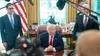
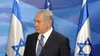
On June 1, 2026, Axios reported that President Donald Trump told Prime Minister Benjamin Netanyahu he was ‘fucking crazy’. The exact words, cited by two US officials and a third source briefed on the call, were these: ‘You’d be in prison if it weren’t for me. I’m saving your ass. Everybody hates you now. Everybody hates Israel because of this.’ Trump was furious because Israel’s escalation in Lebanon, comprising strikes on Hezbollah positions in Beirut’s southern suburbs and an expanding ground operation in the south, was directly threatening to collapse the negotiations he had spent months building to end the US-Israel war on Iran. He steamrolled Netanyahu, according to the officials. Israel agreed to pause the Beirut strikes.
Within hours, Netanyahu’s office confirmed that Israel would continue its military operation in southern Lebanon as planned. The ceasefire announcement produced a social media post and a night of continued fighting. National Security Minister Itamar Ben-Gvir publicly told Netanyahu to tell Trump ‘no’. ‘This is the time to tell our friend, President Trump — no,’ he wrote. Not a fringe voice. A cabinet minister. In public. Iran briefly suspended nuclear talks over Israel’s actions in Lebanon. Trump said talks continue at a rapid pace. By June 3, Trump confirmed to Fox News that he had been ‘a little bit perturbed’ and told Netanyahu ‘we gotta stop this.’ IDF Chief of Staff Lieutenant General Eyal Zamir visited the Haifa Naval Base the same day and told his forces that in Lebanon, ‘there is no ceasefire for our forces.’ Israel and Lebanon announced a renewed ceasefire. The patron screamed. The ally conceded the minimum. The patron declared victory. The ally continued.
This is the liability state. Not a patron that has lost control of its ally. A patron that has concluded it cannot afford to regain it, and an ally that has read that conclusion correctly and is acting on it.
The Pattern
There is a recognisable arc in the history of great power patronage, and it runs consistently. Patrons tolerate liability until the strategic cost of the relationship exceeds the strategic benefit. When that calculation tips, the patron finds a mechanism for distance. The mechanism varies. The pattern does not.
Pakistan is the clearest precedent. The United States supported Pakistan across four decades as a frontline state: a supply route for Afghanistan, a nuclear counterweight and an intelligence partner against Soviet and then jihadist expansion. The liability accumulated quietly. Abdul Qadeer Khan transferred nuclear centrifuge designs to Iran, Libya and North Korea throughout the 1990s. Pakistan’s security services maintained relationships with Taliban factions that were killing American soldiers. Bin Laden lived in Abbottabad, a short drive from Pakistan’s premier military academy, until American forces killed him there in 2011. The United States registered each of these as a liability and sustained the relationship regardless, because Pakistan remained strategically indispensable. The cost of the relationship was real. The cost of ending it was higher. The calculation held.
South Vietnam broke differently. The Ford administration ended military support in 1975 not because the relationship had become strategically worthless but because Congress refused further funding and the domestic political cost of sustaining the war had become untenable. The patron’s domestic politics produced a policy change that its strategic calculation, left alone, might not have. The liability arc completed.
Apartheid South Africa completed the arc through a different mechanism: legislative override. The Reagan administration resisted sanctions for years on the grounds of strategic value. Congress overrode Reagan’s veto in 1986 to impose the Comprehensive Anti-Apartheid Act. The domestic political cost, the moral weight of protecting an apartheid state, finally exceeded the strategic benefit the administration calculated.
The pattern is consistent. Liability accumulates. A triggering mechanism, whether domestic politics, legislative revolt, public opinion or the sheer weight of strategic damage, eventually produces a policy change. The question in every case is not whether the liability will eventually be addressed. It is what tips the calculation, and when.
Israel has crossed into liability territory under the current government. The evidence is specific, public and accumulating. Netanyahu defied a direct presidential statement in real time. Trump announced a ceasefire on social media. Israel said it would continue operations as planned. Eight more Lebanese were killed overnight. Ben-Gvir’s public call for Netanyahu to tell Trump ‘no’ is not an aberration from Israeli government policy. It is a reading of it. If the government believed the United States would impose meaningful consequences for defiance, Ben-Gvir would not have published that statement.
Netanyahu told Israeli television in August 2025 that he subscribes ‘absolutely’ to the vision of a Greater Israel, with biblical borders from the Nile to the Euphrates encompassing parts of Egypt, Jordan, Syria and Lebanon. Finance Minister Bezalel Smotrich has announced territorial intentions in Lebanon and Syria. These are not theological musings. They are public ministerial statements from members of a government that Washington is arming, funding and defending at the United Nations. The United States has vetoed more than 45 Security Council resolutions critical of Israel, more than half of every veto Washington has ever cast. In February 2025 the Trump administration sanctioned the ICC’s chief prosecutor for issuing arrest warrants against Israeli officials. Subsequent rounds have targeted more than nine ICC judges and prosecutors because they applied international law to a US ally. Washington is not merely shielding Israel from accountability. It is punishing the institution that sought accountability. And through all of it, Israel’s escalation in Lebanon has directly undermined the Iran nuclear negotiations. Tehran has made clear that any deal requires stability in Lebanon. The ally is not merely being a liability. It is actively destroying the patron’s primary diplomatic objective.
Why This Is Different
The liability arc that cut South Vietnam loose and ultimately isolated apartheid South Africa cannot produce the same outcome with Israel. The reason is structural, not strategic.
South Vietnam had no domestic political constituency in the United States capable of sustaining congressional support against the weight of public opinion. Apartheid South Africa had strategic value but no moral constituency; the churches, the civil rights movement and eventually mainstream Republican opinion turned against the relationship. When the domestic politics shifted, the policy followed.
Israel retains genuine strategic utility. Intelligence cooperation, military technology, the Abraham Accords framework and Israel’s role as the only reliable military partner in a region of unstable states have not evaporated. They have been complicated by the current government’s conduct. They have not disappeared.
But the decisive difference is the domestic political architecture. AIPAC’s influence on congressional elections is not incidental; it is structural, bipartisan and durable across administrations. The evangelical base’s theological commitment to Israeli statehood is not a political preference. It is a religious conviction held by millions of voters who form a core component of the coalition that elected Trump and will determine the composition of the next Congress. These constituencies do not moderate their position because a cabinet minister publicly defied a presidential statement. The political mechanism for acting on the liability calculation simply does not operate the same way.
This is the trap. The liability is real and visible. The mechanism for addressing it is constrained to the point of paralysis. The patron can scream on a phone call. It cannot impose consequences that its own political coalition would not tolerate.
What Paralysis Produces
When a patron cannot cut a liability and cannot discipline it, three things happen, and all three are visible now.
The patron’s credibility with other allies erodes. If Washington cannot control Tel Aviv, if a sitting Israeli cabinet minister can publicly instruct his prime minister to tell the American president ‘no’ without consequence, then the value of American assurances to Riyadh, Ankara, New Delhi or Seoul must be reassessed. The assurance is only as credible as the patron’s demonstrated capacity to enforce its commitments.
The patron’s diplomatic capacity is constrained. Every negotiation Washington enters is now shadowed by the question of whether Israel will undermine it. The Iran nuclear talks are the immediate case. Future negotiations in the region will carry the same shadow. The patron’s word is only as good as its ability to deliver its ally’s compliance, and that ability is visibly compromised.
And the ally, reading the patron’s paralysis correctly, escalates further. Ben-Gvir’s ‘no’ is not a slip. It is a strategic assessment. The Israeli far right has concluded, with considerable evidence, that Washington will absorb almost any amount of defiance without imposing the consequences that would actually constrain Israeli conduct. That conclusion is driving the escalation that is driving the damage accumulating in the liability ledger.
The events of June 1 to June 3 confirmed all three simultaneously. Netanyahu threatened to bomb Beirut. Trump screamed at him. Netanyahu postponed the Beirut strikes and said Lebanon operations would continue as planned. The IDF chief told his forces there was no ceasefire for their forces. A renewed ceasefire was announced. Iran suspended talks. Trump said talks continue. The credibility of American assurances took another measurable hit. The Iran deal lost another week of momentum. And Ben-Gvir’s calculation, that defiance produces no meaningful consequences, was confirmed again. Three days. The pattern, documented in real time.
The Verdict
Ben-Gvir is not defying the United States despite American power. He is defying it because of American paralysis. Netanyahu did not continue operations in southern Lebanon in spite of Trump’s anger. He continued them because Trump’s anger has, across two administrations, produced no consequences that change the calculation.
The United States has not lost control of Israel. It has decided, repeatedly and deliberately, that it cannot afford the cost of regaining it. In that gap, the most destabilising government in Israeli history has found its operating space, and it is using it.
This Analysis piece is free to read. Future Analysis pieces will be available to registered DiploPolis members first. Free registration takes 30 seconds. No credit card required.