On June 23, Secretary of State Marco Rubio stood in Abu Dhabi and delivered a clear statement of American legal principle. 'No country is allowed to charge tolls or fees on an international waterway,' he said. 'That's existing international law. That's the way it is in international waterways all over the world, and that's the way we expect it'll be here.' He was talking about Iran's tolling system. He described Iran's 'Persian Gulf Strait Authority' as unlawful and unsustainable. He added, specifically, that regardless of what it was called, fee, toll or donation, it was a toll, and no country was permitted to charge one.
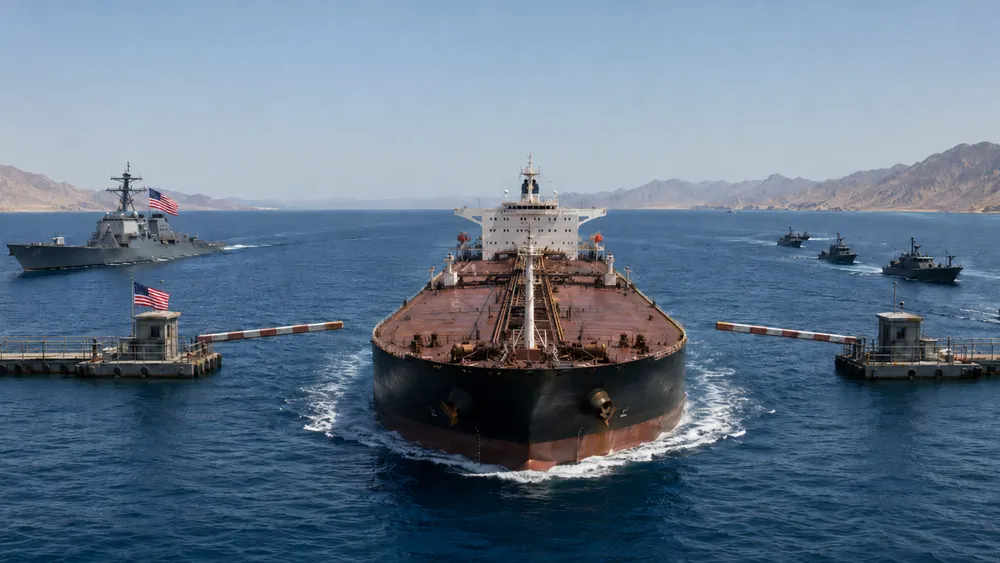
On Monday, Trump announced on Truth Social that the United States would charge a 20 per cent toll on eligible cargo passing through the Strait of Hormuz. 'We're protecting a very rich portion of the world,' he said. 'We're spending money. And so, what we've done is, we are going to be reimbursed for protection.' CNN confirmed this was an 'about-face' from Rubio's own position. The Associated Press called it 'upending hundreds of years of American policy supporting freedom of navigation' across the globe. The International Maritime Organization, the United Nations agency that regulates maritime shipping, issued a statement the same day: 'IMO stands firmly against charging fees for passage through straits used for international navigation. There is no legal basis through which to introduce mandatory tolls simply to transit through a strait.' That is the international legal body confirming what Rubio said and condemning what Trump did, in the same sentence.
This happened on the same waterway, in the same week, while the same secretary of state's legal definition of what constitutes an illegal toll was still on the record.
The freedom of navigation principle is one of the oldest continuously defended positions in American foreign policy. Washington invoked it in 1987 when it escorted Kuwaiti oil tankers through the Gulf under Iranian threat. It invoked it against Beijing's territorial claims in the South China Sea. It was the explicit stated basis for why Iran's control of the Strait of Hormuz was declared unacceptable in February, why the US-Israel war on Iran was launched, why ships were struck, why Oman was threatened with destruction for trying to negotiate a joint management arrangement. DiploPolis wrote in May about Iran's toll booth: 'The bombing did not break Iran's leverage over global energy. It formalised it.' The argument held for two months. Washington has now built its own toll booth on the same waterway.
The symmetry is precise enough to be uncomfortable. Iran's government charges for passage and says the revenue compensates for security services it provides in waters it controls. The US government charges for passage and says the revenue compensates for security services it provides in waters it controls. Iran's Foreign Ministry responded to Trump's announcement by saying Iran, not the US, controls the strait and deserves to 'be compensated for this service.' Foreign Minister Abbas Araghchi added: '20% is of course too much. We will be fair.' Iran's foreign minister was undercutting Trump's price. Iran's Revolutionary Guard said the Strait of Hormuz is 'our territory, and we will not allow a rogue and child-killing army from the other side of the world to continue its illegal interference in it.' Washington says it does not control the strait and that Iran's claim is illegal. Both sides are now charging for the same waterway while contesting who has the right to charge for it. Rubio's definition applies to both simultaneously. Neither government appears to have noticed.
Iran's Foreign Ministry spokesperson Esmail Baghaei told journalists Monday that the Americans had, in this brief period, 'in one way or another, slaughtered' the fourteen clauses of the memorandum of understanding. He was talking about American violations of the deal. His government has simultaneously been attacking shipping, striking six Gulf states and asserting exclusive control over an international waterway. Both sides are building their legal case on a principle they are simultaneously violating. The MOU is fourteen clauses in. The legal argument has been dead for considerably longer.
Trump called the agreement 'over' last week and said that 'when you're dealing with sleazebags, agreements don't mean much.' He was right about the last part. He was describing a process in which his own government has now claimed the right to charge tolls on an international waterway after going to war to prevent another government from doing so. The principle, Rubio said, was existing international law. The law exists. What has changed is who is breaking it.
Rubio said no country was allowed to charge a toll. He said this on June 23. His country is now charging one. The toll is 20 per cent of eligible cargo. The principle was several hundred years old. The about-face took 21 days.