Sometime in the fourteenth century BC, a man named Rib-Hadda sat in the city of Byblos and wrote a letter to Egypt. He had written many letters before. He would write many more. The theme was consistent: Byblos was under pressure, rivals were circling, Egyptian protection was not arriving and Rib-Hadda needed help. He asked for soldiers. When soldiers were not sent, he asked for a ship so he could at least escape. The letters kept coming. The help largely did not. Rib-Hadda eventually lost his city, was expelled by his own brother and appealed one final time to the pharaoh for rescue. There is no record of a reply.
Rib-Hadda wrote more letters into the Amarna archive than any other single ruler. He is not the most powerful figure in Eric H. Cline's remarkable book about the Amarna Letters, that cache of nearly 400 cuneiform tablets recovered from ancient Egypt and containing the diplomatic correspondence of the fourteenth century BC world. But he is the most modern. His letters do not feel like history. They feel like a diplomatic cable from last week: a small ally asking a patron whether alliance means anything once danger actually arrives. The loyal client has performed his loyalty. He has acknowledged hierarchy. He has written the required phrases and placed himself beneath the great king. Now he wants the return on that performance. The answer, when it comes at all, is silence.
What makes Rib-Hadda's correspondence so uncomfortable to read is not the desperation. It is the bureaucratic patience alongside it. He does not simply cry for help. He frames his requests carefully, situates them within the logic of Egyptian interest, reminds the pharaoh that a loyal Byblos serves Egypt's purposes, and presents abandonment as a strategic error rather than a moral failing. He is trying to make protection legible in terms a great power will find persuasive. He is arguing that his survival matters to them, not merely to him. This is the diplomatic grammar of the weak: convert your need into your patron's interest, and hope the translation holds. For Rib-Hadda, it did not.
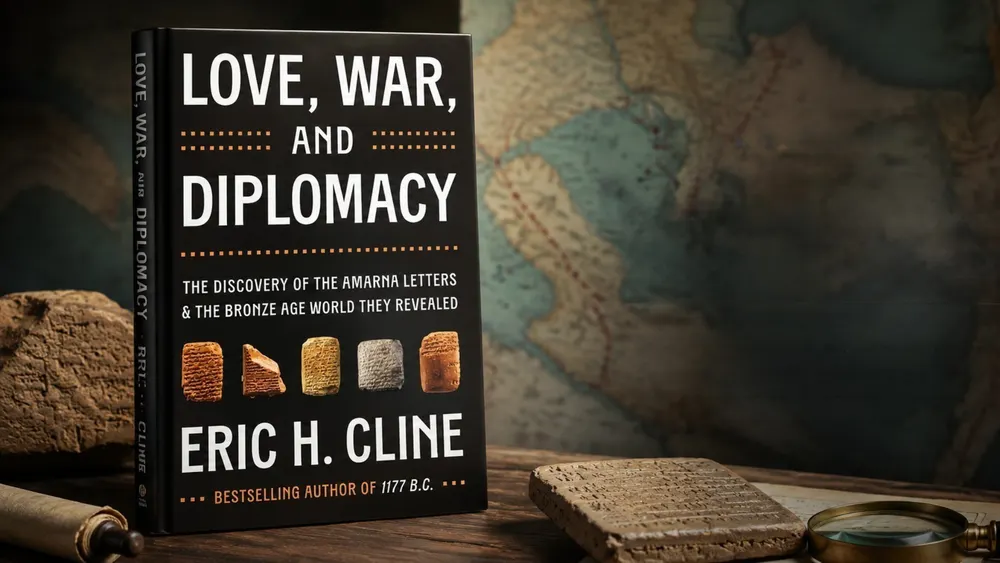
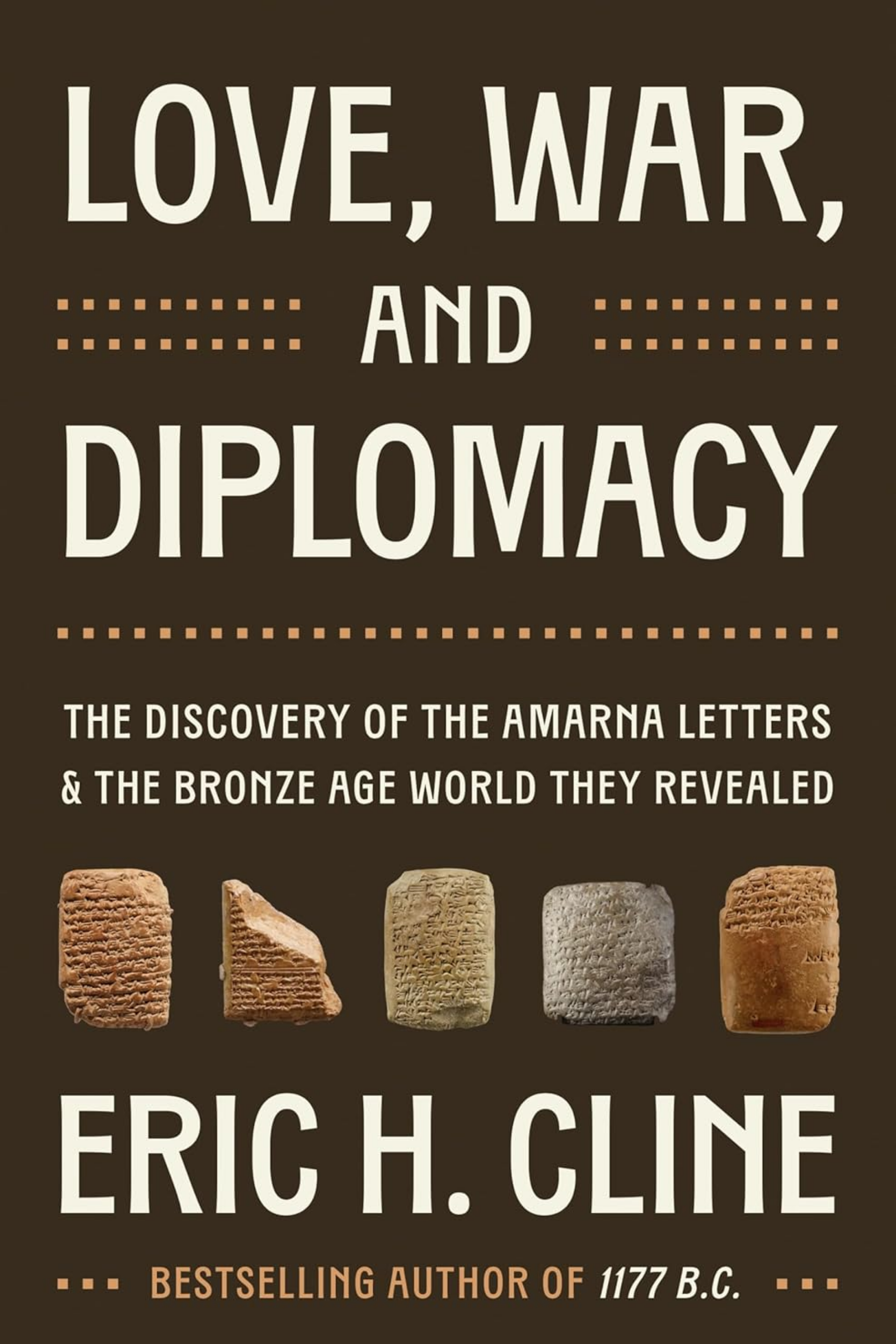
Love, War, and Diplomacy: The Discovery of the Amarna Letters and the Bronze Age World They Revealed (Princeton University Press, 2025) reconstructs the Amarna Letters and the world that produced them: a Bronze Age international system connecting Egypt, the Hittites, Babylonians, Assyrians, Mitanni and a network of smaller Levantine city-states through correspondence, marriage alliance, trade and mutual recognition. Cline brings genuine archaeological and historical authority to this material. The result is a book that does something more interesting than excavate the past. It reveals that the emotional grammar of international relations, the anxiety, the flattery, the status competition, the need to be seen and acknowledged and taken seriously, has remained essentially unchanged across three and a half millennia.
The book's first and most important insight is that this world was genuinely international. The great powers of the Bronze Age did not merely dominate their neighbours. They managed them through a sophisticated system of diplomatic exchange that required constant maintenance. Royal marriages bound dynasties together and encoded political relationships in human bodies. Gifts of gold, lapis lazuli, horses and luxury goods moved between courts as instruments of rank and recognition. Messengers carried correspondence across thousands of miles, and the delay or mistreatment of a messenger was itself a diplomatic act, an insult legible to every party in the system. The tablets record complaints about delayed gifts, challenges to the correct form of address and negotiations over the terms of brotherhood between rulers who would never meet. What holds this world together is not simply military force. It is an elaborate shared performance of hierarchy.
That is the book's second and deeper insight, and the one that justifies reading it as something other than ancient history. Protocol is not the decoration of power. It is one of the ways power becomes legible. The Amarna Letters do not permit the comfortable modern distinction between real politics, military pressure, territorial control, economic leverage, and ceremonial colour, gifts, titles, brotherly declarations, marriage alliances. In the Amarna world, these are not separable. A gift is a statement of status. Calling another ruler 'brother' is not affection; it is rank-management. Refusing the correct title is a geopolitical act. The theatrical and the material are not two registers of the same diplomacy. They are the same register, read from different angles.
Cline understands this. The archive almost forces the point; no historian working seriously with these tablets can treat ceremony as mere background. But the DiploPolis reading pushes the argument further than Cline needs to go for his historical purposes. Theatre is not merely present in ancient diplomacy. It is one of power's oldest technologies, as essential as armies and as carefully maintained as alliances. States have always needed the performance to be credible before the protection becomes real. The credibility of power and the performance of power are not sequential; they are simultaneous.
The contemporary resonance arrives without forcing it, which is the mark of a genuinely important historical argument. The relationship between the United States and its smaller security partners in West Asia illuminates the Amarna dynamic almost exactly. Gulf monarchies praise Washington, host bases, buy weapons, align rhetorically and perform strategic intimacy. They also hedge with Beijing and Moscow, cultivate alternative relationships and live with the persistent fear that when the crisis comes, American attention will be elsewhere. Jordan has performed this balancing act for decades, dependent on American support while navigating pressures from every direction that Washington does not always see clearly or respond to quickly. That is not cynicism or betrayal. It is the rational behaviour of a weaker ruler who has learned from experience that protection depends on the patron's priorities, not the client's need.
Rib-Hadda of Byblos understood this before there was a word for geopolitics. He performed loyalty with meticulous consistency. He acknowledged Egyptian superiority in every letter. He asked for very little, just soldiers, just a ship, just acknowledgement that his correspondence had been received. What his letters reveal, over dozens of iterations, is the central anxiety of the smaller power inside a hierarchical system: the alliance is real until it becomes expensive. The brotherly relationship holds until the brother has more important business elsewhere. Rib-Hadda's tragedy is not that he was abandoned by a great power. It is that he was surprised by it.
There is a phrase worth carrying away from Love, War, and Diplomacy, though Cline does not use it explicitly: diplomatic emotion. The tablets are not primarily a record of military campaigns or territorial negotiations. They are a record of feeling: pride, anxiety, insult, relief, suspicion, flattery and the specific loneliness of the small state writing into the silence of the large one. Rulers who had never met each other and never would expressed frustration over delayed gifts with the same irritability one might feel receiving an unanswered message today. A king wrote to complain that his messenger had been kept waiting in the sun. The complaint reads as comic until you recognise that the sun was the insult, the waiting the political act, and the letter the only instrument of redress available to a ruler too small to do anything else.
Love, War, and Diplomacy is essential reading, and not primarily for those interested in the ancient world. It is essential reading for anyone who wants to understand why international politics looks the way it does: why recognition matters as much as resources, why ceremony cannot be separated from strategy, why the desire to be called a brother by a stronger power has never gone away, and why the fear of being abandoned by that power is just as old. The tablets are 3,400 years old. The grammar is still in use.
This Book Review is free to read. Future Book Reviews will be available to registered DiploPolis members first. Free registration takes 30 seconds. No credit card required.
Find this piece interesting?
Dispatches by DiploPolis delivers sharp analysis and pointed commentary on power, politics, diplomacy, and world affairs — directly to your inbox.
No neutrality. No noise. Just argument.