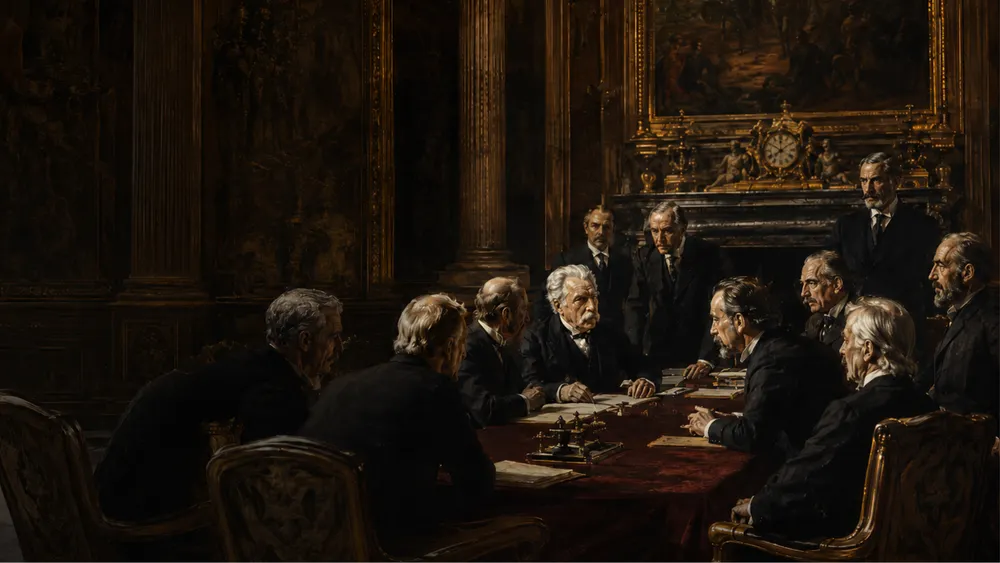
In December 1971, Henry Kissinger was at the peak of his powers. The secret opening to China was complete. The triangular diplomacy that would reshape the Cold War was already in motion. Washington had repositioned itself between Beijing and Moscow with a strategic elegance that textbooks would later struggle to adequately describe. By any measure of great power statecraft, it was a masterclass. In Dhaka, meanwhile, the Pakistani army was conducting what independent estimates would later place among the worst atrocities of the twentieth century. Hundreds of thousands dead. Ten million refugees flooding across the border into India. A genocide proceeding with American knowledge and American acquiescence, because the channel to Beijing ran through Islamabad, and Islamabad's cooperation had a price. The diplomacy was brilliant. The cost was paid by people who were not invited to the table.
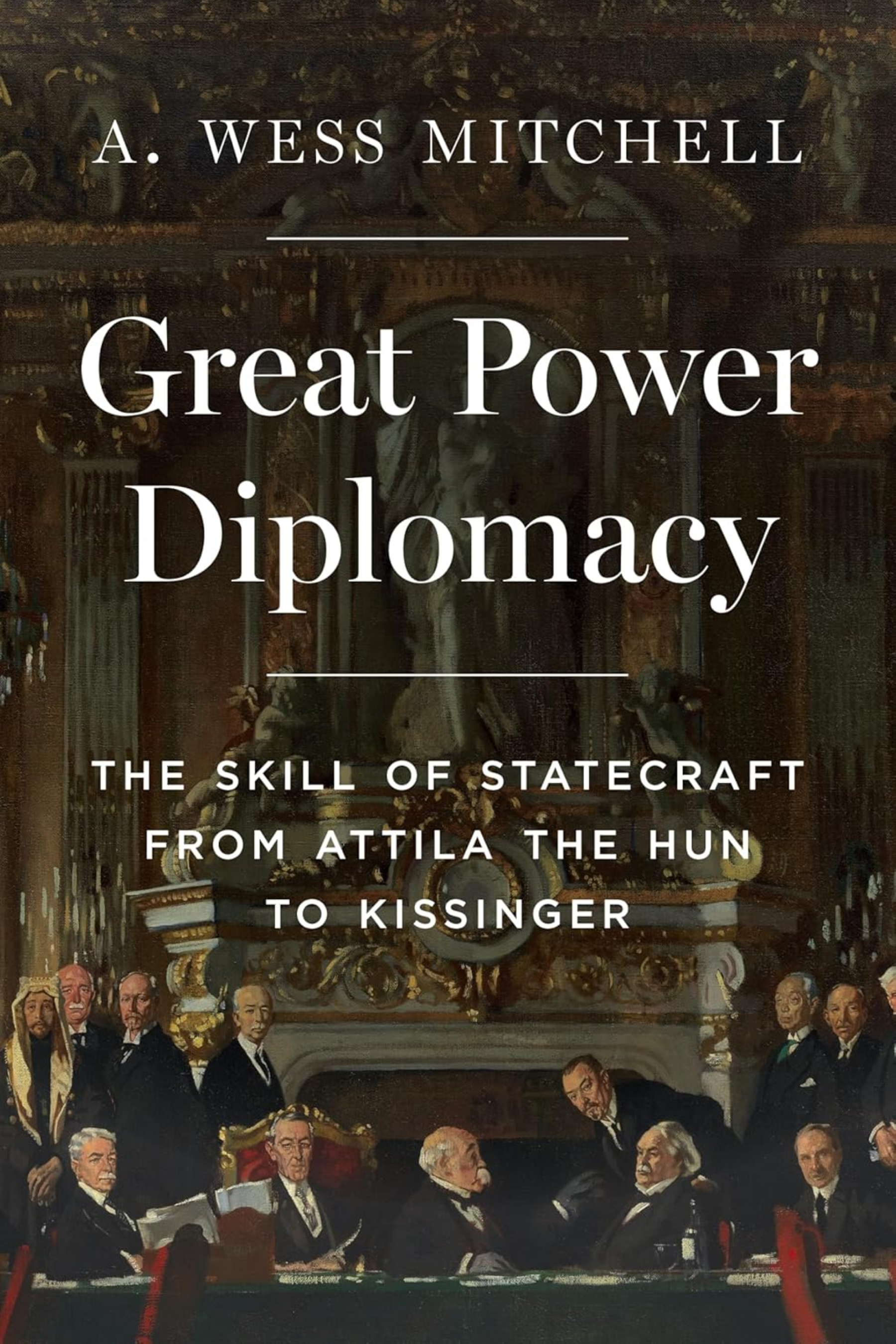
This tension sits at the heart of A. Wess Mitchell's serious and important book about the history and practice of great power statecraft. Great Power Diplomacy is not a manual. Mitchell is too historically serious for that. It is an argument: that diplomacy is a learnable discipline, that states and empires have historically used limited means to outmanoeuvre stronger rivals, and that the Western world has forgotten this art at precisely the moment it most needs to recover it. That argument is largely correct. It is also incomplete in ways that matter.
Begin with what Mitchell gets right, because he gets the important things right. The book moves through long history — from Attila and Byzantium through Richelieu, Metternich and Bismarck to Nixon and Kissinger — to show diplomacy not as soft talk before hard power begins but as one of power's most sophisticated forms. The statesman who can convert geography, timing, alliance management and strategic patience into advantage without firing a shot is not avoiding the real business of international politics. He is conducting it at its highest level. That corrective is valuable, because the lazy view of diplomacy as mere decoration around military and economic power has caused real damage to states that abandoned the discipline.
Mitchell also understands something most commentary misses: great diplomacy is not the application of universal technique. It is the reading of specific circumstances. The cases he examines succeed not because their protagonists followed a formula but because they resisted the wrong formula at the right moment. Bismarck's restraint after 1871, deliberately not extracting maximum advantage from a defeated France, was not weakness. It was the strategic imagination to see that a humiliated France would become a permanent revanchist threat. That kind of judgement cannot be reduced to a lesson plan. Mitchell knows this, and the book is stronger for knowing it.
Yet the danger of building an argument around successful diplomatic episodes is that statecraft begins to look more teachable than it is. Read a certain way, the book's message becomes: study Richelieu, recover Metternich, relearn Kissinger. That is partly right. But it risks turning statecraft into pattern recognition, history into a shelf of usable techniques. The deeper lesson, which Mitchell approaches but does not fully state, is that great diplomacy depends precisely on knowing which historical analogy does not apply. Timing, restraint and strategic imagination are not skills added to knowledge. They are the capacity to resist the wrong knowledge at the wrong moment. States may relearn the gestures of statecraft before they recover their judgement. Mitchell warns against diplomatic amnesia. He is less alert to the danger of diplomatic mimicry.
The book's most significant limitation is not methodological. It is moral. And 1971 exposes it with clarity. From Washington and Beijing, the triangular diplomacy of that year can be told as a masterpiece: Nixon and Kissinger using the China opening to alter the Cold War balance, pressure the Soviet Union and transform the strategic geometry of an entire era. In Mitchell's kind of framework, that is precisely the sort of manoeuvre that matters: timing, secrecy, geopolitical imagination, the use of one rivalry to reshape another. But from Dhaka and New Delhi, the same moment looks different. It is not a masterclass. It is also the story of a genocide proceeding with great power knowledge and great power acquiescence, a refugee catastrophe that arrived at India's border not as a diplomatic variable but as a human emergency, and a liberation struggle whose outcome Washington opposed because it complicated a more important game being played elsewhere.
That absence matters because it tests the moral completeness of the framework. Great power diplomacy often looks most elegant when the victims are kept outside the frame. The smaller power, the occupied people, the refugee, the breakaway nation forced into history by the decisions of larger states: these are not decorative details. They are the human terrain on which great power diplomacy operates. A theory of statecraft that admires strategic dexterity without adequately accounting for what that dexterity costs when smaller peoples become variables in someone else's design is incomplete in a way that the people of Dhaka would recognise immediately.
Mitchell's framework does, however, travel usefully when applied to India's own diplomatic performance. India is a state with every raw material of statecraft: location, scale, market weight, military capacity, civilisational depth, diaspora reach and a long diplomatic tradition. Yet too much of its recent foreign policy confuses visibility with influence. India wants recognition as a rising pole, a Vishwaguru (Sanskrit for teacher of the world), a voice of the Global South. But statecraft is not the announcement of status. It is the accumulation of leverage. Mitchell's standard asks a simple and devastating question of Indian foreign policy: what did this summit, this visit, this slogan, this alignment, this abstention actually produce?
Mitchell gives India a useful standard. He does not give the full explanation for why India so often falls short of it. India is not a classical European great power operating in a familiar balance-of-power theatre. It is a civilisational state, a postcolonial democracy, a developmental society, a nuclear power and a China-facing security actor simultaneously. Its diplomacy must manage not only rivals but memory, poverty, status anxiety and domestic political performance. Mitchell shows what statecraft requires. India shows what happens when a state wants the prestige of great power diplomacy before it has mastered the discipline of it.
Great Power Diplomacy is essential reading for anyone trying to understand why the world's most consequential decisions get made as they do, and why so many states make them so badly. Read it for the historical intelligence and the standard it sets. Then hold it against 1971, and ask yourself whether a theory of statecraft that cannot fully account for Dhaka has accounted for enough.
This Book Review is free to read. Future Book Reviews will be available to registered DiploPolis members first. Free registration takes 30 seconds. No credit card required.
Find this piece interesting?
Dispatches by DiploPolis delivers sharp analysis and pointed commentary on power, politics, diplomacy, and world affairs — directly to your inbox.
No neutrality. No noise. Just argument.