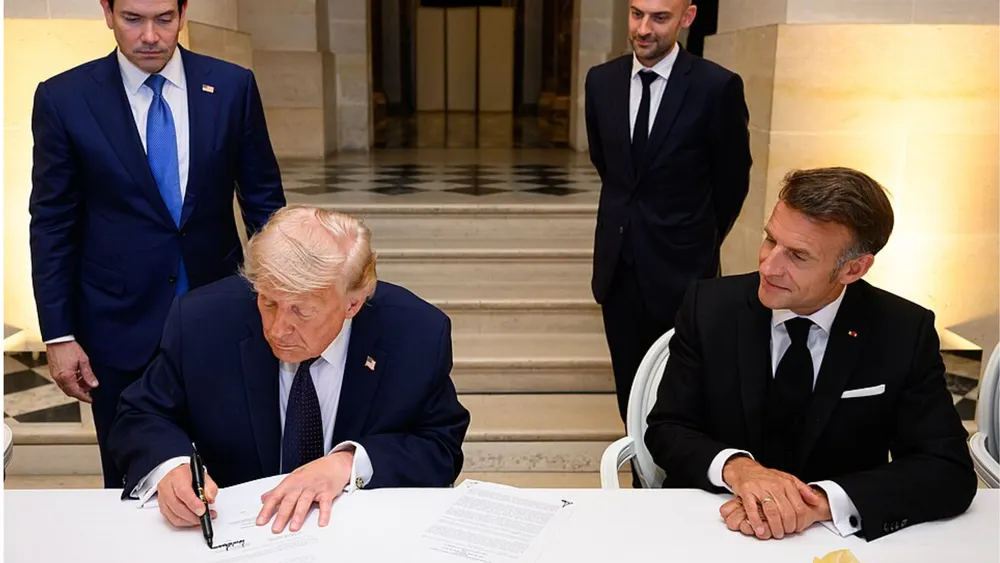
The full text of the Islamabad Memorandum is now public. The Centre for Strategic and International Studies, which reviewed it yesterday, chose its words with precision: 'The deal itself is horrifically lopsided. Iran gets most of what it wants, and it gets it up front — before negotiations on a final deal even start. The United States gets very little. Israel gets even less.'
CSIS does not usually say things like that. When it does, the text supports it.
The fourteen-point memorandum gives Iran the immediate end of the US naval blockade, with the American pullback required to be complete within 30 days. Iranian oil starts flowing. Cash starts flowing. An estimated $24 billion in frozen Iranian funds are to be unfrozen during the 60-day window, half before the final negotiations even begin. Iran also wins a pledge of American noninterference in its internal affairs. The country that fought a war partly described as creating conditions for regime change has now signed a document promising not to pursue it.
What does the text not contain? Iran's ballistic missile programme is not mentioned. Its proxy network — Hezbollah, the armed factions across Iraq and Syria, the Houthis — is not mentioned. The 440 kilograms of uranium enriched to 60 per cent, which was described in April as a non-negotiable element of any deal, stays in Iran; the text calls only for its dilution to reactor grade following a final agreement that has not been negotiated. The final agreement, to be reached within 60 days, is where every hard question now lives.
The war that produced this text cost between $34 billion and $42 billion, according to CSIS's revised estimate. It killed more than 7,000 people. It closed the Strait of Hormuz, disrupted global energy markets, strained every American alliance in Europe and the Middle East, and produced a memorandum of understanding that a mainstream Washington think tank calls horrifically lopsided on the morning the full text becomes public.
CSIS notes one piece of good news: both Washington and Tehran are publicly describing the same deal. Previous purported agreements in this conflict featured wildly different accounts of what had supposedly been settled — a classic tactic for backing an opponent into a corner by claiming public agreement they never actually made. This time, both sides agree on what they agreed to. That is a genuine signal that both sides want to be done with the fighting. CSIS calls it 'the only good news.'
The deal has 'trap doors through which Iran can escape, or through which the whole thing can fall apart,' the CSIS analysis notes. The 60-day window for nuclear talks begins with both sides holding positions they have held since before the war: Iran insisting on its right to enrich uranium, America insisting on full surrender of enrichment. Those positions did not move during four months of bombing. The text does not explain how 60 days of diplomacy will close the gap that decades of diplomacy could not.
What the text confirms is simpler. Iran receives money before it makes commitments. The commitments it makes are to talks, not to outcomes. The issues that were the stated reason for the war are deferred to a future agreement. Washington spent between $34 and $42 billion to arrive at an interim document that CSIS calls horrifically lopsided.
The text is public now. Anyone can read it.