Some time after midnight on August 5, Russian missiles and drones struck Kyiv and the surrounding region, killing 17 people and wounding 44. Russia fired 24 ballistic missiles, four hypersonic or supersonic missiles and 115 drones in a barrage that lasted approximately two hours. Ukraine's air defences failed to intercept a single one of the incoming missiles. By the measure of this war's grimmer statistics, it was not the deadliest attack Ukraine has suffered. It was, however, one of the most consequential in its specific timing: it came hours after the Financial Times reported that Trump had refused to transfer 300 Patriot interceptor missiles to Ukraine at an Oval Office meeting the previous week, citing a shortage of interceptors caused by the war with Iran.
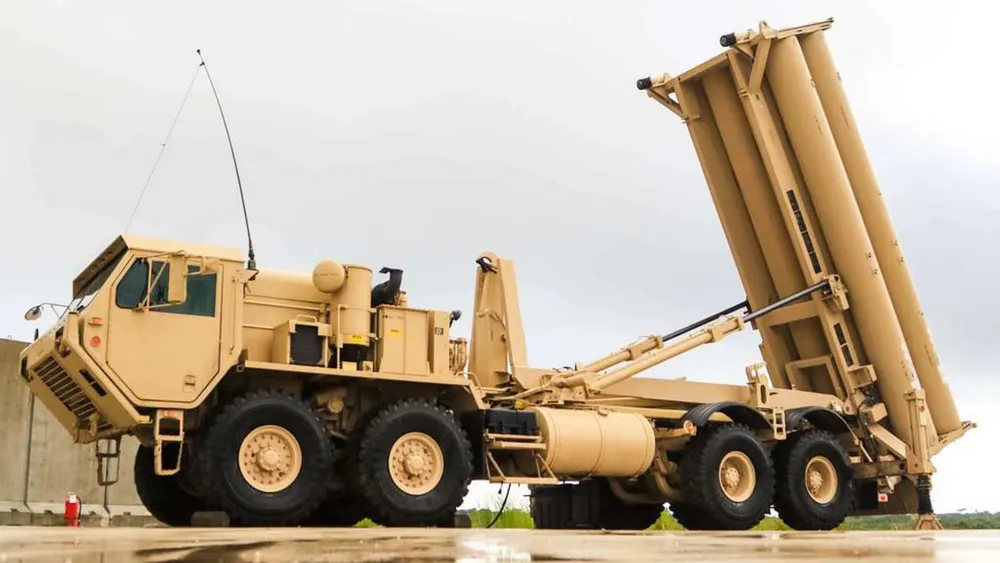
The shortage is documented. NPR confirmed on August 4, independently of Reuters, that US stockpiles of certain precision missiles are almost depleted as the war in Iran enters its sixth month. CNN reported the same day that the US military has burned through nearly four-fifths of its THAAD ballistic missile interceptors and roughly half of its Patriot interceptors since the war began. Senior US military commanders are warning that the Pentagon's munitions stockpile is 'dangerously low.' Stockpiles are expected to take years to replenish.
The interceptors that were not in Kyiv's air defences on the night of August 5 were not there for a reason. That reason is called Operation Epic Fury.
What the War Consumed
The Reuters investigation published August 4 is the most precise public accounting of what the Iran war has cost the United States in military hardware. The US Army has expended what sources described as 'virtually all' of its ATACMS — the Army Tactical Missile System — and its newer Precision Strike Missile, or PrSM, during five months of operations against Iran. These are long-range, surface-to-surface weapons that allow strikes without putting aircraft crews at risk. Before the war, they formed the backbone of the US Army's long-range strike capacity. One US Army unit, according to sources cited by NPR, exhausted its entire PrSM inventory early in the conflict.
The numbers that the Centre for Strategic and International Studies has published give the depletion concrete dimensions. Before the war began, the US held approximately 2,200 Patriot interceptors of its two most modernised variants, and 452 THAAD missiles. By July 29, CSIS estimated that fewer than 827 Patriots remained in US stockpiles and fewer than 278 THAAD. The US has also used slightly less than half of its global Tomahawk cruise missile inventory since February 28. Raytheon has reached a tentative multiyear agreement with the Pentagon to increase Tomahawk production. The implication of a multiyear production agreement is that the gap will not be closed quickly.
The Pentagon's response to the Reuters report was vigorous denial. Defence Secretary Pete Hegseth called the reporting false. Trump said the US had 'far more munitions than anyone in the world, and far more than we need.' The White House's public posture is that there is no shortage. The Financial Times' Oval Office reporting, published the day after the denials, describes the president telling Zelensky in person that the interceptors are needed in the Middle East.
Both things can be true simultaneously. The US may have more munitions than any other country in the world. It may also have fewer of the specific interceptors that Ukraine needs than it did in January, and fewer than it can spare while simultaneously protecting American installations across the Gulf. The shortage is not absolute. It is specific, contextual and consequential.
Last week, the Department of Defence circulated a memo asking for 'creative' ways to pressure Iran. The New Republic, which reported the memo, observed the obvious implication: that conventional long-range strike options had been exhausted. When a superpower's defence department asks for creative alternatives to its standard instruments of coercion, it is because the standard instruments are no longer available at the required scale.
The Refusal and Its Consequence
Zelensky requested 300 PAC-3 interceptor missiles at his Oval Office meeting with Trump last week. Trump declined, citing Iranian war depletion and the need to protect US military installations across the Middle East and the Persian Gulf countries. He also declined to grant Ukraine a licence for the independent production of Patriot interceptors, despite earlier signals that this option was under consideration. NPR confirmed separately that the administration is pressing ahead with talks on allowing Ukraine to manufacture its own PAC-3 missiles, but that process will take time Ukraine does not have tonight.
The Kyiv strikes of August 5 demonstrated what the gap in air defence coverage means in concrete terms. Ukraine's air defences intercepted none of the incoming ballistic missiles. Russia used a record 8,300 guided aerial bombs in July alone, according to the Ukrainian General Staff, more than the previous record of 8,266 in June. The aerial campaign is not contracting. The interceptor supply is. The gap between those two trajectories is measured in dead.
North Korean military contributions are accelerating the pressure. A North Korean missile unit has begun deploying to western Russia equipped with up to 120 ballistic missiles and six launchers for strikes against Ukraine, according to Ukraine's military intelligence agency. The western Russia deployment connects two wars that the world has been tracking as separate: the Iran conflict and the Ukraine conflict now share a supply relationship. North Korea provides Russia with additional ballistic missile capacity. Russia uses that capacity against Ukraine. The US has consumed its own interceptors fighting Iran. Ukraine asks for those interceptors and is told they are needed in the Middle East. The connections are documented. They are not speculative.
What Was Promised and What Was Built
Operation Epic Fury was launched on February 28, 2026 with four stated objectives: destroy Iran's ballistic missiles and its missile industry; annihilate the Iranian navy; sever Iran's proxy network; guarantee that Iran would never obtain a nuclear weapon. None of those objectives has been achieved in full. Iran's nuclear programme is under negotiation, not dismantled. The proxy network continues to operate. The navy was damaged, not annihilated. The missile programme was degraded but not destroyed; Iran displayed domestically produced ballistic missiles at a Tehran military ceremony as recently as August 2.
What Operation Epic Fury achieved that its architects did not announce as an objective was the consumption of a significant portion of the United States' long-range precision strike capacity, the depletion of roughly half its Patriot interceptors, the near-total exhaustion of its ground-launched long-range missiles and the diversion of presidential attention, diplomatic bandwidth and military resource from a European war in which Russia has killed 17 people in Kyiv on a single night while Ukraine's president sits in Washington being told there are no more interceptors to spare.
The Distraction War piece DiploPolis published in June tracked how the Iran war gave Putin diplomatic relief from the June deadline. The administration that pressed Zelensky for a peace agreement by June started a war in the Middle East ten days before the next scheduled round of Ukraine talks and never came back. That analysis remains correct. This piece adds the hardware dimension: the distraction was not only temporal. It was physical. It consumed the weapons. When commanders warned that the munitions stockpile was 'dangerously low,' they were not describing an abstraction. They were describing the specific condition that produces a president telling a wartime ally no at the exact moment the ally's capital is being struck.
Trump said this week, of the Iran situation, that 'IRAN WILL NEVER HAVE A NUCLEAR WEAPON.' Whether that commitment can be sustained without the long-range precision missiles that have been expended in its pursuit is not a question the administration has answered publicly. What it has answered, in an Oval Office meeting, is the question of who pays when the arsenal runs short. Ukraine pays. It pays in refused requests and depleted air defences and the specific people killed in Kyiv on nights when Russian missiles are not intercepted.
The Accounting That Has Not Been Done
There is an accounting that the United States has not performed publicly and does not appear to be preparing to perform. It concerns the relationship between a war started in February and a war that has been running since February 2022, and whether the resources consumed in the first were essential to a stated objective that has not been achieved, and whether those resources were needed in the second and were refused because they were consumed in the first.
The accounting is not anti-war. It is the accounting that every competent military establishment performs after every conflict: what was expended, what was achieved, what it cost, what it prevented. The Iranian nuclear programme is under negotiation. The Strait of Hormuz is under a 60-day arrangement pending further talks. Iran's government is intact. The IRGC is operating. Hezbollah is in Lebanon. The proxy network is functional. The long-range missiles are gone. The THAAD is almost gone. Kyiv's Patriot request was denied.
Whether that exchange is strategically worth the cost depends on what the negotiations eventually produce. If the 60-day Hormuz arrangement produces a durable nuclear settlement, the exchange may be defensible. If the talks collapse and the war resumes, the US will resume combat with a depleted arsenal and a European ally whose capital is being struck because the interceptors were spent elsewhere. Zelensky has accepted the unconditional ceasefire Trump demanded. Putin has refused it. The war continues regardless of what Ukraine has agreed to.
Trump told Zelensky there were no interceptors to spare. Russia killed 17 people in Kyiv that night. Ukraine's air defences intercepted none of the incoming missiles. The war that was supposed to guarantee Iran would never have a nuclear weapon has not yet guaranteed that. What it has guaranteed is that Ukraine has fewer interceptors than it had in January, and that the president of the United States told the president of Ukraine in the Oval Office that the reason for that is Iran.
That is the bill. It arrived in Kyiv on August 5.
This Analysis piece is free to read. Future Analysis pieces will be available to registered DiploPolis members first. Free registration takes 30 seconds. No credit card required.
Find this piece interesting?
Dispatches by DiploPolis delivers sharp analysis and pointed commentary on power, politics, diplomacy, and world affairs — directly to your inbox.
No neutrality. No noise. Just argument.