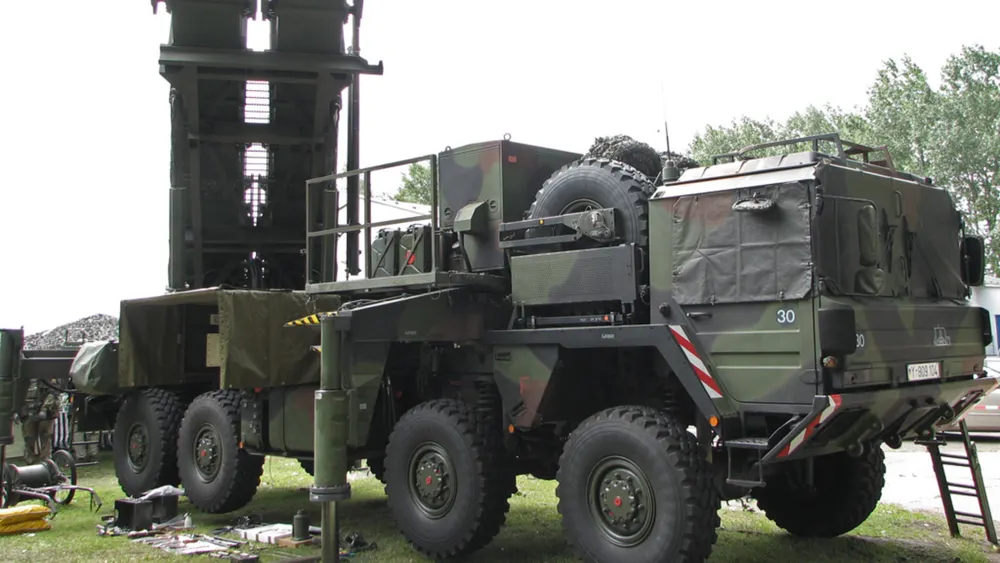
The Wall Street Journal reported on October 28 that the United States has warned several Gulf Arab countries to prepare for a 'short, intense military campaign' against Iran after the November 3 midterm elections. The US is moving a Patriot missile defense system from Texas to the region, relocating troops from bases considered vulnerable to Iranian retaliation, restocking munitions, and readying bombers and fighter jets. An additional aircraft carrier strike group and a Marine expeditionary unit are expected to join about 20 US warships already in the Middle East next month. At a rally in Texas this week, President Trump said: 'You'll see Iran in a couple of weeks, if you don't mind.' He had previously said he would not attack Iran before the midterms. The White House declined to discuss 'sensitive military plans that may or may not exist' and said Trump keeps all options open to prevent Iran from getting a nuclear weapon.
The phrase 'short, intense' is doing a significant amount of work. It describes an operation designed to degrade a target set quickly, minimise the window for retaliation, and produce a political result before the costs accumulate. The US-Israel war on Iran began on February 28. It is now October 28, eight months later. The Strait of Hormuz remains effectively closed. The June memorandum of understanding collapsed amid disputes over navigation through the strait. IAEA Director Rafael Grossi told the UN Security Council this week that he has seen no evidence Iran has tried to repair its nuclear facilities since June 2025, and that 'since June 2025, we have not identified any activity to repair or reconstruct.' He also said the agency still cannot verify the status of Iran's near-weapons-grade uranium stockpile and has urged inspector access. The previous strikes destroyed infrastructure. They did not resolve the nuclear question. A new round of 'short, intense' attacks after November 3 is not a strategy. It is the resumption of something that did not work the first time, timed to a midterm calendar.
What Trump is reportedly considering for after November 3 is a larger strike, hitting Iranian infrastructure and nuclear sites at a scale beyond the February campaign. Trump has said the war could end 'whenever I want it to end.' That claim is not supported by eight months of evidence. Iran responded to the first round of strikes with missile and drone attacks across the region and effectively closed the Strait. A June ceasefire memorandum collapsed. The Houthis are still striking Saudi Arabia daily. Iran's regional proxy networks are still functional. Gulf infrastructure is being hit. The war has not ended when Trump wanted it to end. The assessment that a second, larger round will produce a different result rests on assumptions that the first round did not validate.
The Gulf states being warned to prepare are the ones who will bear the most immediate costs if Iran retaliates against civilian and economic infrastructure in the region. Iran has threatened exactly that: renewed US strikes could bring retaliation against Gulf oil facilities, ports and population centres. Saudi Arabia is already absorbing daily Houthi attacks. Egypt authorised military support for Riyadh earlier this week. Britain is deploying fighter jets to protect Saudi cities. An additional US carrier strike group is heading to the region. Regional states are not passive observers of a US-Iran war. They are the terrain on which it is being fought, and their infrastructure, airspace and economies are among the stakes. The warning to prepare for a 'short, intense campaign' is a warning issued to countries that will spend months managing whatever the campaign's aftermath produces.
The midterms are November 3. The additional carrier strike group arrives in the weeks after. Trump said 'a couple of weeks.' Those timelines converge around the second week of November. What happens before November 3 is an election in which Trump has said almost nothing about Iran beyond 'you'll see.' What happens after is, per the Wall Street Journal, a short, intense campaign against a country that has survived eight months of war, dispersed its forces and watched its trading partners decline to abandon it. Short and intense are choices about tempo. Whether they are also a strategy is a different question, and it is one the Gulf states being warned to prepare for consequences will want answered before the planes take off.