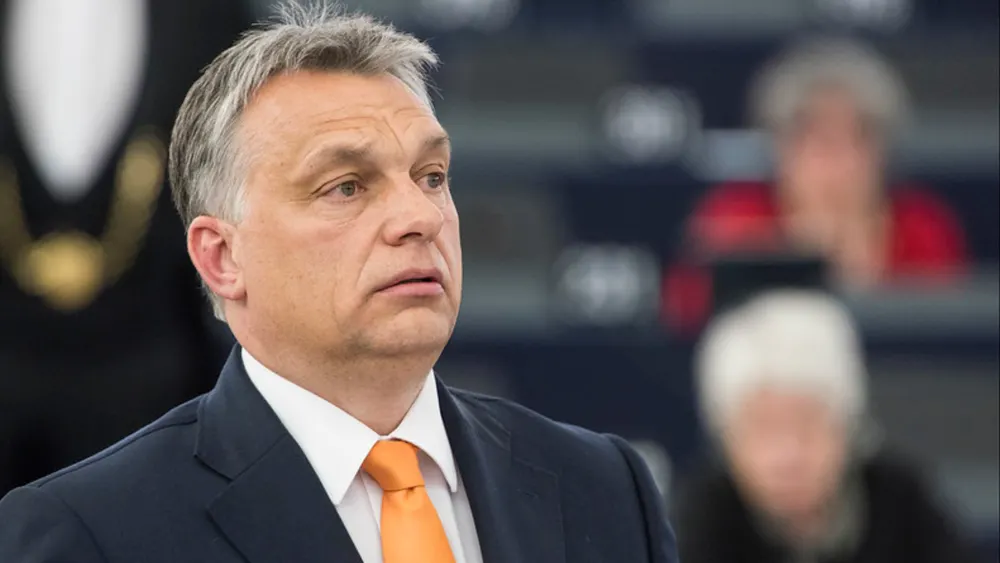
A Wall Street Journal report published this week says the Trump administration is pushing former Hungarian Prime Minister Viktor Orban to stand as the next UN Secretary-General, as a joint candidate of the United States, Russia and China. A State Department official described Orban as the 'dream candidate for MAGA conservatives.' No formal candidacy has been announced. Orban has not confirmed he will run, and he reportedly declined to comment. He is said to be receptive but unwilling to enter the race unless he is confident of winning. Antonio Guterres's second term ends December 31. The next Secretary-General takes office January 1, 2027. Informal Security Council straw polls are underway. One US official estimated that eight of the 15 Council members would 'easily' back Orban, with possibly 10 votes. A candidate needs nine votes and no veto from any of the five permanent members.
The significant fact in this story is not Orban. It is the three countries said to be supporting him. The United States, Russia and China have not agreed on anything through the Security Council in years. They have disagreed on Ukraine, on Taiwan, on Iran, on Gaza and on virtually every consequential matter before the Council since Russia's invasion of Ukraine in 2022. That these three countries have found common ground on a candidate for the UN's top post is the most important piece of information here. What they have agreed on is a candidate they believe will not challenge them. Orban vetoed €90 billion in EU loans to Ukraine in February; Hungary lifted the veto in April only after losing its parliamentary majority. He is the only European leader who maintained warm ties with both Moscow and Beijing throughout the war in Ukraine. He lost power in Hungary in April because voters there chose something different. Washington, Moscow and Beijing now want to give him the UN.
The procedural hedge has already appeared. Russia's Deputy Foreign Minister Aleksandr Alimov said the US, Russia and China will not nominate Orban, since permanent Security Council members do not nominate candidates. He said those behind the idea need to find a nominating country. That is technically accurate and politically irrelevant. The vote math requires nine Council votes and no permanent-member veto. If the US, Russia and China are all in favour, the question reduces to whether Britain and France are willing to veto a candidate backed by the other three. Britain and France have not publicly taken positions. Poland's foreign minister said he does not foresee Polish support. Ukrainian Foreign Minister Andriy Sybiha said Orban would bring his 'masterful veto and blackmail skills' to the UN. That is not an inaccurate description of Orban's record in EU institutions.
The context around Orban matters. He lost power in Hungary's April election to Péter Magyar's Tisza party after 16 years in government. Hungarian authorities have since opened fraud and corruption investigations into former government members, and Orban's possible involvement is being examined. The UN Secretary-General's post carries significant institutional immunity. The Emirati diplomat Lana Nusseibeh recently entered the race and is reportedly gaining momentum; she is a career diplomat from a Gulf state with strong ties to both the Western and Arab worlds. A Security Council straw poll is scheduled this week. Whether Orban's name will even be included is unclear.
There is a version of this in which Orban does not run, Britain or France quietly says no, and a consensus candidate emerges from somewhere else. That version is not impossible. What the WSJ report makes plain is that the Trump administration has decided the UN Secretary-General should be a figure who reflects its own preferences: nationalist, comfortable with authoritarian powers, and hostile to the multilateral order the UN was created to sustain. The agreement of Russia and China on this candidate is not an accident. It is the logic of the whole project. The UN is being refashioned around the one thing the US, Russia and China currently agree on, which is that the institution should not inconvenience any of them. That project may not produce Orban. It will produce someone. The institution will not look the same afterwards.