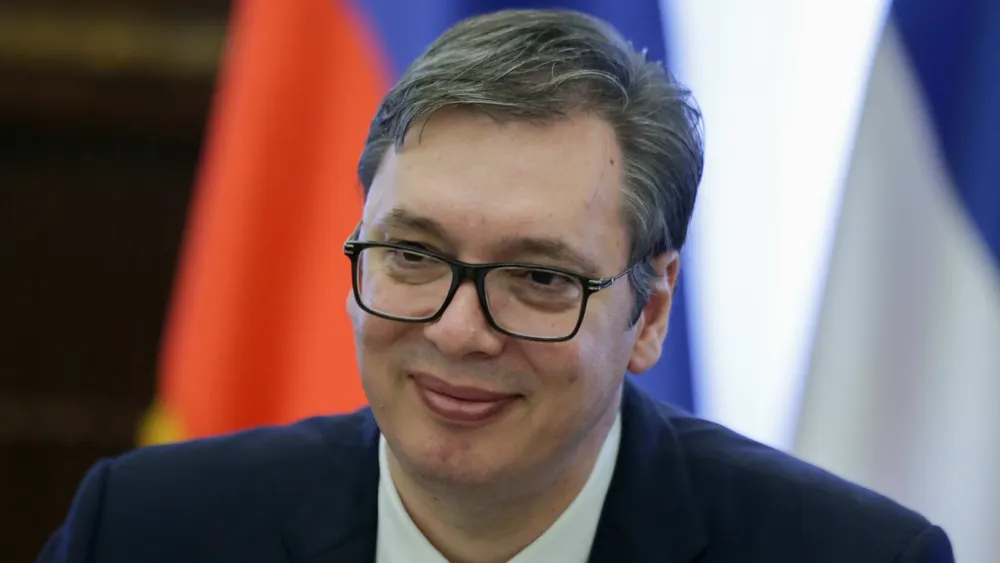
On Sunday, October 25, Aleksandar Vucic conceded defeat in snap parliamentary elections that he himself had called, to a movement that had not existed as a political party two years ago. He said: 'It is clear that we have lost these elections.' Based on a sample of votes, the Student List was projected to win between 135 and 140 seats in the 250-seat parliament; his Serbian Progressive Party was projected to win about 105. Turnout reached nearly 70 per cent, the highest since Yugoslavia broke apart in 1992. The Student List received about 2.2 million votes. The party that had governed Serbia for 14 years received about 1.72 million. CESID observers noted pressure on voters or election workers at almost a third of the polling stations they monitored. It did not change the outcome.
The origin of the Student List is specific and worth stating precisely. On November 1, 2024, a concrete canopy at the Novi Sad railway station collapsed and killed 16 people. Protests began almost immediately, focused on government negligence and the failure to hold anyone accountable. The protests did not begin as a demand for democracy, or with an agenda of constitutional reform, or with a manifesto about media freedom. They began with a demand for accountability for 16 deaths at a railway station. That specificity gave the movement its durability. Over two years, it widened into corruption, institutional decay and the systematic control of public life that had characterised Vucic's 14 years in power. But it never lost the original argument. Vucic called the protesters 'blockaders.' He called them destabilizers. Neither label landed, because 16 people were dead and he had not answered for it.
Vucic's career spanned three decades and three political identities. He began in the ultranationalist Serbian Radical Party in 1993. His 1995 remark in the Serbian parliament during a debate on NATO strikes in Bosnia, 'Kill one Serb, and we will kill 100 Muslims,' defined his early political reputation. He broke from the radicals in 2008, co-founded the Serbian Progressive Party and positioned it as pro-European and reformist. By 2012 the SNS was in government on an anti-corruption platform. Under his leadership, unemployment fell from about 26 per cent to 8 or 9 per cent, nominal GDP nearly tripled to around €90 billion, and foreign direct investment reached a record €5.2 billion in 2024. Critics argued that the economic gains were real and that he used them to build a system of state control over institutions, media and political life that made accountability structurally impossible. The Novi Sad canopy did not collapse because of an isolated failure. It collapsed because of the kind of institutional neglect that a 14-year grip on the state produces.
The Student List is led not by a politician but by Ilija Srdanovic, a cardiologist from Novi Sad. Its 250 candidates are largely unknown. The coalition's campaign promised to root out corruption and restore public institutions. It has been notably quiet on foreign policy, and that silence served it well in an election but will not serve it in government. Serbia's position is genuinely complicated: China is a major investor in infrastructure and mining, Russia is the traditional ally and gas supplier, and the EU is the largest trading partner with accession negotiations officially open. Vucic navigated these tensions by maintaining all three relationships simultaneously, which his critics called opportunism and his supporters called pragmatism. The students have not said which of those three relationships they will prioritise or how they intend to handle Kosovo. These are not questions they can leave open indefinitely.
European Commission President Ursula von der Leyen congratulated the Student List and pledged support for reforms on rule of law, media freedom and anti-corruption. Brussels has its own interest in a pro-European government in Belgrade, and it was quick to say so. What von der Leyen's congratulations do not resolve is the governing question: a coalition of largely unknown candidates, led by a cardiologist, with a mandate rooted in a single structural failure at a railway station, now has to govern a country with Vucic's legacy embedded in its security services, public media and state-adjacent businesses. A purge of Vucic's allies is expected in the police and intelligence services. What comes after the purge is not yet clear. The movement that started when a canopy fell has won. What it builds is a separate project, and it has not started yet.