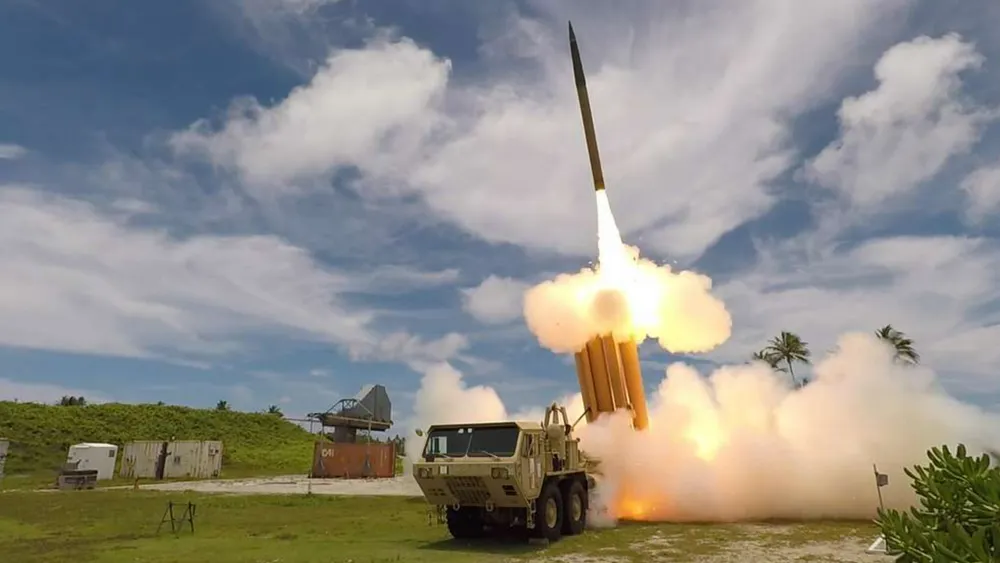
Before the latest pause in bombing, Gen. Dan Caine told a White House meeting that interceptors available to CENTCOM were running out. It was the second time in recent weeks the Chairman of the Joint Chiefs had raised the stockpile concern during a military options discussion with the president. On Tuesday, CNN confirmed what Caine was measuring: the US military has burned through nearly four-fifths of its THAAD missile interceptor inventory since February 28. It has used more than half of its Patriot interceptors. The Pentagon entered the Iran war with 452 THAAD missiles and approximately 2,200 of its most modernised Patriot variants. Nearly four-fifths of the THAAD stockpile is gone. Fewer than 827 Patriots remain. Each interceptor costs millions of dollars. Both take years to produce.
The White House spokesperson said this week that the US military 'has more than enough munitions, ammo, and stockpiles to serve all of President Trump's strategic goals and beyond.' Caine told senators last week that without the additional funding the Pentagon is requesting, the military 'will not get the munitions it needs.' Trump said the inventories are 'in very good shape.' Trump has also requested $67 billion in supplemental defence funding, a substantial portion of which is to replace the munitions the Iran war has consumed. These statements were all made by people who had access to the same inventory report. Some were more accurate than others.
The most specific operational consequence of the depletion has gone largely unreported. CNN confirmed this week that US commanders are now choosing which Iranian projectiles to intercept and which to let through. Commanders are opting not to shoot down Iranian missiles and drones on track to hit unpopulated areas of US military bases — specifically to conserve interceptors for projectiles that would hit populated or critical areas. American military bases are being struck by Iranian missiles that the US has decided not to intercept. The decision is not incapacity. It is triage. The interceptors are too valuable to use on empty ground.
The Center for Strategic and International Studies, whose July 27 report the Pentagon sources confirmed was close to internal government figures, offered the most direct assessment of what the depletion means: 'Diminished stockpiles may force the United States and its coalition partners to take more risks with interceptions. There are no good alternatives to Patriot and THAAD for ballistic missile defense.' The replenishment rate makes the timeline clear: the Pentagon is currently receiving roughly 15 new Tomahawks and 20 new Patriot missiles per month. At that rate, rebuilding THAAD inventories to pre-war levels will take three or more years. The war consumed them in five months. The retired Marine Corps colonel who led the CSIS analysis went further. Continued fighting with Iran, he told CNN, could deplete stockpiles to the point where the US military's ability to fight a future war with China or North Korea would be compromised. The war launched to prevent one nuclear threat has consumed the principal defensive instruments with which the United States would respond to three others.
Gulf allies have also raised concerns. Countries hosting US military bases — the same countries that have been intercepting Iranian missiles aimed at their own infrastructure — are watching the interceptor supply deplete and asking what happens when it runs out. 'The lack of interceptors means that conventional attacks can backfire if the suicide drones start making it through en masse,' one source familiar with the stockpile concerns told CNN. The sentence is precise. If Iran launches enough simultaneous projectiles, the US and its allies can no longer guarantee that all of them will be stopped. The mathematics of the depleted inventory is not theoretical. It is operational.
The war that was going to be over in two to three weeks (Trump, April 1) and has cost $37.5 billion (Hegseth, July 21) has burned through nearly four-fifths of America's THAAD interceptors and more than half of its Patriots. The Defence Department has accelerated production — new deals for Patriot and THAAD rocket motor manufacturing were signed this week. But analysts say it will take three or more years to rebuild the THAAD inventory to pre-war levels. The war consumed it in five months.
Dangerously low. That is what the commanders called it in the White House meetings. More than enough. That is what the spokesperson said in public. Both used the same numbers. Only one described them accurately.