Somewhere in India, a woman applies for a microloan. The algorithm processes her file in seconds. It reads her transaction history, her location data, her social network, the postal code she lives in and the device she used to apply. It returns a decision. She does not know how it was reached. The institution that deployed it may not know either. The machine has spoken with authority. Whether it has spoken with understanding is a different question, and nobody in the room is authorised to ask it.
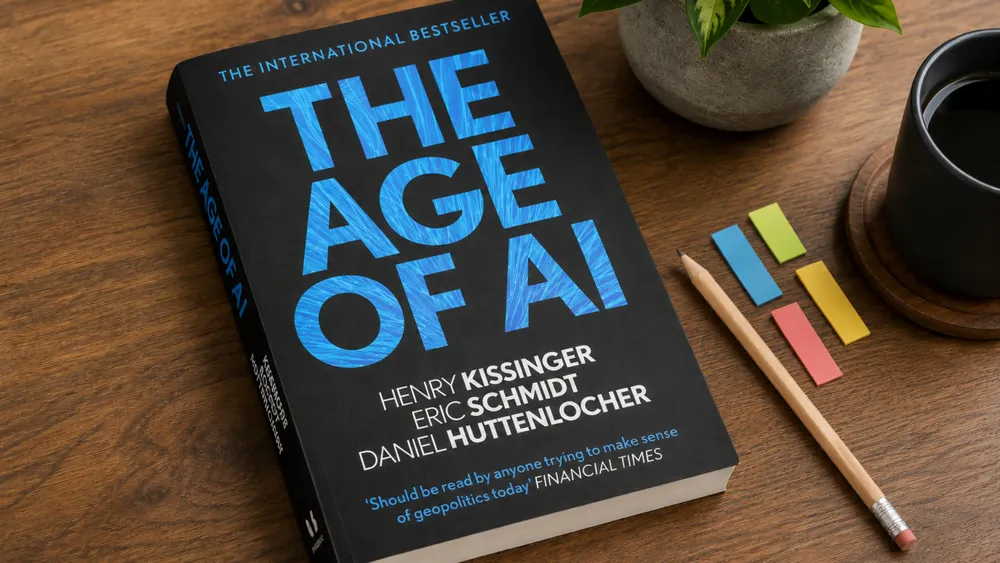
This is the human future that the late Henry Kissinger, Eric Schmidt and Daniel Huttenlocher have written a serious and important book about. It is also, almost entirely, the human future they have not written about. The Age of AI is alert to the civilisational stakes of artificial intelligence. It is less alert to the civilisational inequality embedded in how those stakes will be distributed. The gap between what the book sees and what it cannot bring itself to look at is where its most significant limitation lives.
Begin with what the book gets right, because it gets important things right. The central argument is not that AI is a more powerful calculator. It is that AI enters the human chain of knowledge. It produces conclusions, classifications and recommendations that humans may act upon without fully understanding how the machine reached them. When a system’s reasoning cannot be inspected, authority shifts. Not merely technical authority. Epistemic authority. The authority to say what is true, what is likely, what is safe, what is risky, who qualifies and who does not. That is a civilisational change, and the book is genuinely alert to it.
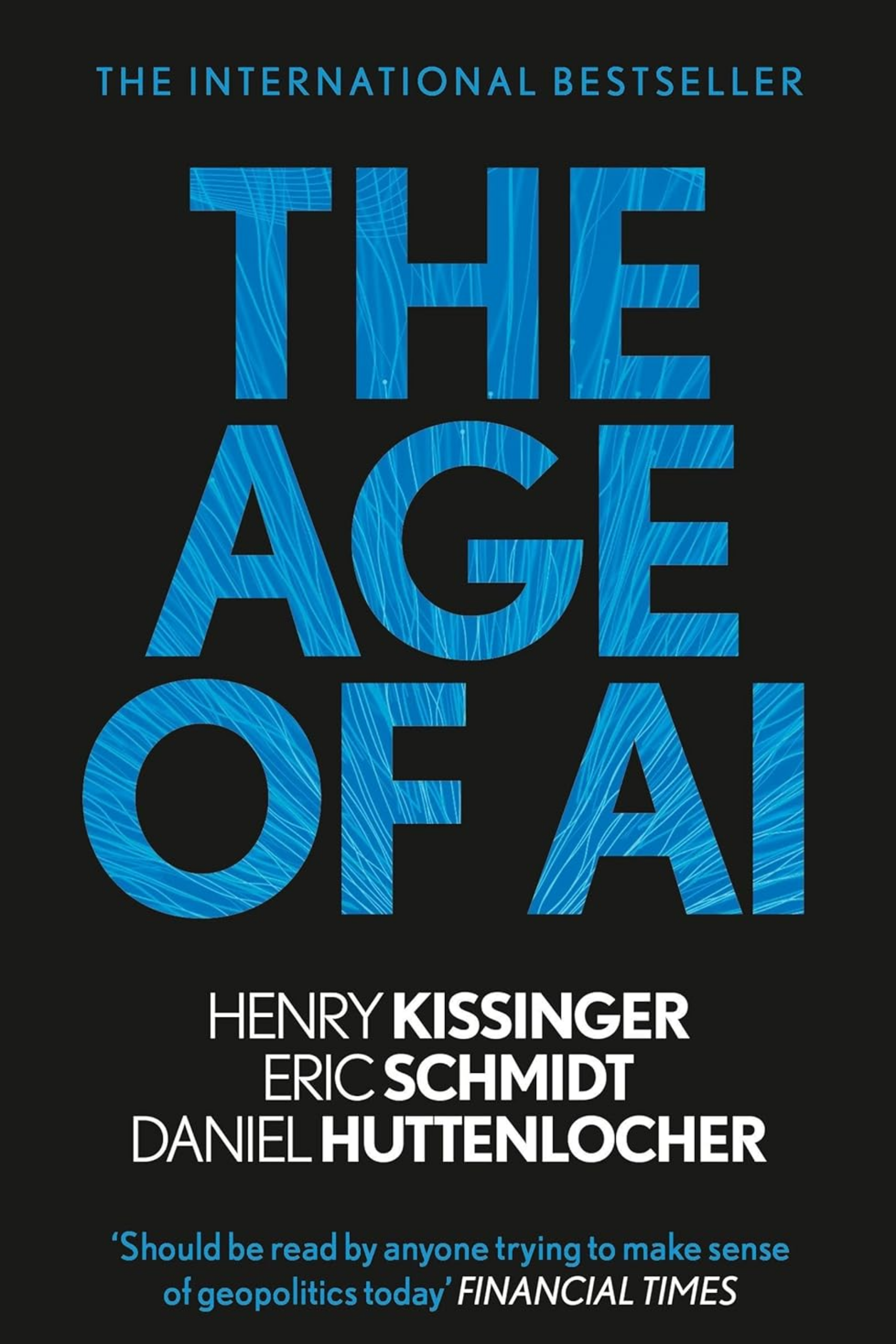
Its concern is not only operational risk, but the deeper question of what happens when a non-human intelligence begins to participate in the production of knowledge. The book moves across AI’s implications for discovery, strategy, network platforms, security, governance and human identity. Its proposed answer lies in stewardship, institutional adaptation, international dialogue and safeguards that preserve human agency.
Kissinger brings the instinct of the strategist: AI will alter the balance of power between states in ways that existing diplomatic frameworks cannot contain. Schmidt sees it through the technologist’s lens: scale and innovation will outpace regulation, and institutions must adapt or become irrelevant. Huttenlocher, as the computer scientist and inaugural dean of MIT’s Schwarzman College of Computing, locates the deepest disruption at the level of epistemology rather than operations. Together they produce an argument that is serious, historically grounded and genuinely unsettling, at least within the world the authors have always inhabited.
That world is the problem. Kissinger, Schmidt and Huttenlocher are men accustomed to systems being governable. Their fear of AI is real, but it is the fear of insiders who still believe that the right summit, the right commission, the right strategic doctrine and the right elite vocabulary can contain the disruption. They see the need for stewardship. They imagine stewards who look very much like the people already sitting near the controls. The book asks how humanity governs AI. It does not sufficiently ask which humans have been authorised to speak for humanity.
This is not a criticism of bad faith. The authors are not cynics performing concern. The sharper criticism is that proximity to power shapes imagination in ways that are difficult to see from inside. The governing subjects of this book, humanity, leaders, societies, policymakers, states, sound universal. They are not. They hide hierarchy. They assume a kind of political subject that does not exist in equal measure across the world the book claims to address.
The blind spot that reveals all the others is linguistic inequality. A world governed by AI will not merely privilege countries that own the chips, the platforms and the cloud infrastructure. It will privilege languages, idioms, archives and ways of reasoning that are already dominant in the machine’s training environment. Most of the world’s languages are data-poor. Most of the world’s knowledge traditions are not well represented in the corpora that train the systems now being deployed everywhere. The machine will process, classify and decide in idioms shaped by a fraction of humanity, then present its conclusions to the rest as objectivity.
For an Indian reader, this is not an abstract concern. India is not outside the AI revolution; it is being absorbed into it at speed. English-speaking elites will use AI as amplification, a co-pilot that extends their reach and accelerates their output. The poor, the vernacular speaker, the person whose life is recorded in weak data and bureaucratic fragments, will encounter it differently. For them it arrives as a loan decision, a welfare eligibility check, a policing risk score, a migration screening or an employability assessment that does not know how to read a life lived outside the dominant data environment. The machine will speak with authority. It will not necessarily speak with understanding.
This is where The Age of AI most clearly shows the limits of its vantage point. The book worries about humanity. That is a grand word, and it is used with evident sincerity. But the human future will not arrive equally for all humans. AI will not disrupt a level world. It will accelerate an already tilted one. The question is not only how to govern AI. It is whether the governance frameworks being imagined will be built by and for the humans who already hold power, or whether they will be genuinely accountable to those who will be most affected by the decisions AI makes on their behalf.
Kissinger, Schmidt and Huttenlocher recognise that AI may reorder the world. What they do not sufficiently reckon with is that the world being reordered was already unjust. That omission is not incidental to the book’s argument. It is structural. The book’s solutions, international agreements, institutional adaptation, elite stewardship and strategic doctrine, are precisely the instruments that have historically managed global disruption in ways that protected existing hierarchies while appearing to address universal concerns. There is no reason to assume AI governance will be different, and the book offers no serious argument for why it would be.
None of this makes The Age of AI dispensable. The strategic and epistemological arguments are genuinely valuable. The book thinks seriously about a hard problem, and it largely succeeds on its own terms. Read it for what it understands: the depth of the epistemic shift, the inadequacy of existing regulatory frameworks, the urgency of the moment. Then read it against itself. Ask who is missing from the conversation it imagines. Ask whose future is being planned without their presence in the room.
The disturbing argument that The Age of AI approaches but does not quite make is this: beyond challenging human reason, AI can industrialise deference. It can make obedience look like objectivity. The woman waiting for the algorithm’s verdict on her loan application already knows this. The book that claims to speak for her future has not yet found a way to hear her.
This Book Review is free to read. Future Book Reviews will be available to registered DiploPolis members first. Free registration takes 30 seconds. No credit card required.
Find this piece interesting?
Dispatches by DiploPolis delivers sharp analysis and pointed commentary on power, politics, diplomacy, and world affairs — directly to your inbox.
No neutrality. No noise. Just argument.