Most geopolitics reading lists are written from the same place: a think tank office in Washington or London, by someone whose implicit question is what the great powers should do next. The books they recommend reflect that vantage point. They explain American strategy, Chinese ambition and Russian calculation with precision and authority. They are less useful for a reader who wants to understand how the world looks from Nairobi, Mumbai, Doha or Jakarta — from inside the system rather than at its controls.
This list is built from a different question: what do you need to read to understand how power actually works, regardless of where you sit in the international order? The ten books below were chosen because each one teaches something the standard list does not. Some are classics that have earned their place through sustained accuracy. Some are recent enough to speak directly to what happened this week in the Strait of Hormuz and the Red Sea. All of them will make you a more precise thinker about the events DiploPolis covers every day.
They are arranged not by rank but by the order in which you should read them: from the structural to the specific, from the framework to the detail.
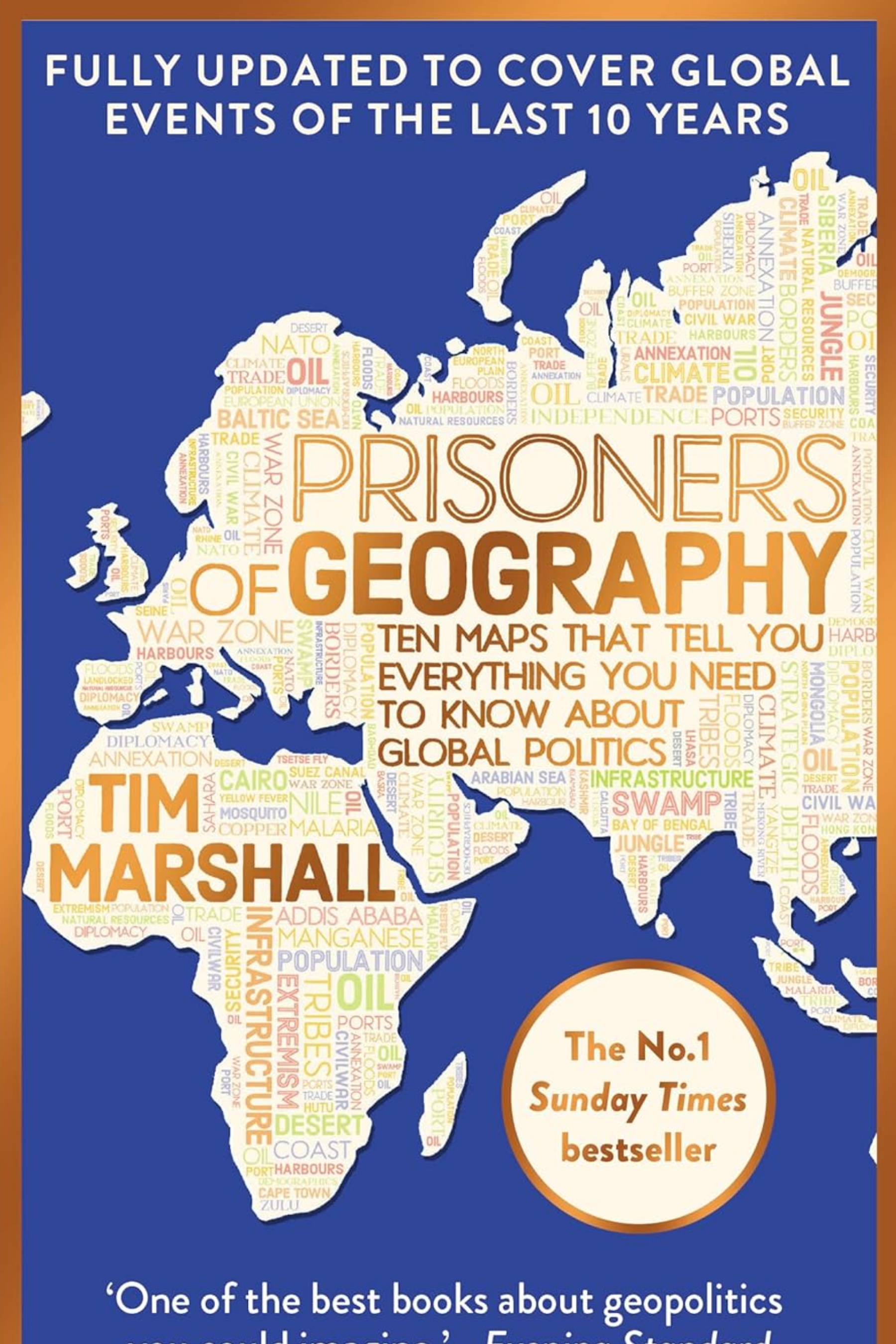
Prisoners of Geography – Tim Marshall (2015)
Start here. Before strategy, before economics, before ideology — geography. Marshall's argument is simple and important: the physical shape of the world constrains what states can do more than any leader's intentions or any policy document's ambitions. Mountain ranges, rivers, warm-water ports, chokepoints, landlocked borders — these are not background to geopolitics. They are geopolitics.
Marshall writes as a foreign correspondent, not an academic, which means the book is readable in a way that most geopolitics texts are not. Each chapter takes a region and shows how its geography has shaped its history, its conflicts and its strategic options. Russia needs warm-water ports and will do almost anything to secure them. China's eastern coast has no natural defensive depth. The Indian subcontinent is bounded by the Himalayas on one side and the Indian Ocean on the other, which explains both India's strategic autonomy and its persistent security anxiety.
The chapter on the Middle East is the one to read first if you are following the Iran war. The Strait of Hormuz is twenty-one miles wide at its narrowest point. That geography did not change when the US-Israel strikes began in February. It will not change when the war ends. Marshall explains why this matters and why no amount of military power can make geography irrelevant.
Read this if: You want to understand why Hormuz, Bab el-Mandeb and the South China Sea keep appearing in every geopolitical crisis.
Its limitation: Marshall's framework is deterministic. The book is weaker on how states sometimes overcome their geographic constraints through diplomacy, technology or institutional creativity.
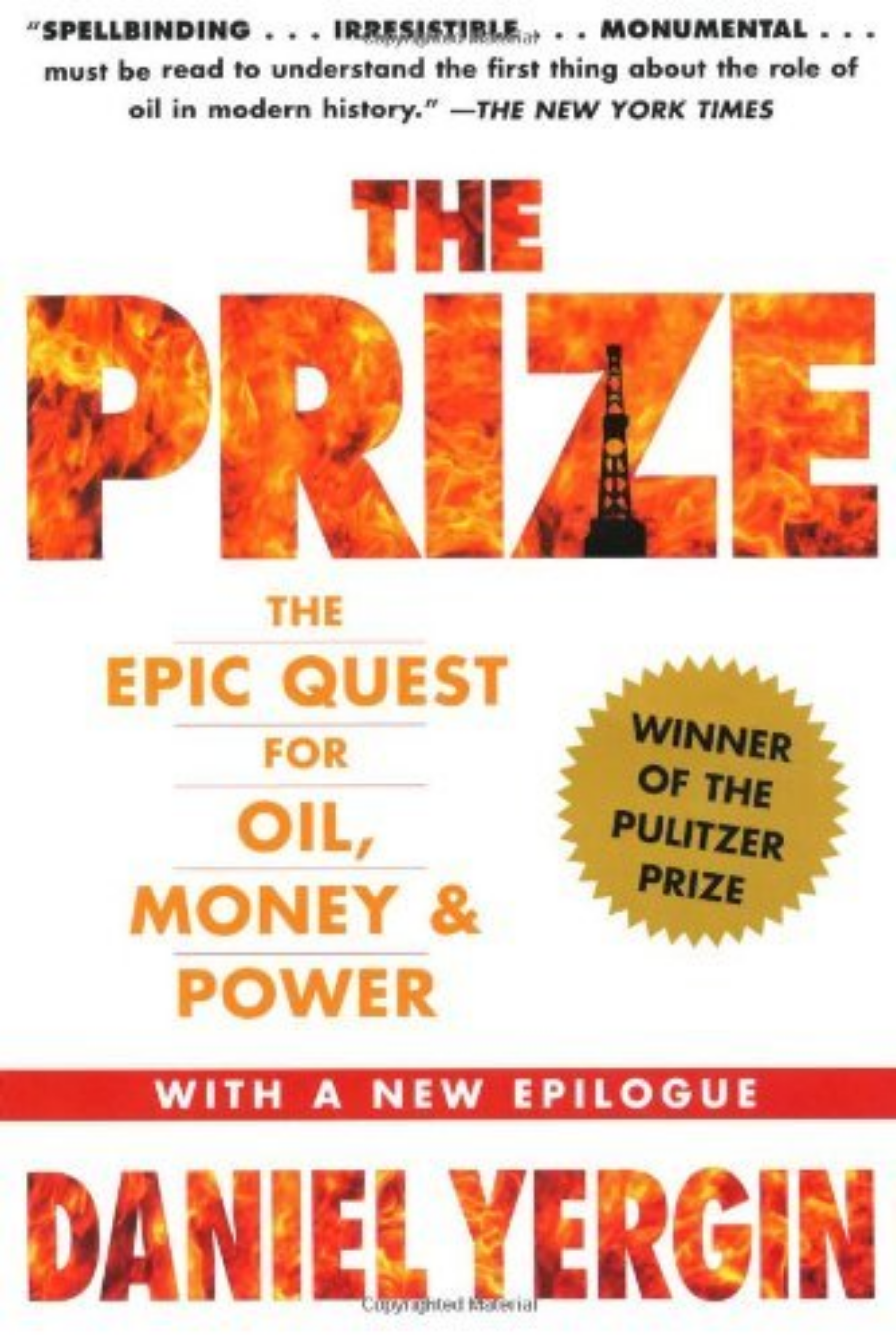
The Prize: The Epic Quest for Oil, Money and Power – Daniel Yergin (1991)
Thirty-five years old and more relevant than anything published this year about energy. Yergin's history of the oil industry is the background document for the entire Hormuz crisis. Every decision being made in Washington, Tehran, Riyadh and Beijing about the Strait of Hormuz connects to the structure Yergin maps across eight hundred pages: how oil became the instrument of geopolitical power in the twentieth century, why the Gulf became the centre of that power, and why the dependence on a single narrow maritime corridor was created and why it cannot be easily dismantled.
The book covers the discovery of oil in Pennsylvania, the rise of the Standard Oil empire, the transformation of the British Navy from coal to oil, the First World War's revelation that mechanised armies run on petroleum, the scramble for Middle Eastern concessions between the wars, the Second World War's dependence on Allied access to oil, the postwar creation of the Gulf state system and the oil shocks of the 1970s that remade the global economy. By the time you finish it, you understand that the Hormuz closure is not an anomaly in the history of oil geopolitics. It is the scenario that the entire postwar energy architecture was designed to prevent.
Yergin received the Pulitzer Prize for this book. It has not dated because the underlying structure it describes has not changed. What has changed is that the guarantee is now contested.
Read this if: You want to understand why the Hormuz closure matters beyond the immediate military conflict.
Its limitation: Yergin is a consultant to the energy industry and his sympathies occasionally show. The book is less useful on the political economy of oil from the producing countries' perspective.
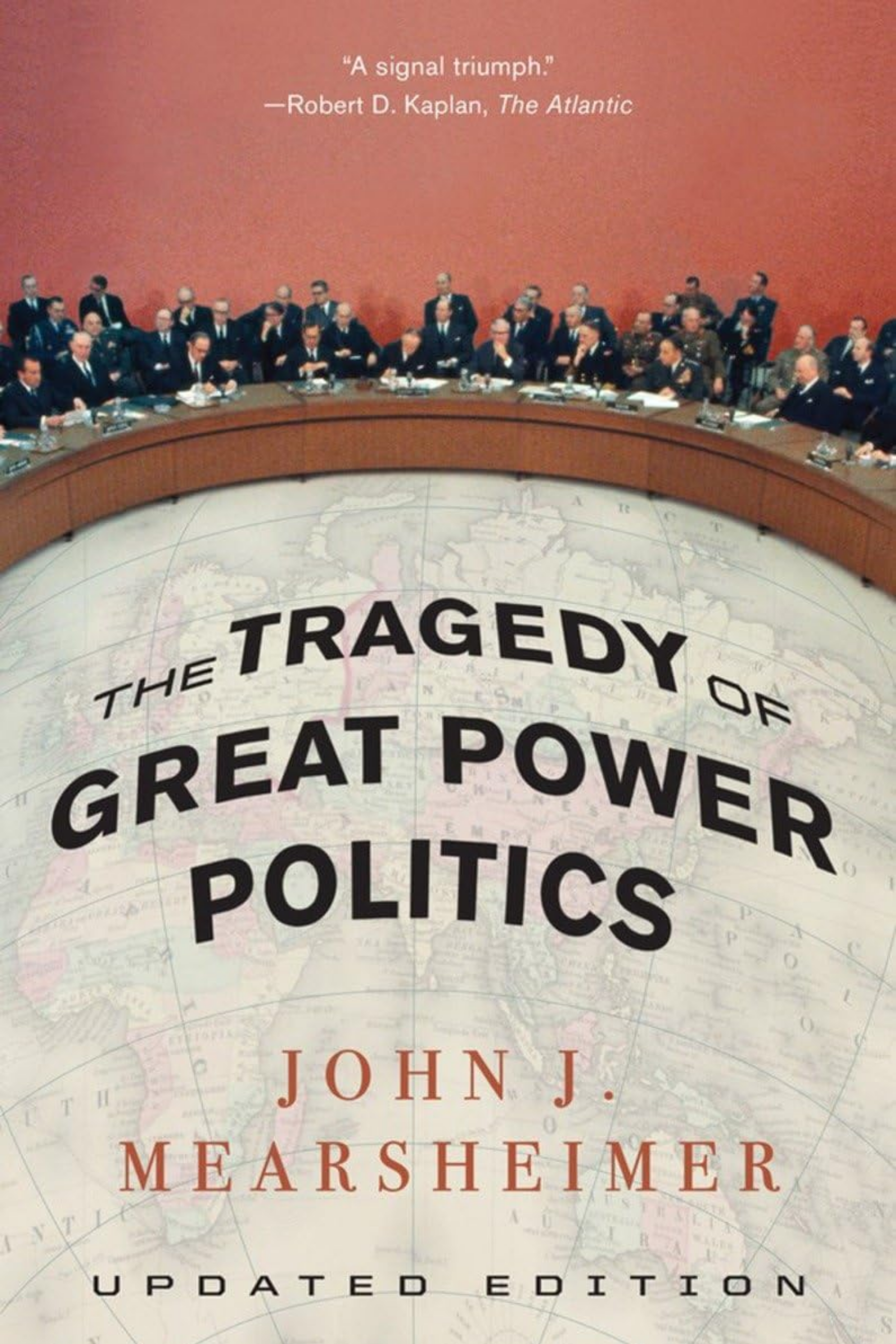
The Tragedy of Great Power Politics – John Mearsheimer (2001)
The uncomfortable book on this list. Mearsheimer's offensive realism argues that the international system produces great power competition regardless of intentions, ideologies or institutions — that states pursue power because the anarchic international system gives them no choice, and that periods of cooperation are temporary accommodations within a permanent competition. The moral framework of international law, in Mearsheimer's account, is a constraint that operates only when great powers find it convenient.
DiploPolis does not endorse Mearsheimer's framework as a description of what should happen. We include this book because it is, watching the Iran war unfold, the most accurate descriptive theory available for what does happen. The ICJ provisional measures did not stop Israeli operations in Gaza. The UN Security Council resolutions were vetoed. The G7 communiqués were disregarded. The ICC arrest warrants sit unexecuted. Mearsheimer would not be surprised by any of this.
Read Mearsheimer not to accept his argument but to understand its explanatory power. Read him alongside Acharya, who comes later in this list, to understand what the framework misses about the parts of the world that are not great powers.
Read this if: You want to understand why the moral case for international law keeps losing to the strategic calculation of great power interest.
Its limitation: Mearsheimer's framework is almost entirely focused on great powers. It has very little to say about how smaller states navigate the system he describes, which is where most of the world's population lives.
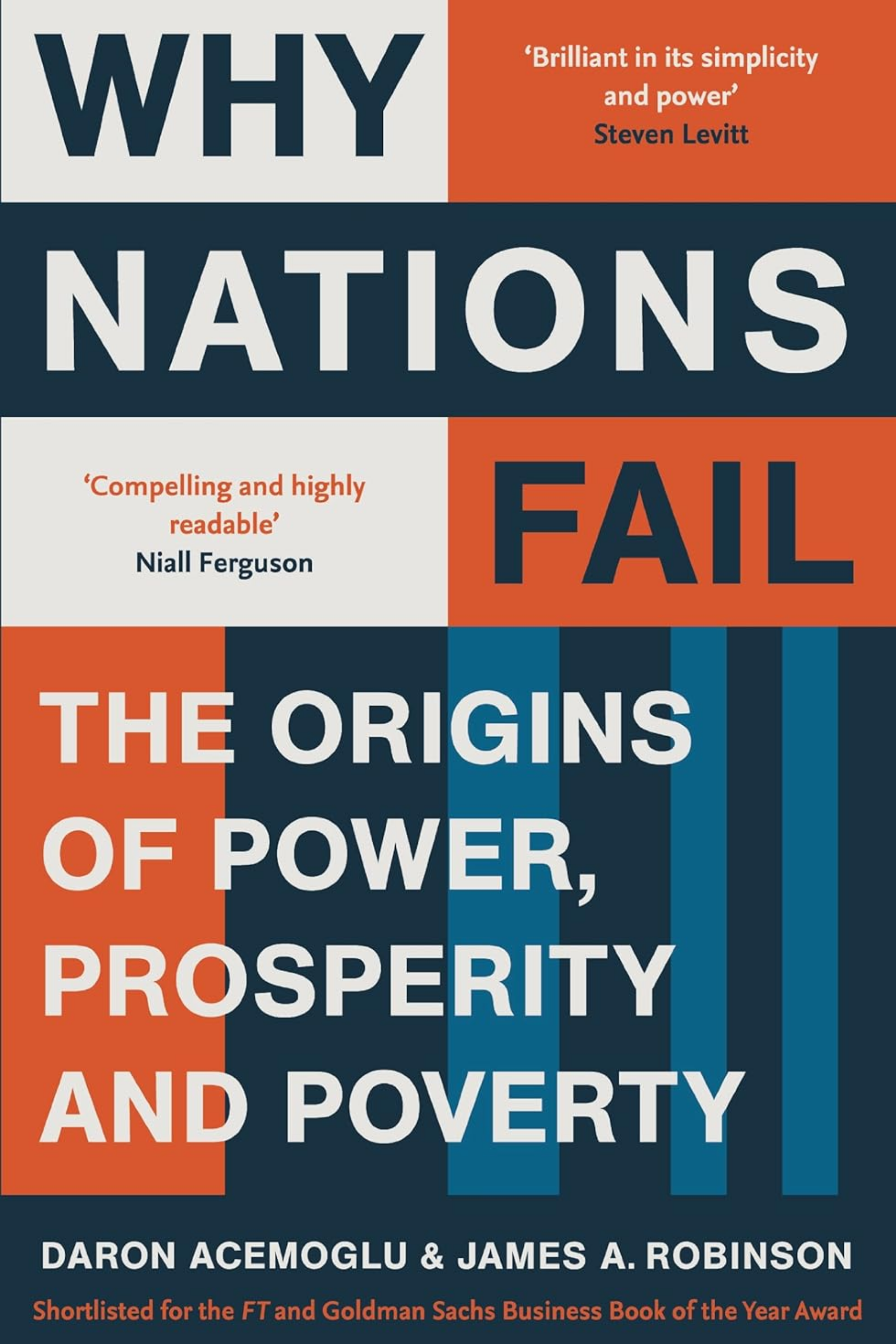
Why Nations Fail – Daron Acemoglu and James Robinson (2012)
The institutional argument for why the same external pressure produces regime collapse in some states and adaptation in others. Acemoglu and Robinson's central claim is that the difference between prosperous and failing states is not geography, culture or natural resources but the quality of their institutions — whether they are inclusive, distributing power and opportunity broadly, or extractive, concentrating power in the hands of a narrow elite.
The Iran sanctions case is a live test of their thesis. Iran has been under comprehensive sanctions since 1979. Additional layers were imposed after 2012, after 2018 and after 2024. The country's economy has contracted severely. And yet the Islamic Republic has not collapsed. Acemoglu and Robinson's framework suggests an answer: extractive institutions are in some ways more durable under external pressure than inclusive ones, because the elite who control them have both the incentive and the means to prevent the kind of organised political opposition that would displace them.
The book is also essential for understanding why the post-war order in the Middle East is unlikely to produce the democratic transformation that Western policymakers consistently predict. Institutions do not change because external pressure is applied. They change when the internal distribution of power shifts.
Read this if: You want to understand why sanctions rarely produce regime change and why post-conflict reconstruction so often fails.
Its limitation: The book's case studies are heavily drawn from Africa and Latin America. Its application to the Middle East and South Asia requires the reader to do additional work.
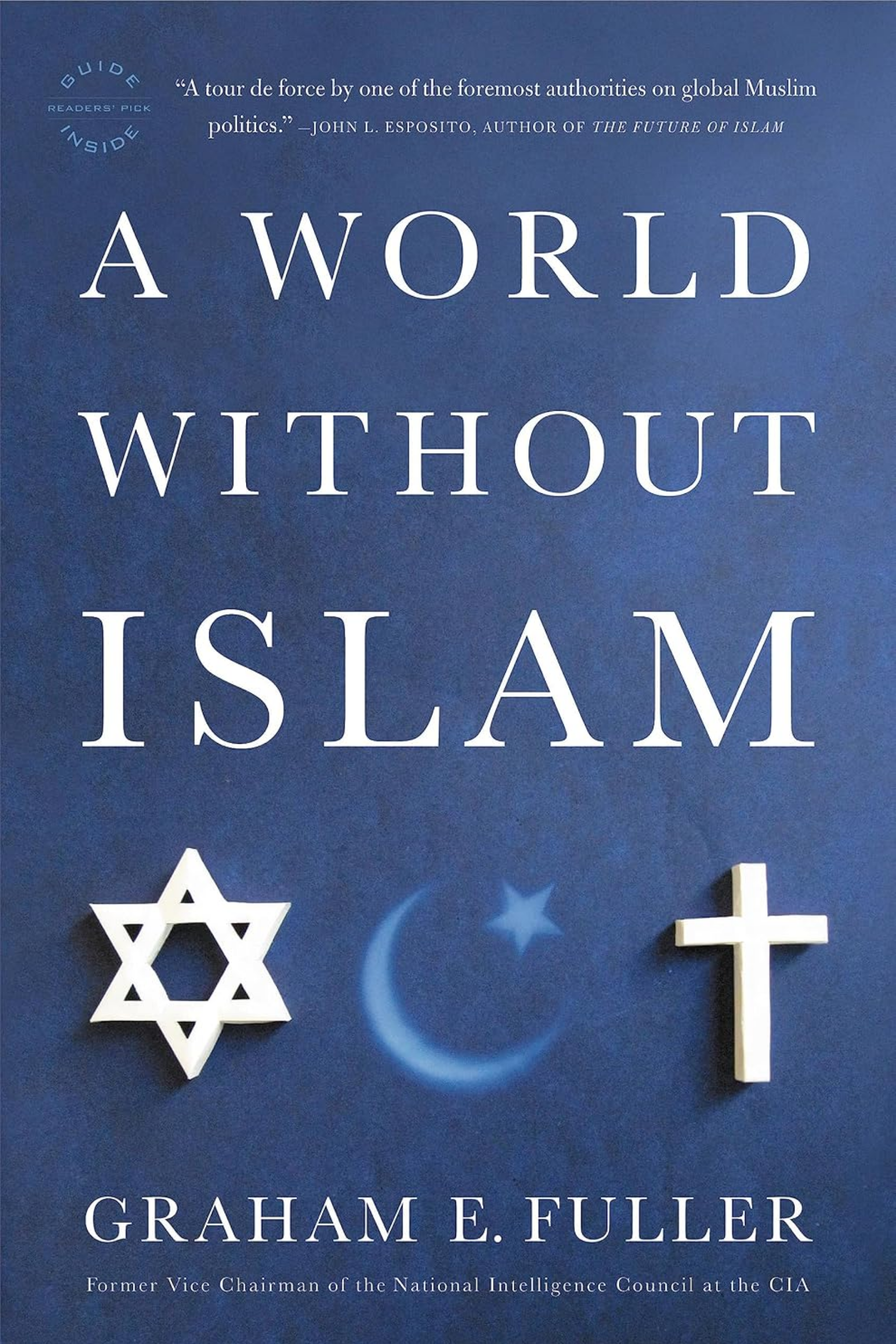
A World Without Islam – Graham Fuller (2010)
The most important counter-factual on this list. Fuller — a former CIA station chief in Kabul and former vice chairman of the National Intelligence Council — asks a simple question: if Islam had never existed, would the Middle East be more peaceful? His answer, argued across three hundred pages of careful historical analysis, is no.
The conflicts associated with political Islam — resistance to external domination, competition over resources, the struggle for sovereignty, the rejection of a subordinate position in a Western-led international order — predate Islam by centuries and would have expressed themselves through other frameworks had the religion not existed. Fuller's argument is particularly important for readers following the Iran war because it reframes the conflict. The Islamic Republic is not fighting to impose religious law on the world. It is fighting to preserve its sovereignty against what it understands as a long history of external domination.
The root cause is the same one that drove Iranian nationalism in 1951 when Mohammed Mossadegh nationalised the Anglo-Iranian Oil Company, decades before the revolution. The religious framing is genuine but it is not the primary driver. Understanding this distinction changes how you read every statement from Tehran.
Read this if: You want to understand the Iran war as a geopolitical conflict rooted in sovereignty and history rather than primarily a religious one.
Its limitation: Fuller's argument sometimes smooths over genuine theological and political differences within Islam that do matter for understanding specific conflicts.
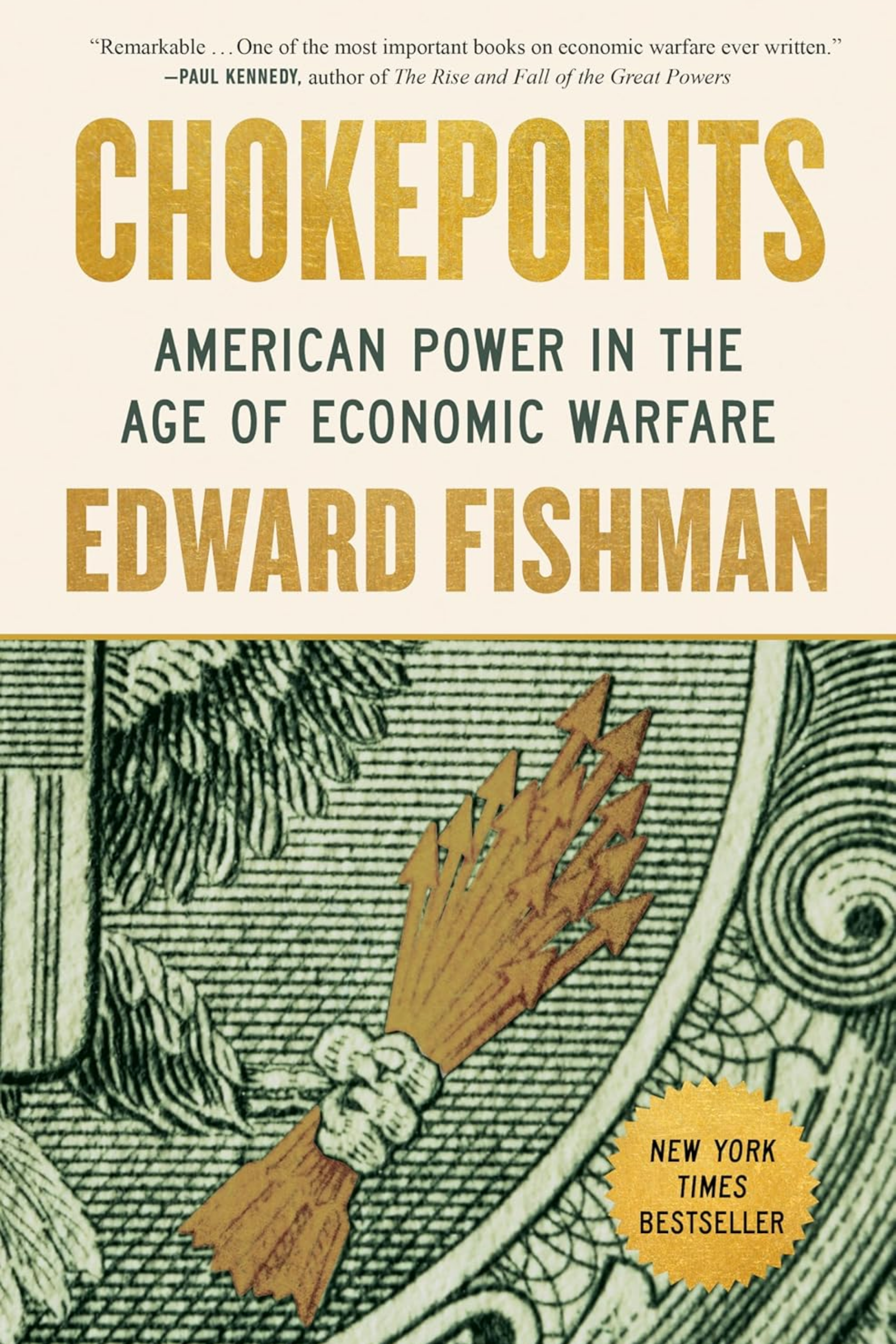
Chokepoints: American Power in the Age of Economic Warfare – Edward Fishman (2025)
The most important new geopolitics book in a decade and the one most directly relevant to the events DiploPolis has covered this week. Fishman — a former senior official at the US State Department and Treasury with direct experience designing sanctions — explains how the United States transformed the architecture of globalisation into a weapon system. Control over economic chokepoints: the US dollar, advanced semiconductor technology, critical minerals, energy supply chains — became the key instrument of American power in the twenty-first century without firing a shot.
The book is essential for three reasons. First, it explains why the Rubio toll reversal happened so quickly: Trump discovered that charging money for Hormuz passage was economically destructive to the Gulf states whose investment he needed, which is exactly the kind of chokepoint logic Fishman maps. Second, it explains why Iran has proved so difficult to defeat economically despite decades of sanctions. Third, and most important for the DiploPolis reader, Fishman is honest about the system's limitations: overuse of economic chokepoints accelerates the very fragmentation it is meant to prevent.
The Economist, Financial Times and Bloomberg named it a book of the year. The LSE called it a substantial, policy-driven and accessible analysis of economic statecraft. Paul Kennedy called it one of the most important books on economic warfare ever written.
Read this if: You want to understand why the global economy is the real battlefield of the twenty-first century and how chokepoint control shapes every conflict you are reading about.
Its limitation: Fishman writes from inside the American system. The book is less analytical about how the targets of American economic warfare have adapted and developed countermeasures.
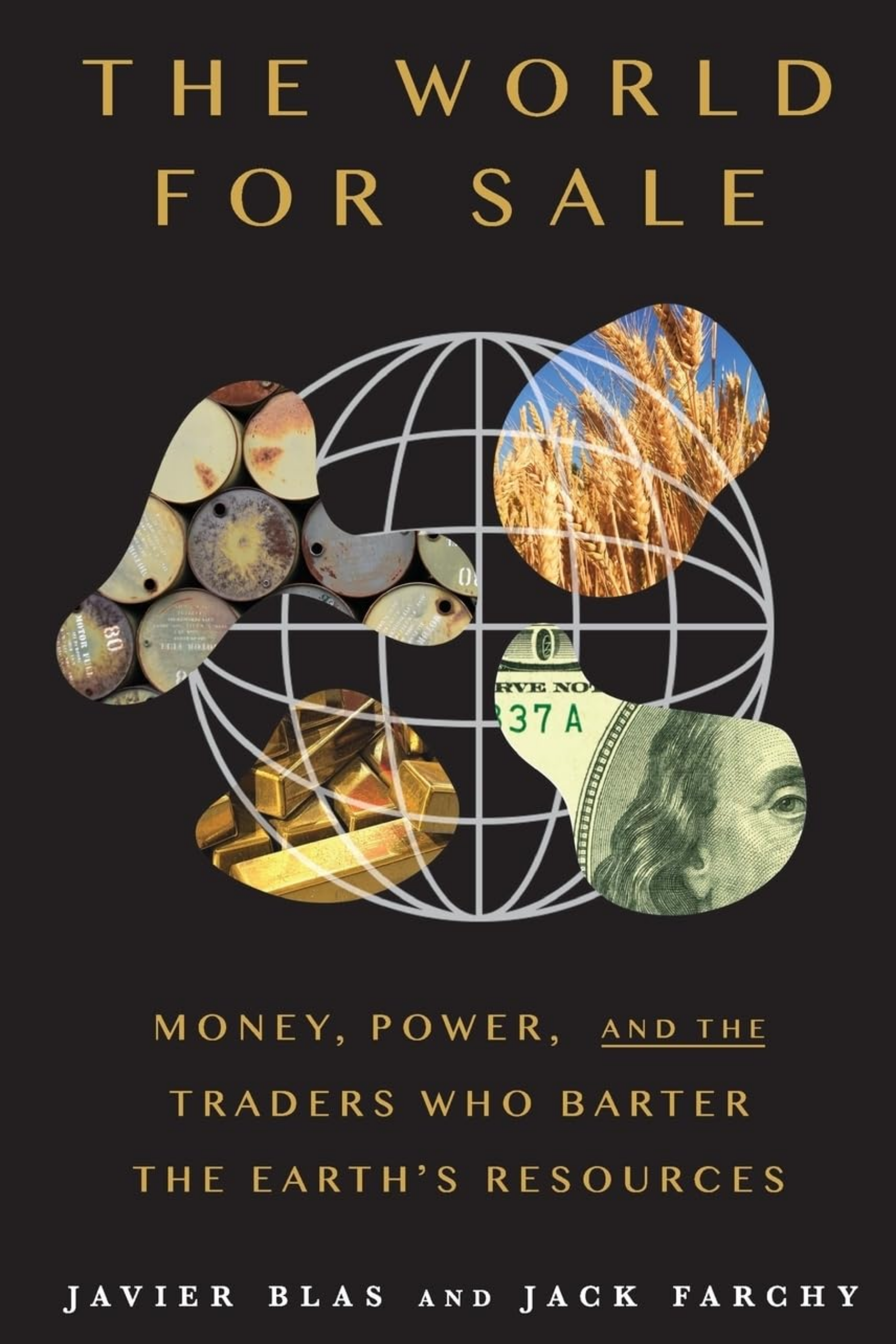
The World for Sale – Javier Blas and Jack Farchy (2021)
The book that answers the question nobody asks loudly enough: who actually makes money from geopolitical disruption? Blas and Farchy — both Bloomberg commodity journalists — take the reader inside the commodity trading houses that sit between oil producers and oil consumers: Vitol, Trafigura, Glencore, Gunvor, Mercuria. These companies move the physical commodities that states fight over, and they profit from every disruption, shortage and crisis that makes prices volatile.
The book is not a polemic against commodity trading. It is a reported account of how the industry works, who runs it and what role it plays in the geopolitical events that most analysis treats as purely political. When Iran's oil was under maximum sanctions pressure in 2019, someone was still moving it — through grey market networks, through ship-to-ship transfers, through shell company chains. When Russian oil became politically toxic after 2022, someone was still buying it at a discount and selling it to India at a margin.
For the DiploPolis reader following the Hormuz closure: the price spike from the closure is generating extraordinary profits for every entity with access to oil stored outside the Persian Gulf. Understanding who those entities are and how they operate is as important as understanding the military situation.
Read this if: You want to understand the economic actors who profit from the conflicts that international relations analysis treats as purely political or military.
Its limitation: The book's most recent period of coverage ends in the early 2020s. The frameworks it provides apply directly to the Iran war but the specific events are not covered.
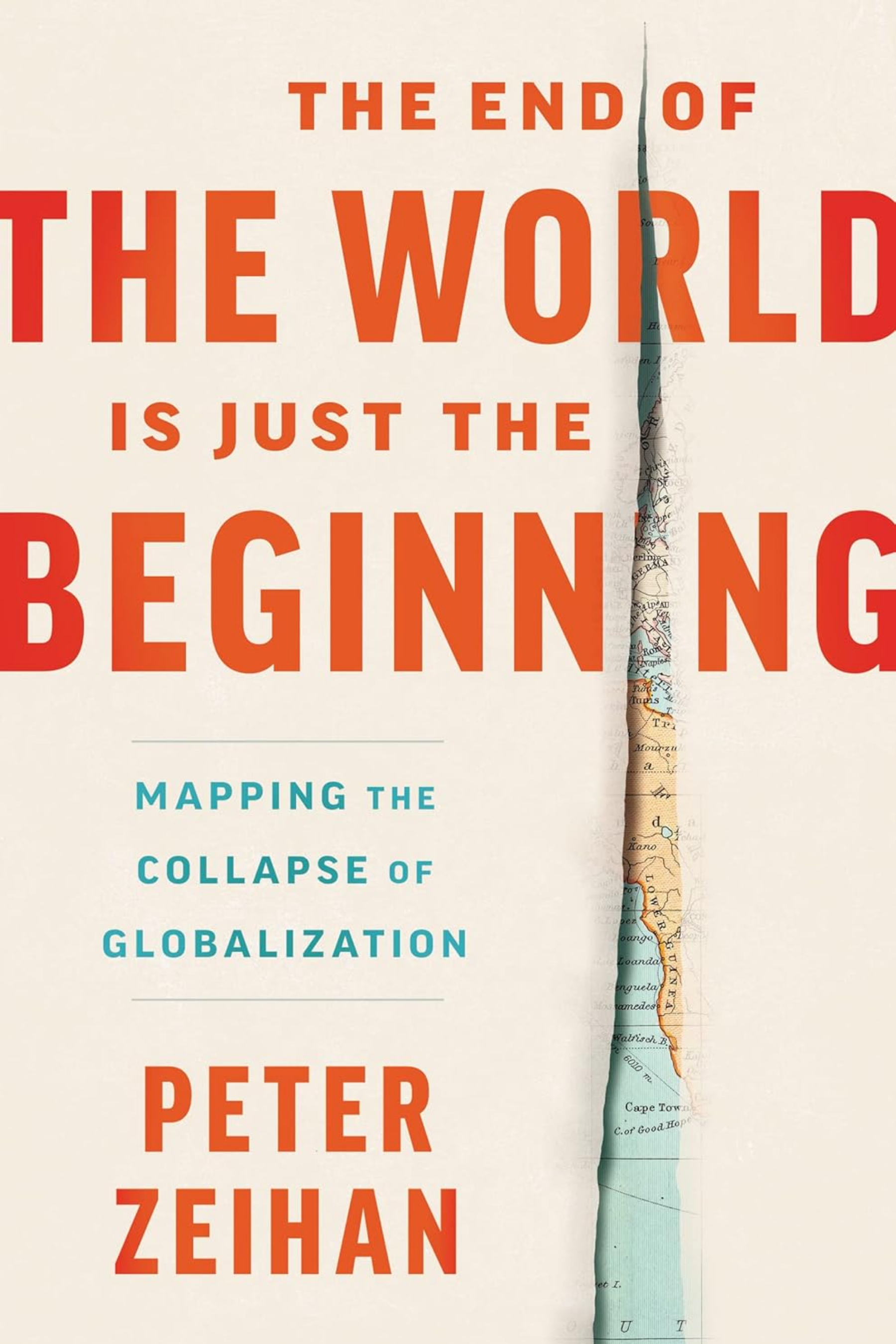
The End of the World Is Just the Beginning – Peter Zeihan (2022)
The most provocative book on this list and the one that requires the most critical reading. Zeihan argues that the era of American-enforced globalisation — cheap shipping, open trade routes, enforced rules — is ending, and that most countries are structurally unprepared for what replaces it. His analysis of deglobalisation, demographic decline and supply chain fragmentation is rigorous and frequently correct. His prescriptive conclusions are aggressively American in their assumptions about who wins and who loses in the transition.
Read Zeihan for his diagnosis, which is sharp. Be cautious about his prescription. The DiploPolis reading asks a different question: what does deglobalisation look like from the Global South? For India, which has spent seventy years building strategic autonomy, the end of American-enforced globalisation is not unambiguously a crisis. For the smaller economies of Sub-Saharan Africa and Southeast Asia that depend on open trade routes and commodity price stability, it is. Zeihan treats these as equivalent. They are not.
The book forces the reader to think about the structural changes that are happening regardless of who is in the White House — the demographic, geographic and logistical forces reshaping the global economy at a pace that political analysis rarely captures.
Read this if: You want to understand the structural forces pushing toward deglobalisation and why the rules-based international order is under pressure that predates Trump and will outlast him.
Its limitation: Zeihan's framework has a pronounced American exceptionalism that distorts his analysis of the Global South. Read him in conversation with Acharya, who follows.
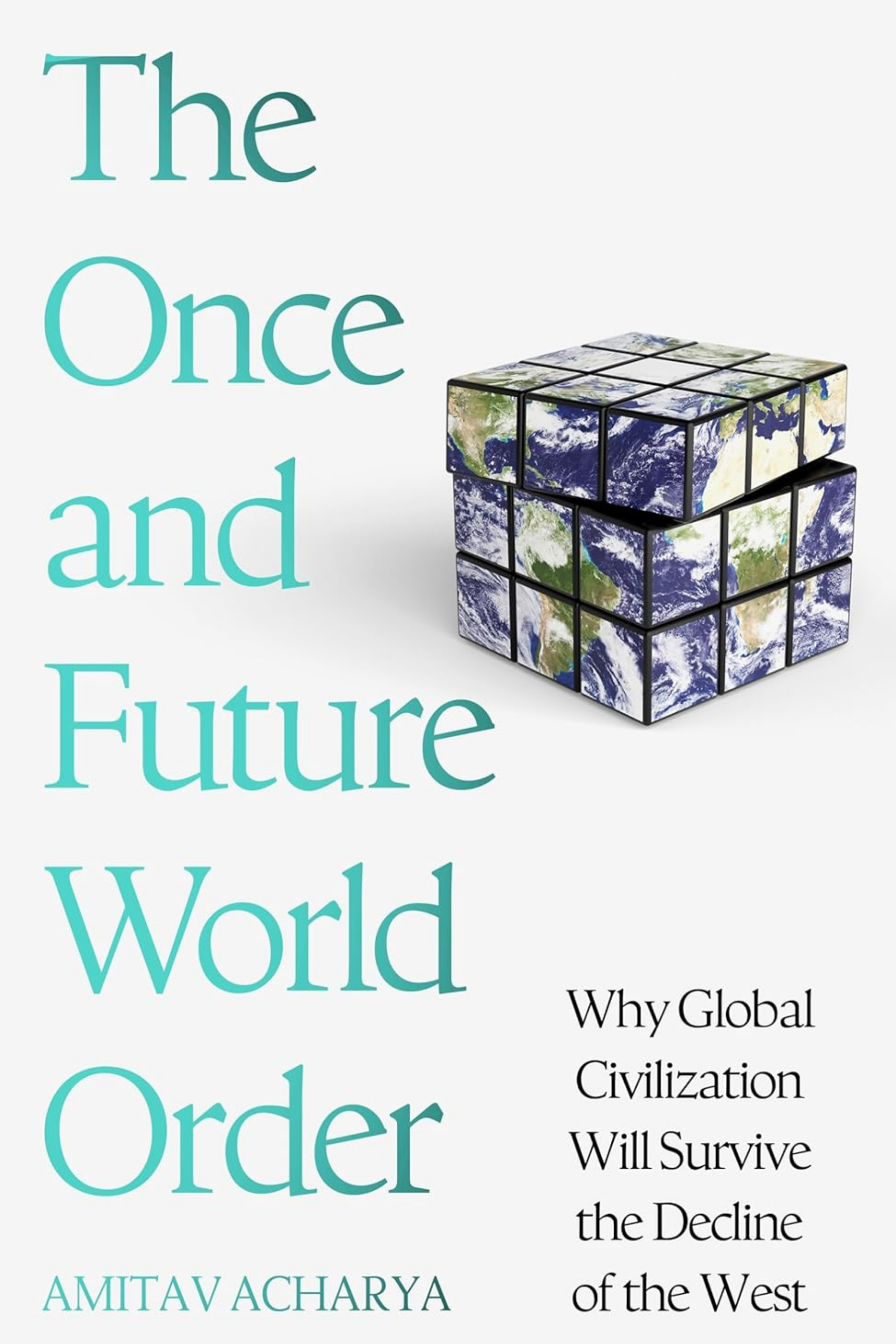
The Once and Future World Order: Why Global Civilization Will Survive the Decline of the West – Amitav Acharya (2025)
The essential corrective to every other book on this list. Acharya — a distinguished professor of international affairs at American University, born in India, who has spent his career working on Global South international relations — argues that the standard story of international order as a Western-built system now under challenge from China is fundamentally wrong. The world is not transitioning from a US-led order to a China-led one. Surveying five thousand years of global history, Acharya shows that world order existed long before the rise of the West — in ancient Sumer, India, Greece, medieval caliphates and Eurasian empires — and that the decline of Western dominance is not the end of order but potentially the beginning of a more equitable one.
The book's multiplex framework is the tool for understanding why the Arab states could move Trump where the ICC could not. They were not operating within the liberal international order's framework. They were operating within a different order simultaneously — one built on Gulf investment, oil flows and bilateral relationships with the American president — and that order had levers that the liberal international order lacked. Acharya's argument is also essential for understanding India's position in the Iran war: abstaining from UN votes, maintaining trade with Iran, deepening ties with the US, refusing to take sides. This is not incoherence. It is the behaviour of a civilisational state that has understood, long before Acharya articulated it, that multiple orders can be navigated simultaneously.
Reviewed in the New York Times, Foreign Affairs and International Affairs. Named one of the top ten books of the year by International Affairs. The most important Global South contribution to international relations theory published in 2025.
Read this if: You want to understand why the Global South's behaviour in great power conflicts consistently defies the binary choices that Western analysis expects.
Its limitation: Acharya's framework is more convincing as a description of how the world works than as a prescription for how states should navigate it. The book is better on diagnosis than strategy.
Small States in World Politics: Explaining Foreign Policy Behavior – Jeanne Hey (ed.) (2003)
The book that most geopolitics reading lists ignore entirely and that practitioners in small and middle powers most need to read. Hey and her contributors examine how states too small to impose their will on the international system navigate great power competition — through hedging, through careful alignment, through niche positioning, through the creative use of international institutions as leverage, through maintaining multiple relationships that great powers would find contradictory.
Qatar is the case study that runs through every other entry on this list. Qatar hosts the largest US military facility in the Gulf. Qatar maintains working relationships with Iran, Hamas and the Taliban. Qatar funds Al Jazeera. Qatar brokers ceasefires between parties that consider each other enemies. Qatar is currently the back-channel through which Washington and Tehran communicate when direct communication becomes impossible. All of this is in Hey's framework: the small state that makes itself indispensable to every party in the system by refusing to be captured by any of them.
Jordan has played a version of the same game for seventy years. Rwanda has played it with extraordinary discipline for three decades. Singapore is the model that every Southeast Asian small state studies. Understanding small state strategy is not a peripheral interest for readers following international affairs. It is central to understanding the Middle East, Southeast Asia and most of Africa.
Read this if: You want to understand how the majority of the world's states actually navigate a system designed by and for great powers.
Its limitation: The academic register is drier than the other books on this list. It rewards patience but does not read quickly.
How to Use This List
Prisoners of Geography first. It takes two days and reframes everything else. Then The Prize if you are following the energy dimension of the Iran war and Chokepoints if you are following the economic warfare dimension. Mearsheimer and Acemoglu-Robinson together build the structural framework for understanding why international law keeps losing to strategic calculation. Fuller provides the historical depth on the Middle East that the news cycle cannot supply. Blas and Farchy and Zeihan cover the economic forces that political analysis tends to treat as background. Acharya and Hey are the corrective that makes the whole list Global South-relevant rather than a Washington reading group's recommendations with a new label applied.
None of these books will tell you what happens next in the Iran war. That is not what books are for. What they will do is give you the frameworks to make sense of what happens, to recognise the patterns behind the events and to read the news with the kind of structural literacy that distinguishes analysis from commentary.
The world is complicated. The books that make it less so are worth more than the ones that make it seem simple.