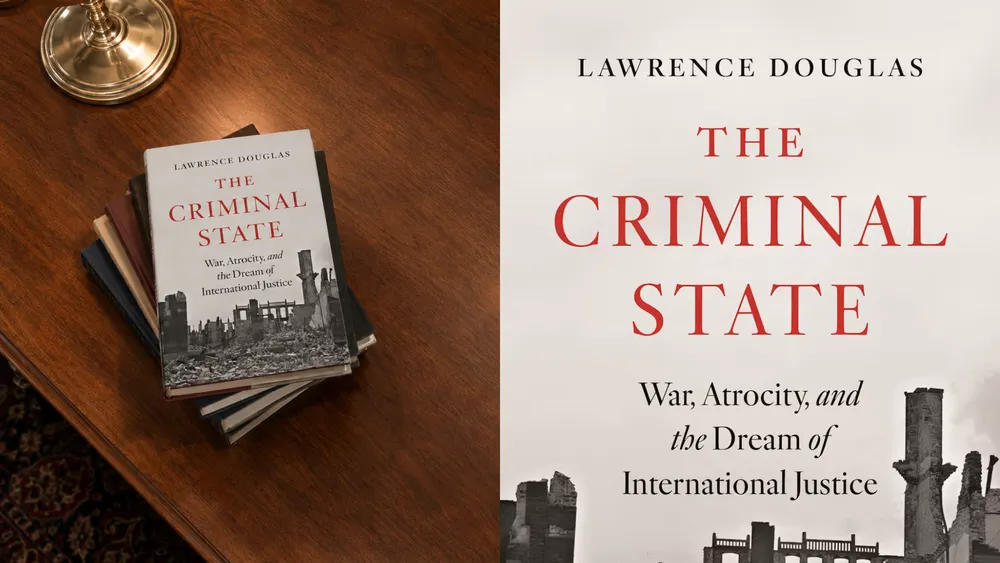
A review of The Criminal State: War, Atrocity, and the Dream of International Justice by Lawrence Douglas
Princeton University Press · 2026
In October 1945, the International Military Tribunal at Nuremberg did something that international law had never quite managed before. It said, in terms that could not be easily unmade, that the state itself could be the criminal. Not merely the soldier who pulled the trigger. Not merely the official who signed the order. The state, its leaders, its apparatus and its sovereign authority, could stand in the dock. That was the dream. Seventy years later, the International Court of Justice issued provisional measures ordering Israel to prevent genocidal acts in Gaza. The measures were binding. The killing continued. The dream, it turns out, has boundaries. The question Lawrence Douglas's important and sombre book forces us to ask is whether those boundaries are a temporary failure of political will, or a permanent feature of what international justice is actually able to do.
Douglas traces the legal imagination's attempt to confront radical state violence across more than a century, from Leopold's Congo through Nazi aggression to Putin's war in Ukraine. The Criminal State is not a work of cynicism. It is something harder to write and more honest to read: a work of tragic faith. Douglas takes the legal project seriously precisely because he understands how badly it has failed. He is interested in how law has tried to name atrocity, pierce sovereignty and hold power accountable, and in why that attempt, despite its spectacular partial successes, has never quite become the permanent architecture of world order that Nuremberg seemed to promise.
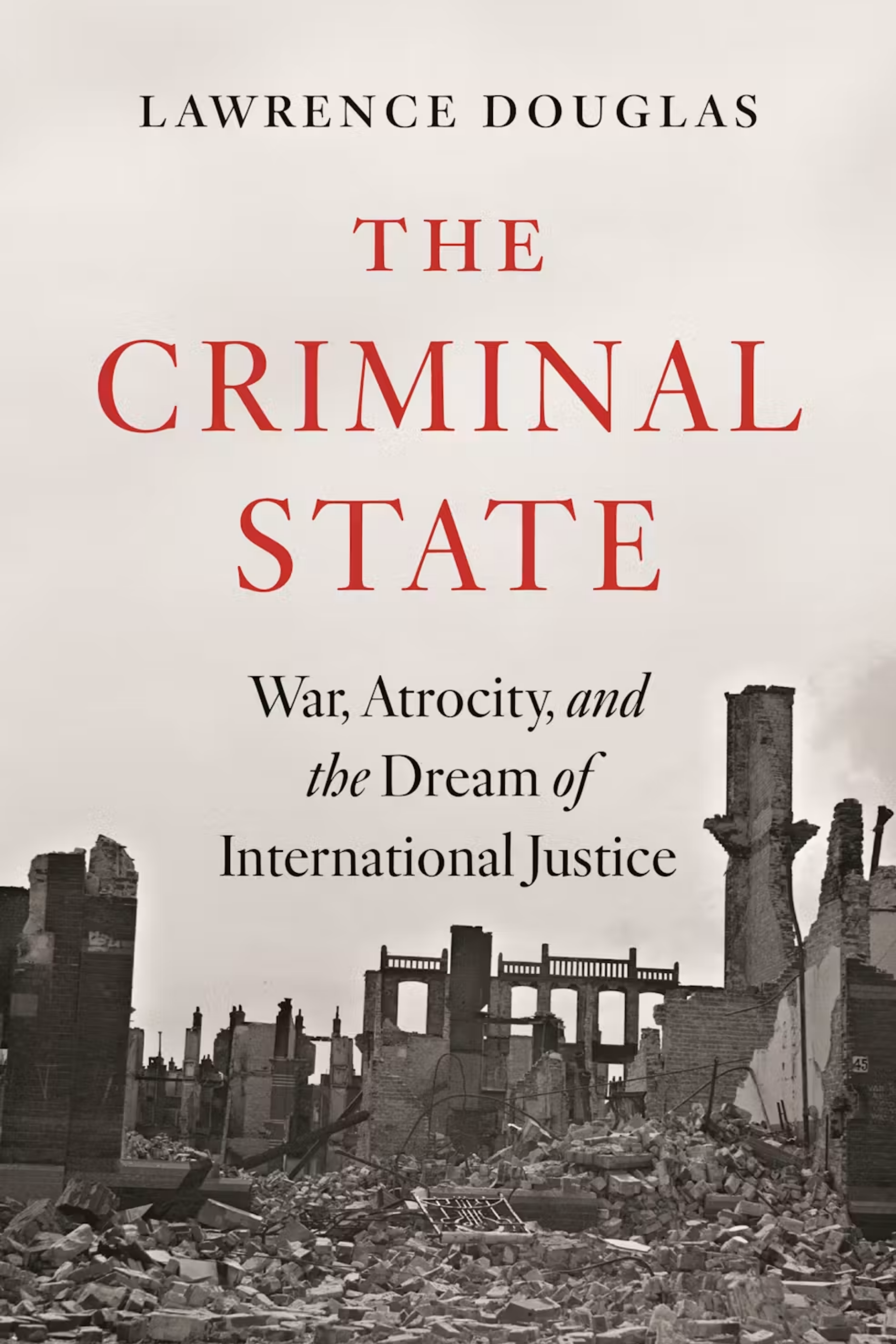
The emotional centre of the book is Nuremberg itself. The tribunal made sovereign criminality legally speakable. It created a vocabulary. It opened a door. What Robert Jackson, the United States Chief Prosecutor, called 'the supreme international crime' was not the massacre or the camp. It was aggression itself — the decision to wage war. 'To initiate a war of aggression,' the tribunal's judgment declared, 'is not only an international crime; it is the supreme international crime differing only from other war crimes in that it contains within itself the accumulated evil of the whole.' That formulation was meant to be the foundation of a new legal order. What followed instead was the structural disappointment that Douglas is too historically serious to avoid. Nuremberg does not become the foundation of a new legal order that disciplines power regardless of who holds it. It becomes a precedent, selectively invoked, feared when inconvenient, narrowed when powerful states are implicated.
Douglas is particularly attentive to what he identifies as the shift from Nuremberg's focus on aggression to what he calls the atrocity paradigm: the gradual narrowing of international criminal accountability from the crime of launching wars to the crimes committed within them. That shift matters more than it might appear. Nuremberg prosecuted the decision to wage war. The International Criminal Court, by contrast, has built its docket almost entirely around atrocities committed within conflicts — war crimes, crimes against humanity, genocide. The architects of wars that kill hundreds of thousands remain largely beyond reach. The commanders who carry out massacres within those wars are more exposed. It is a distinction that has quietly protected the powerful while appearing to advance accountability. The most consequential decisions in modern warfare — the decision to invade, to blockade, to bomb — remain the hardest to prosecute.
There is a phrase in the book that carries more weight than its technical framing suggests: the belatedness problem. Atrocity trials almost always come after. After the dead have been counted. After the displaced have lost everything. After the political conditions that permitted the crime have shifted enough that prosecution becomes possible. Consider the cases that defined international criminal justice after Nuremberg — Rwanda, the former Yugoslavia, Sierra Leone, Darfur. In each instance, the tribunals arrived into the ruins of violence that had already run its course. The architects of the Rwandan genocide were prosecuted after 800,000 people had been killed in a hundred days. Slobodan Milosevic died in his cell before a verdict could be delivered. Omar al-Bashir evaded arrest for fifteen years while the court that indicted him watched powerless. Belatedness is not a scheduling inconvenience. It is the wound at the centre of international criminal justice. The law arrives. But it arrives into a world that has already absorbed the damage.
When the Dream Was Tested
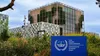
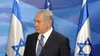
On November 21, 2024, the ICC's Pre-Trial Chamber unanimously issued arrest warrants for Israeli Prime Minister Benjamin Netanyahu and former Defence Minister Yoav Gallant for war crimes and crimes against humanity committed in Gaza. For the first time in the court's history, an arrest warrant had been issued for the sitting leader of a Western-aligned state. It was the moment the dream seemed to arrive on time rather than after the fact. The belatedness problem, for once, appeared to have been avoided.
The response was immediate and structural. On February 6, 2025, President Trump signed Executive Order 14203, imposing sanctions on the ICC's Chief Prosecutor Karim Khan and authorising asset freezes and travel bans against court officials and others supporting its work on investigations of American citizens or allies. Secretary of State Rubio subsequently expanded the sanctions to eight ICC judges. The UN described it as an attack on the global rule of law. The United States — the country whose chief prosecutor Robert Jackson called aggression the supreme international crime at Nuremberg in 1945 — was now sanctioning the judges of the court built on Nuremberg's promise for attempting to hold a US ally accountable. The circle was complete.
Hungary provided the test case of what that environment produces in practice. When Netanyahu visited Budapest in April 2025, Hungary — an ICC member state legally obligated to arrest him under the Rome Statute — gave him a red carpet welcome instead. Prime Minister Orbán invited him, assured him of his safety and announced Hungary would withdraw from the ICC the same day. The ICC initiated proceedings against Hungary for non-compliance. Hungary did not reverse course. When Netanyahu visited again in March 2026 for a conference, the ICC had already found Hungary in breach of its obligations. Netanyahu walked in and out without consequence. The warrant existed. The world watched. The arrest did not happen.
These are not anomalies in Douglas's framework. They are its fulfilment. International justice disciplines power when politics permits it. Politics permits it most readily against the defeated, the isolated, the inconvenient or the no longer useful. The law disciplines power when power allows it. When power does not allow it — when the accused is sanctioned by Washington, welcomed by Budapest, and shielded by a Security Council veto — the law speaks into silence. That silence is not accidental. It is maintained by specific actors with specific interests in maintaining it.
The Stress Test
Gaza makes this visible in ways that Douglas's book, ending as it does with Ukraine, does not fully confront. That is not a criticism of his scholarship. Books have cut-off points. But for this particular book, Gaza is not simply another omitted current event. It is the stress test of the argument.
Gaza asks whether international justice still has the courage of its own vocabulary when the accused is protected by the architecture of Western power. The ICC issued the warrants. Washington sanctioned the court's officials for issuing them. An ICC member state refused to execute the warrants and withdrew from the court in protest. The Security Council cannot act because one permanent member — the same state whose prosecutor called aggression the supreme international crime at Nuremberg — uses its veto to protect the accused. The structural accountability that Nuremberg promised has not merely failed to materialise. It has been actively dismantled at the precise moment it was most visibly needed.
Douglas has written a book about the dream of international justice at precisely the moment Gaza forces us to ask whether that dream still belongs to everyone, or only to those whose suffering does not embarrass power. His book does not answer that question. It may not have intended to. But it has written the most honest account of why the question is so hard to answer: because the dream was always struggling inside politics, and politics has never been neutral about whose crimes get named.
The Honest Verdict
Douglas, as I read the architecture of his position, stands inside the tragic liberal faith of international law. He knows its failures. He knows its dependency on political consent. But he still believes the legal project matters because it changes the moral vocabulary of world politics, because it makes certain crimes harder to deny even when it cannot make them impossible to commit. That is not a naive position. It is a serious one.
But it may not be serious enough. International justice does not merely depend on political will in the abstract. It depends on whose political will, and in whose interest that will operates. The law disciplines power when politics permits it. And on that battlefield, not everyone fights on equal terms.
The Criminal State is essential reading. Not because it resolves the tension between law and power. Because it refuses to pretend the tension does not exist. Read it alongside the ICC docket. Read it alongside the news from Gaza. Read it alongside the executive order that sanctioned the court's prosecutor for trying to do his job. Read it as a record of what humanity has learned to say after atrocity, and ask yourself, when you finish, whether saying it has ever been enough.
This Book Review is free to read. Future Book Reviews will be available to registered DiploPolis members first. Free registration takes 30 seconds. No credit card required.
Find this piece interesting?
Dispatches by DiploPolis delivers sharp analysis and pointed commentary on power, politics, diplomacy, and world affairs — directly to your inbox.
No neutrality. No noise. Just argument.