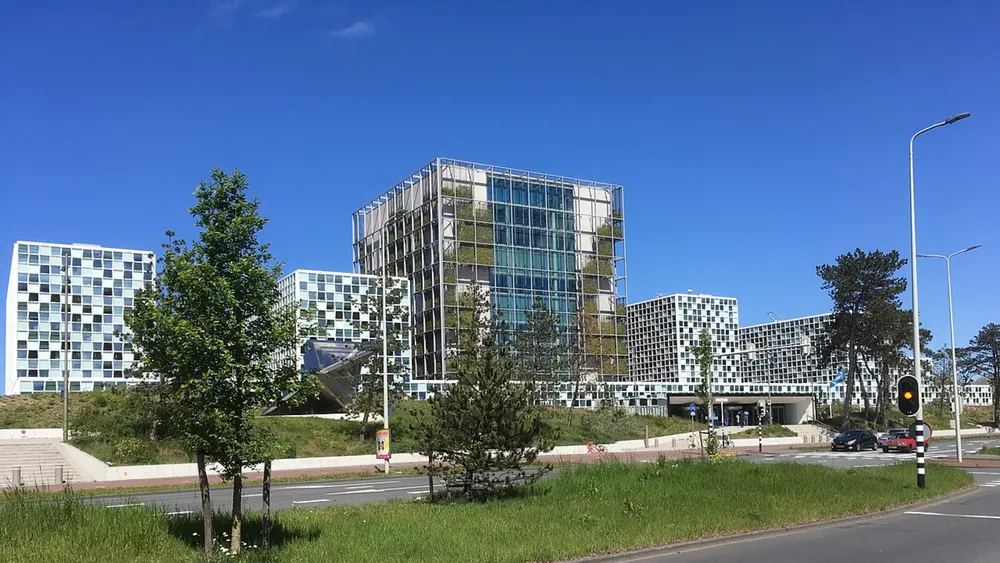
The arrest warrant for Vladimir Putin was issued in March 2023. The arrest has not happened. The arrest warrant for Benjamin Netanyahu was issued in November 2024. The arrest has not happened. For issuing that warrant, the United States government sanctioned the court’s prosecutor and eight of its judges. Robert Jackson, the American chief prosecutor at Nuremberg, called the decision to wage war ‘the supreme international crime differing only from other war crimes in that it contains within itself the accumulated evil of the whole.’ Since 1945, no one anywhere has been successfully prosecuted for it.
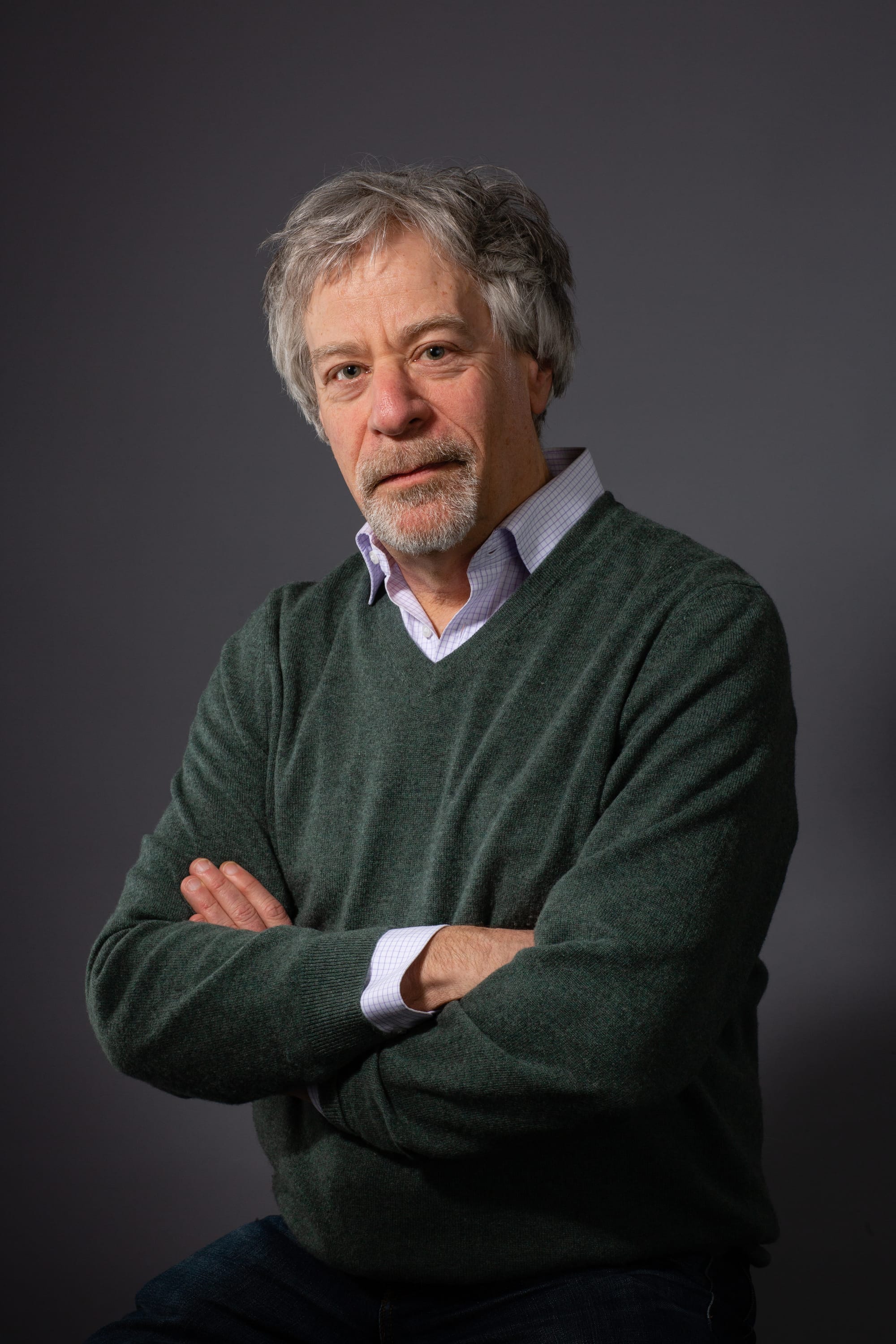
Lawrence Douglas is Professor of Law, Jurisprudence and Social Thought at Amherst College. His previous books include The Memory of Judgment, a study of Holocaust trials, and The Right Wrong Man, on the Ivan Demjanjuk prosecution. His new book, The Criminal State: War, Atrocity and the Dream of International Justice, published by Princeton University Press in 2026, is the most rigorous recent account of how international criminal justice arrived at this moment: capable of naming crimes, incapable of prosecuting power. You can read DiploPolis’s view of the book here. Douglas agreed to respond to questions about the argument by email. This interview is that exchange.
A note on the form. Several of Douglas’s responses correct the framing of the questions put to him, most notably his challenge to the characterisation that the ICC ‘deliberately narrowed’ charges against Putin, which he identifies as a misreading of the court’s structural jurisdictional limits. These corrections are part of the record and they can be found in his answers.
Q. You argue that Nuremberg’s primary achievement was not the prosecution of atrocities but the prosecution of aggression itself — the decision to wage war. Robert Jackson called it the supreme international crime. Yet the ICC has effectively shelved aggression as a practical charge, building its docket almost entirely around what happens within wars rather than the decision to start them. How did international justice make that retreat, and who benefited from it?
First, I would say that international courts since Nuremberg have not simply focused on ‘what happens within wars.’ It would be more accurate to say that these courts have focused on acts of atrocity — genocide, crimes against humanity and war crimes — regardless of whether these acts were perpetrated during an international conflict. For example, the UN’s Rwanda tribunal dealt almost exclusively with atrocity crimes unrelated to any war. Even the UN’s Yugoslavia tribunal claimed jurisdiction over war crimes unconnected to any cross-border conflict.
As you note, Nuremberg treated state aggression — the unprovoked resort to war — as the ‘supreme international crime,’ and sought to make the crime of aggression the centrepiece of a postwar system of international criminal law. As I describe in my book, The Criminal State: War, Atrocity and the Dream of International Justice, that effort failed for complicated reasons. For one thing, the jurists at Nuremberg neglected to define ‘crimes against peace’ — their term for criminal aggression. They insisted that a definition wasn’t necessary, arguing that irrespective of how one defined the crime, Nazi aggression would fit the bill. Post-Nuremberg jurists, however, did not enjoy this same luxury, and efforts during the Cold War to frame a workable definition of the crime of aggression failed. More generally, jurists struggled to explain why state aggression should even be considered criminal. Atrocity crimes — genocide, crimes against humanity and war crimes — victimise people. The crime of aggression, by contrast, treats a state as a victim. But why should the violation of the territorial integrity or the political independence of a state be considered criminal? Does the criminalisation of aggression serve as a restraint on state sovereignty or as simply another more elaborate form of protection? These questions continue to vex jurists, diplomats and human rights advocates.
Q. You describe the belatedness problem as the wound at the centre of international criminal justice — the law consistently arrives after the violence has already run its course and the political conditions for prosecution have shifted. Is this structural or contingent? Is there any version of international criminal justice that does not depend on the defeat or isolation of the accused before the trial can happen?
I believe the belatedness problem is structural — it inheres in the nature of the beast. It is born of the recognition that any prosecutorial response to state-sponsored mass atrocities inevitably comes after the fact and highlights the dramatic insufficiency of any legally authorised punishment to fit crimes of mass atrocity. This is why I argue that the spectre of belatedness pushes in the direction of more muscular, interventionist responses to mass atrocities. That said, I argue that the ‘responsibility to protect’ and so-called ‘wars of humanitarian intervention’ carry moral hazards of their own. Our moral sense demands intervention to stop atrocities but the politics of intervention remain fraught.
Q. The enforcement problem looks different depending on which case you examine. In Ukraine the ICC issued an arrest warrant for Putin in March 2023 — for the deportation of Ukrainian children, not for the act of aggression itself, which is precisely the charge Nuremberg prioritised. In Gaza the ICC issued arrest warrants for Netanyahu and Gallant in November 2024, and within months the United States had sanctioned the court’s prosecutor and eight of its judges for doing so. Two cases, two different failures — one where the charge was deliberately narrowed away from aggression, one where the enforcement machinery was actively dismantled by a state that claims Nuremberg’s legacy. What do these two cases together reveal about the structural condition of international justice — not as a political setback but as a matter of what the system is and is not designed to do?
I sometimes say, not entirely facetiously, that we can view the glass of international criminal justice as either nine-tenths empty or one-tenth full. Your question supports both perspectives. That said, I would challenge your characterisation that the ICC ‘deliberately narrowed’ the charges against Putin. It would be more accurate to say that the ICC has extremely limited jurisdiction over the crime of aggression. From the perspective of Nuremberg, that seems like a dreadful shortcoming; and yet we need to bear in mind that it took jurists decades to even frame a workable definition of the crime. So I suppose even limited jurisdiction is better than none at all. But there is something ironic about the fact that Putin was indicted for deporting Ukrainian children and not for waging a war marked by indiscriminate attacks on civilians.
In the case of Netanyahu, I wouldn’t say the entire machinery of enforcement has been dismantled. Netanyahu must still be careful about his travels lest he find himself diverted to The Hague, and the Trump administration will not be around forever. I recall the early criticism of the UN’s Yugoslav tribunal: it will only prosecute the small fish, while the likes of Milosevic, Karadzic and Mladic will never be held to account. In the end, all three were tried, with Karadzic and Mladic given life terms.
Q. Staying with Ukraine specifically — Putin’s invasion is the most visible act of state aggression since the Second World War, the kind of crime Robert Jackson placed at the centre of the Nuremberg project. Yet the ICC indicted Putin for war crimes committed within the conflict rather than for the act of aggression itself. Is this the clearest recent demonstration of the shift from the Nuremberg framework to the atrocity paradigm? And what does it tell us about whether the supreme international crime, in any practically enforceable sense, still exists?
Your question well highlights the failure of jurists to make state aggression the centrepiece of the system of international criminal law. As I point out in my book, the trials conducted directly on the heels of Nuremberg — the Tokyo trial of Japanese leaders and the twelve trials staged by the US military of members and supporters of the Nazi state — were designed to build on Nuremberg’s focus on aggression but failed to do so. In fact, since the conclusion of these Second World War trials, no one anywhere has been successfully prosecuted for the crime of aggression. Saddam Hussein’s unprovoked attack on Kuwait in 1991 provoked an international military response, and yet Hussein’s aggression played no role in his trial. And as you suggest, if you could push a button and magically transport Putin from the Kremlin to The Hague, the ICC would still be unable to prosecute Putin for the crime of aggression because its jurisdiction over the crime is extremely limited. So much for the ‘supreme international crime.’
Q. The ICC has spent most of its existence prosecuting leaders from the African continent. The first time it issued warrants touching a Western-aligned government’s conduct, the Western hegemon sanctioned the court’s officials. Is international criminal justice structurally selective — designed to discipline the weak while insulating the powerful — or is selectivity a contingent political failure that a reformed system could correct?
The critique you make could be directed to any domestic legal system — that despite the apparent generality of legal norms, they are selectively enforced in a manner that works to the benefit of the strong and to the detriment of the weak and vulnerable. But I think it goes too far to say that the international system of criminal law was designed to discipline the weak and insulate the powerful. That certainly was not the aim of the many talented jurists and officials who worked tirelessly and creatively to try to craft law that could restrain sovereign power. We can certainly bemoan the fact that the US, the nation most responsible for the Nuremberg trial and that contributed most generously to the creation of the Yugoslav tribunal — now, under Trump, works to undermine the ICC. But come 2029, the US might have a very different administration with a very different attitude toward international justice.
Q. You describe your own position as a form of tragic liberal faith — you believe the legal project matters because it changes the moral vocabulary of world politics, making certain crimes harder to deny even when it cannot make them impossible to commit. Both Ukraine and Gaza test that position directly. The crimes have been named. The warrants have been issued. The killing has continued. In Gaza the court’s officials have been sanctioned for naming the crime. Is changing the moral vocabulary enough when the moral vocabulary has no enforcement mechanism against those who choose to ignore it?
I think it’s an overstatement to say there is no enforcement mechanism. It’s true that we are unlikely to see the prosecution of the officials responsible for these atrocities anytime soon. But I would come back to the point that I made above about Milosevic, Karadzic and Mladic. Sometimes it’s hard to predict who will be held to account and when. Also, there are forms of ‘enforcement’ short of prosecution. Leaders of states that commit atrocities risk being shunned as pariahs. The status of pariah can have real consequences both internationally and domestically. Putin is not vulnerable to ouster by electoral means but who knows how secure his hold on power really is. Netanyahu, by contrast, may well be voted out of office, in part as a form of moral censure. Removing criminal leaders from their official positions may be less dramatic than prosecuting them, but it can be an important form of political and moral rejection.
Q. If the structural conditions for meaningful international accountability — a court with genuine enforcement power, a Security Council that cannot be used to shield allies from prosecution, member states that execute warrants regardless of political cost — do not exist and show no signs of emerging, what is the honest argument for the legal project continuing in its current form? Is there one? Or has the dream become, as you almost but do not quite say, a legitimising fiction for a system that protects the powerful while appearing to hold them accountable?
I don’t believe that a system that continually fails to demonstrate its even-handedness and efficacy can perform much of a legitimising function — its failures become too transparent. At some point, the system must demonstrate its bite. It did so at Nuremberg, and the Yugoslav and Rwandan tribunals also notched their achievements. But given the absence of a world government, it’s unrealistic to expect international criminal law to enjoy the coercive force and normative consistency of a domestic system of criminal law. But dramatic failings notwithstanding, it’s still better to have a cup one-tenth full than one that is completely empty.
Q. The questions above press hard on what the current system cannot do. Let me ask you to look forward rather than backward. If the architecture of international criminal justice is structurally incapable of disciplining powerful states and their allies — and the evidence we have discussed suggests it is — what would a system that could actually do so look like? Not as an ideal. As a practical political question. What would have to change, who would have to agree to it and is there any realistic path from where we are to where accountability could actually mean something for everyone?
We should bear in mind that international courts are not the only tribunals capable of prosecuting state actors who commit international crimes. Domestic national courts can apply international criminal law, and courts in Germany, France, Belgium and Australia, among others, have done so. Indeed, the ICC is designed to serve as a court of last resort, authorised to act only when domestic national courts either are unwilling or unable to mount prosecutions of those alleged to have committed international crimes.
More generally, I think it’s worth noting that healthy democratic states generally do not commit mass atrocities. Probably the best and most efficacious way to rid the world of aggression, crimes against humanity and genocide is not through a vigorous prosecutorial programme but through acts of domestic political reconstruction. It is crucial for the world’s most powerful nations to find a way toward democratic renewal. Only if the strong demonstrate a commitment to rule-based legality, both domestically and internationally, can a system of meaningful restraint exist. An international order dominated by autocratic, illiberal states is no order at all.
The Criminal State: War, Atrocity and the Dream of International Justice by Lawrence Douglas is published by Princeton University Press, 2026. The book traces more than a century of attempts to make sovereign power legally answerable, from the atrocities of the late nineteenth and early twentieth century through Nuremberg and the ad hoc tribunals of the 1990s to Putin’s invasion of Ukraine. Douglas’s central argument, that the system has progressively narrowed its ambition from holding states accountable for starting wars to prosecuting atrocities committed within them, explains more about the current condition of international justice than most contemporaneous commentary does. It is a serious book, written from what Douglas calls, honestly, a tragic liberal faith: the belief that the legal project matters even when, and precisely because, it fails. It is available here.
Lawrence Douglas is the James J. Grosfeld Professor of Law, Jurisprudence and Social Thought at Amherst College. DiploPolis’s review of The Criminal State, ‘The Dream and Its Boundaries,’ is available here.
This Interview is free to read. Future Interviews will be available to registered DiploPolis members first. Free registration takes 30 seconds. No credit card required.