Republican Senator John Kennedy told reporters on Tuesday that Congress needed 'straight answers' from the Pentagon. This was not a senator asking whether the war was right or wrong. Kennedy supports the president. His party controls the Senate. His question was simpler and more damning: he needed someone to explain why America went to war with Iran and how it was going to get out.
Nobody at the hearing answered him.
Defense Secretary Pete Hegseth told the Senate Appropriations Committee on Tuesday that the US-Israel war on Iran has cost $37.5 billion so far. Up from $25 billion in April. Up from roughly $30 billion earlier this month. Up by approximately $1 billion every day since the war resumed on July 7. Independent estimates compiled by a Brown University cost tracker put the total at more than $100 billion by mid-July when damage to American bases, reconstruction costs and long-term equipment replacement are included. Hegseth is asking for $67 billion more. The administration's requested 2027 defence budget — $1.5 trillion — would be the highest in American history. A 44 per cent increase in a single year. A generational investment, Hegseth called it.
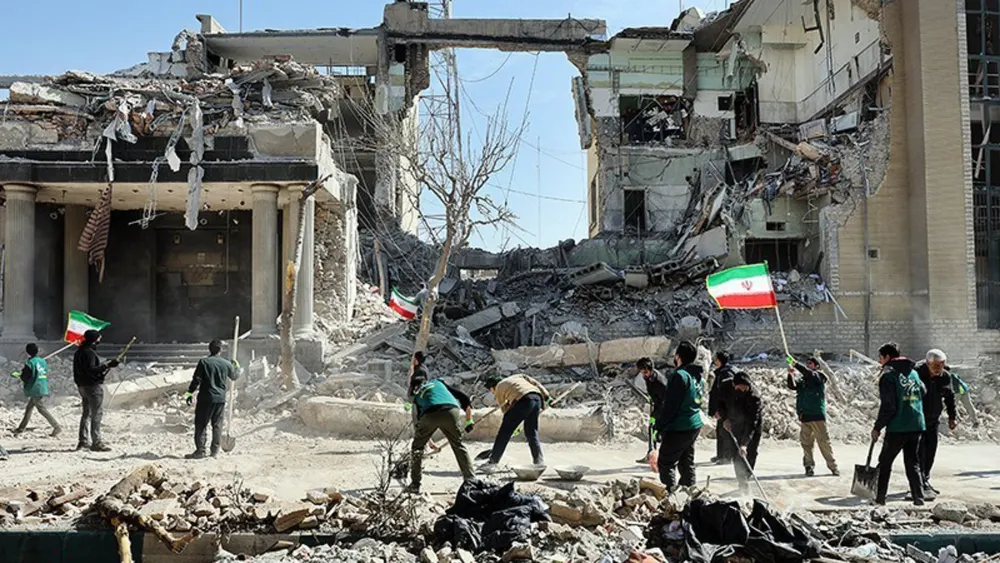
Senator Patty Murray called it something else. 'The American people want to see a quick and strategic end to this war,' she said, 'not $70 billion of their tax dollars sent to keep it going.' She noted that Trump had now told Americans more than 40 times that a deal was near and the war would be over soon. In April, he said it would be over in 'two to three weeks.' It is July 23. The war has just completed its 11th consecutive night of resumed bombing since the Versailles MOU collapsed. Eighteen Americans are dead. Five hundred have been injured since the strikes resumed this month.
The war has two bills. The first is $37.5 billion and officially growing. The second is invisible in the defence supplemental request but has already been paid by American households: the Brown University Iran War Energy Cost Tracker estimates that Americans had paid more than $68 billion in extra petrol and diesel costs as of mid-July. That is more than $500 per household. The war that was supposed to open the Strait of Hormuz and bring petrol prices down has cost American families more than $500 each in fuel surcharges. The bill for the bombing is $37.5 billion. The bill at the pump is nearly double that. The second bill did not go to a Senate committee. It went to every American who filled a tank since February.
The Global South paid a different price. The World Food Programme has confirmed that six million people in Somalia, Afghanistan and Sri Lanka have been pushed toward acute food insecurity by the Hormuz closure. The WFP needs $6 billion to close the global hunger funding gap it has identified since the war began. The US has spent $37.5 billion conducting the war that created the gap. That is six times the cost of feeding the people the war pushed toward starvation. The food bill exists. It will not be presented to Congress. It will be paid in Somalia, in Afghanistan, in Sri Lanka, in the bodies of children who had no relationship to the nuclear enrichment question that started this.
What has $37.5 billion bought? The Iranian nuclear programme was not destroyed. It was dispersed and hardened. The Strait of Hormuz was not opened. Iran is still charging for passage through it. Iran's regional presence was not eliminated. Six Gulf states are under active missile attack. The weapons stockpiles that were used to bomb Iran are now at 50 per cent or less of pre-war levels on four key munitions, requiring billions more to replenish over months or years. Gen. Dan Caine, the chairman of the Joint Chiefs, told the committee that time is still on America's side. Kennedy, sitting in the same room, said he still could not explain why they went in or how they would get out.
These are not contradictory positions. They are the two faces of a war that began with a clear statement of objectives and has since produced a bill, a body count and a question nobody has answered.
Kennedy asked for straight answers. He will not get them today. The war cost $1 billion yesterday. It will cost $1 billion tomorrow.