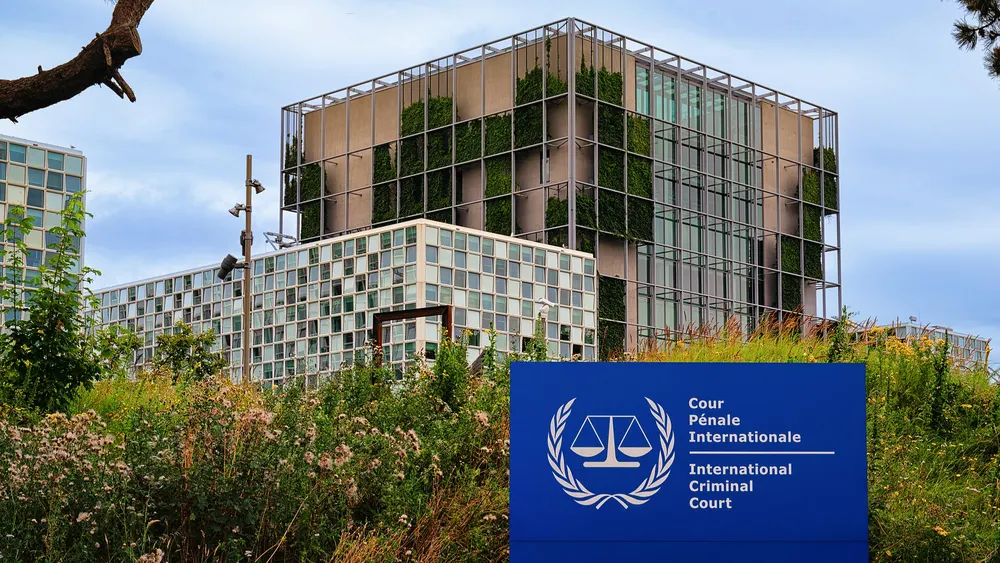
The International Criminal Court was an American idea. Not entirely, and not without complication — the United States refused to ratify the Rome Statute in 2002, and George W. Bush unsigned the document Clinton had endorsed — but the architecture of international criminal accountability that the court embodies was built on precedents that Washington demanded, jurisprudence that American lawyers helped develop, and a postwar order that the United States designed and insisted upon. Nuremberg was an American project. The Hague, in the way the court thinks about what it does, is Nuremberg's institutional heir.
On October 9, 2026, Secretary of State Marco Rubio announced that the United States was moving to cut the International Criminal Court off from the American financial system. Banks and payment processors that provide services to the court would be subject to secondary sanctions. Technology companies that service the ICC's operations would face the same. US dollar transactions with the court — which, given the dollar's role in international finance, means most transactions — would be banned. A six-month wind-down period would give current counterparties time to disentangle themselves before enforcement began. Rubio described the intent without ambiguity: to dismantle the ICC piece by piece.
This was not the first time the United States had moved against the court. It was the completion of a trajectory that began on February 6, 2025, when President Trump signed Executive Order 14203, and that has proceeded, with regularity, through nineteen months of escalating measures. What the October 9 announcement added was not a new category of action but a new target: not the court's personnel, but the court's institutional existence.
How You Build a Sanctions Campaign
Executive Order 14203 designated ICC Prosecutor Karim Khan under financial sanctions and visa restrictions. The stated justifications were the court's investigations into American military personnel — a longstanding American concern, predating Trump and rooted in Washington's refusal to accept ICC jurisdiction over its own nationals — and the court's arrest warrants for Israeli Prime Minister Benjamin Netanyahu and former Defence Minister Yoav Gallant, issued in November 2024 for alleged war crimes and crimes against humanity in Gaza.
Khan was the first target. He was not the last. In June 2025, four ICC judges were added to the designations list. In August 2025, four more. In December 2025, two additional judges brought the judicial total to ten. In July 2025, UN Special Rapporteur Francesca Albanese — who had reported on Israeli practices in Gaza and the West Bank — was sanctioned under the same executive order framework. In September 2025, three Palestinian civil society organisations were designated. By the time Rubio announced the institutional financial sanctions in October 2026, seventeen individuals had been targeted under EO 14203.
The pattern is worth reading carefully, because the escalation was not accidental. It moved from an individual (the prosecutor) to office-holders (the judges) to civil society organisations (Palestinian NGOs whose reporting fed ICC investigations) and finally to the institution itself. Each step was self-contained enough to be defended on narrow grounds — this prosecutor, this judge, this NGO — while the cumulative effect was to signal that any actor whose work contributed to ICC accountability for American allies or American personnel was a potential sanctions target. The signal was received. That was the point.
The October 9 measures took the logic of individual designation and applied it to the institution's financial circulatory system. The ICC, headquartered in The Hague, operates in euros and dollars. Its staff salaries, procurement contracts, travel costs and legal fees run through correspondent banking networks that are, given the dollar's reserve currency status, substantially integrated with the American financial system. Cutting the court off from that system does not physically close the court. It makes the court operationally dysfunctional: unable to pay its staff reliably, unable to contract with vendors whose banking relationships run through New York, unable to conduct the dollar-denominated transactions that international legal proceedings require. The mechanism is financial strangulation rather than legislative abolition, and it has the advantage of operating below the threshold of what would require a Security Council resolution or a treaty withdrawal.
What the Allies Said
The response from ICC member states was swift and, by diplomatic standards, uncharacteristically direct. Canada, Denmark, Germany, France, Italy, Japan, the Netherlands and the United Kingdom issued a joint statement strongly disagreeing with the sanctions. Seventy-nine states had backed the court in a joint statement after EO 14203 in February 2025. The European Union began examining whether its existing blocking statute — a legal mechanism designed to shield EU entities from extraterritorial American sanctions — could be adapted to protect European banks and companies that service the ICC.
The blocking statute option is legally significant and practically limited. The EU's blocking statute, last activated to protect European companies from US sanctions on Iran, creates a legal prohibition on compliance with American measures and a right to recover damages from any American entities that enforce them. In practice, European companies tend to choose compliance with American sanctions over the legal protection of the blocking statute, because the cost of losing access to the American financial system dwarfs the cost of any EU fine. The statute's deterrent value depends on the credibility of EU enforcement, which has historically been low when set against the systemic power of dollar primacy.
UN Secretary-General António Guterres described the October 9 sanctions as 'a serious blow to international law and the rule of law.' That is the assessment of an institution without enforcement capacity, and it carried no operational consequence. But it registered a verdict that will be available when this history is written.
The American legal challenges to EO 14203 and its subsequent applications have proceeded through federal courts with mixed results. Rona v. Trump and Smith v. Trump raised First Amendment concerns about sanctions targeting the speech and associational activities of American lawyers who work with the ICC. Prost v. Trump brought a direct challenge by ICC judges themselves against their own designations. L.C. v. Trump and AFSC v. Trump raised broader administrative law objections. None of these cases has produced an injunction that stopped the sanctions programme. Several are ongoing. The trajectory of the courts on executive branch sanctions authority has generally favoured the executive, and there is no indication that the October 9 institutional measures will face a different judicial reception.
What the Court Was For
The International Criminal Court was created by the Rome Statute in 1998 and came into operation in 2002. Its founding premise was that the impunity that had accompanied mass atrocities throughout the twentieth century — the impunity that Nuremberg prosecuted for the first time, the impunity that Rwanda and Yugoslavia demonstrated had survived into the century's final decade — should end. The court would assert jurisdiction over genocide, crimes against humanity and war crimes when national courts were unable or unwilling to prosecute. The individual criminal responsibility that Nuremberg established as a principle would have a permanent institutional home.
The United States, under Clinton, signed the Rome Statute in December 2000. The Bush administration withdrew the signature in May 2002 on the grounds that the court posed unacceptable risks to American military personnel who might be subject to politically motivated prosecution. That concern — that an institution with universal jurisdiction claims might be used against American forces — has been the stated American objection to the court ever since. It is not an invented concern: the court's jurisdiction is broad, its prosecutor operates with substantial independence, and the history of international institutions includes examples of political capture. American scepticism of the ICC has always had a structural basis.
What the Trump administration's sanctions programme has added to that scepticism is an operational conclusion: that the ICC should not merely be kept at arm's length but should be financially incapacitated. The shift from non-participation to active dismantlement is not a difference of degree. It is a difference in the relationship between Washington and the international legal order it helped build. A state that declines to join an institution is sceptical of multilateralism. A state that sanctions the institution's judges and moves to cut it off from the global financial system is something else. It is a state that has decided that the institution's existence, in its current form, serving its current functions, is more dangerous to American interests than the reputational and diplomatic cost of dismantling it.
The Netanyahu and Gallant warrants are the proximate cause. They are not the complete cause. The Trump administration's objections to the ICC predated the Gaza warrants, rooted in the court's Afghanistan investigation that touched American personnel. The Gaza warrants gave the objections an urgency they might not otherwise have had, and gave the sanctions programme a domestic political audience it would not otherwise have found. But the trajectory from EO 14203 to Rubio's October 9 announcement follows a logic that would have found other occasions even without Gaza. The Gaza warrants accelerated a process whose destination was already set.
The Mechanism and Its Meaning
Rubio's description of the goal — to 'dismantle the ICC piece by piece' — is notable for its candour. Most sanctions programmes maintain a formal justification based on specific, targeted concerns. The suggestion that the objective is the court's dismantlement is an admission that the United States is no longer engaged in the kind of targeted pressure that characterises normal diplomacy but in an institutional destruction project. Whether that project succeeds depends on whether European and other ICC member states are willing to accept the financial cost of maintaining the court's operations in a world where those operations carry American sanctions exposure.
That question does not yet have an answer. The EU blocking statute option, the joint statements of disagreement, the UN Secretary-General's verdict — these are markers of intent, not demonstrations of capacity. The ICC's ability to function in the coming six months, as the wind-down period closes and enforcement begins, will depend on whether European banks decide that their relationship with the American financial system is more important than their relationship with an international institution that the American government has decided to dismantle.
The court's investigators, judges and prosecutors will continue to work. The warrants for Netanyahu and Gallant will remain in the court's records. The cases will not disappear. What may disappear, if the financial sanctions succeed in their operational objectives, is the court's capacity to enforce those warrants, complete its investigations, and bring the matters before it to legal conclusion.
The institution that the United States helped demand into existence, on the grounds that the Nuremberg precedent should survive into a permanent form, is being systematically defunded by the state that made that demand. That is the ledger entry that will remain when the immediate politics are settled. The mechanism for accountability is being dismantled by the state that required it to be built.
This Analysis piece is free to read. Future Analysis pieces will be available to registered DiploPolis members first. Free registration takes 30 seconds. No credit card required.
Find this piece interesting?
Dispatches by DiploPolis delivers sharp analysis and pointed commentary on power, politics, diplomacy, and world affairs — directly to your inbox.
No neutrality. No noise. Just argument.