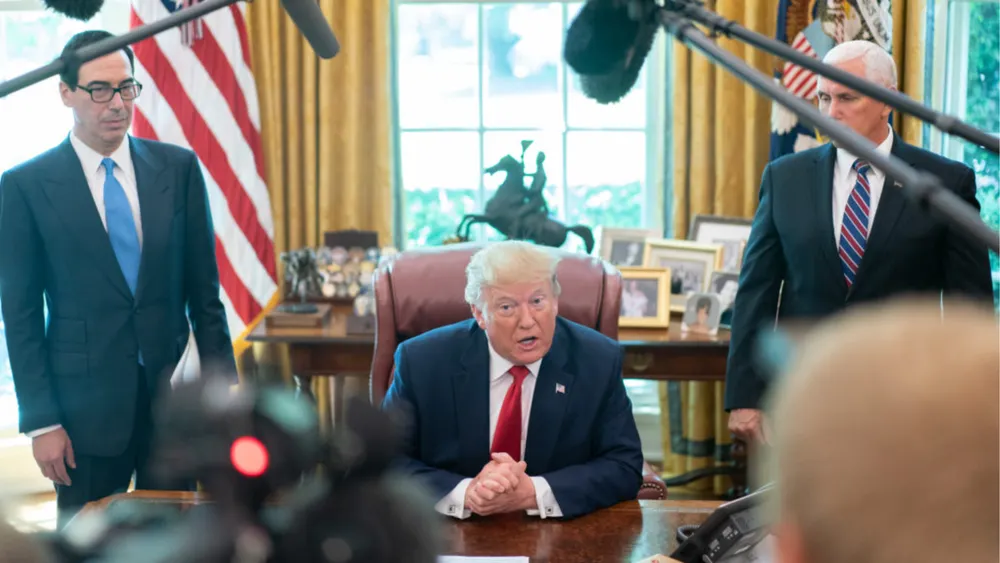
On October 8, Donald Trump posted to Truth Social that the United States 'will not be attacking Iran at any time prior to the Midterm Elections.' He added that the US naval blockade 'will remain in full force and effect.' He said Iran is 'in very bad condition, both Economically and Militarily.' And he said: 'We are having productive discussions with the Islamic Republic of Iran.' He named no one. He described no agenda. He gave no timeline. Oil prices, which had risen sharply after The Atlantic reported that the White House was asking the Pentagon for pre-midterm strike options, fell back. The markets, at least, took the announcement at face value.
The productive discussions, as far as Qatar-mediated back-channel reporting allows, are the same Qatar-mediated talks that have been ongoing since the Versailles memorandum of understanding collapsed in June. At the UN General Assembly in September, Iran's foreign minister Ali Araghchi presented a seven-point framework through Qatari intermediaries. The seven conditions included lifting the US naval blockade, releasing frozen Iranian assets and ending US military operations across what Iran describes as the resistance front. The United States did not accept the framework. Trump rejected it publicly on September 26. Two weeks later he is describing discussions with Tehran as productive. The framework that was rejected has not been altered. The conditions that were unacceptable remain on the table.
The blockade is now in its eighth month. US Central Command says commercial shipping continues and that over 19 million barrels of crude moved through the strait in a single day. Iran's army chief says the strait is closed and under IRGC surveillance. A Singapore-flagged container ship, identified by Vanguard security as the GFS Pride, struck a naval mine and sank in the strait this week with more than 2,500 containers on board. CENTCOM has not confirmed the sinking. The IRGC described the ship as having been on an 'unauthorised and dangerous' shipping lane. A ship is on the floor of the strait that carries a fifth of the world's daily oil supply. The discussions are productive.
The timing of Trump's announcement matters in a specific and unambiguous way. The Atlantic and The New York Times both reported on October 7 and 8 that the White House had asked CENTCOM to develop Iran strike options for use before the elections. Brent crude rose more than 5 per cent above $105 a barrel. Trump's post came hours after the Times report. The announcement was market management as much as foreign policy. The productive discussions he cited are real in the sense that intermediaries are still talking. They are not real in the sense of having a stated agenda, a named US representative or a timetable. The war continues. The blockade holds. The elections are in 20 days.