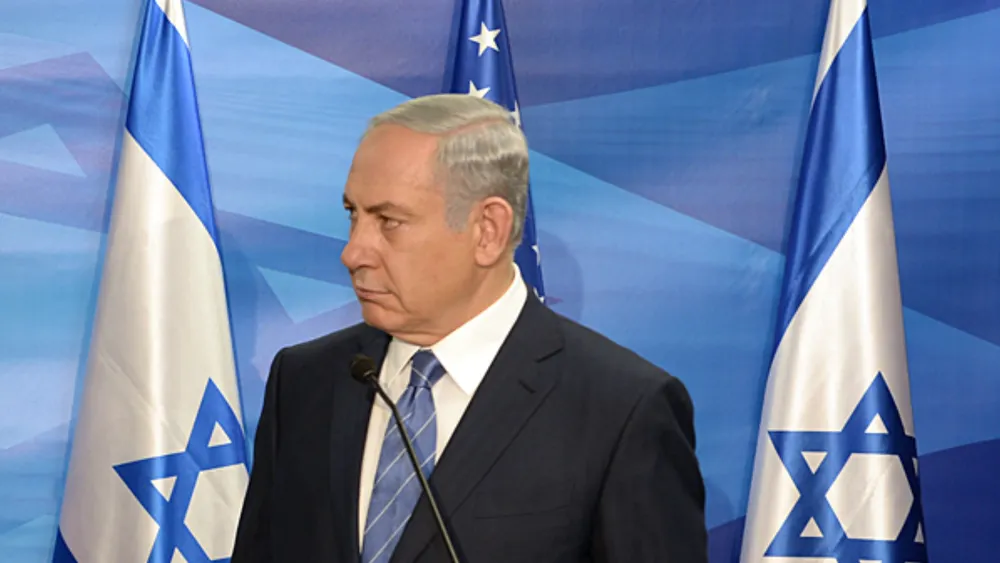
A Kantar poll for Kan 11 published on Sunday, October 11, shows Netanyahu's coalition at 53 seats and Eisenkot's bloc at 50, with Arab parties holding 13 and neither major bloc reaching the 61 needed for a majority. The poll of 552 respondents carried a margin of error of 4.2 points, which means the two blocs are statistically tied. It also means they have been statistically tied for weeks. What has not been statistically ambiguous is the direction: Eisenkot's bloc has slipped from 52 to 50 seats across successive polls while Netanyahu's has risen from 51 to 53. Sixteen days remain before Israeli voters go to the polls on October 27. Thirty per cent have not yet decided.
The election is formally a contest for the Knesset. In practice it is a referendum on Benjamin Netanyahu, on the US-Israel war on Iran, and on who is responsible for what happened on October 7, 2023. Netanyahu's Likud holds 20 seats in the current polling. Yashar, Eisenkot's party, leads all parties at 22 to 23 seats depending on the poll. The coalition path Netanyahu needs runs through Shas, United Torah Judaism, Otzma Yehudit and Religious Zionism, the religious and nationalist right. That path exists, just about. The path Eisenkot needs runs, arithmetically, through the Arab parties. His centre-left coalition partners refuse to govern with them. That is the number that does not add up. See also: 2026 Israeli election.
Gadi Eisenkot is the former IDF chief of staff who was serving on the war cabinet when Hamas attacked in October 2023. He resigned from the cabinet in December 2023, accusing Netanyahu of prioritising political survival over the management of the war. He leads every 'preferred prime minister' poll, in this survey by 43 to 38 per cent over Netanyahu. He leads the largest single party. He cannot form a government. The structural problem is not Netanyahu's popularity. It is the geometry of a coalition system where the centre-left's electoral mathematics requires either Arab votes or a Likud breakaway, and neither is available before October 27.
Netanyahu has run this election on October 7 and on the war. He announced on the anniversary this week that Israel struck ballistic missile stores inside Iran, hit its nuclear programme hard and eliminated scientists and infrastructure. He did not address the pre-October 7 intelligence warnings he is alleged to have ignored. The war is his argument. The polls say the argument is working, slowly, in the final fortnight. A Channel 12 poll on October 13 shows Eisenkot holding at 54 seats. Thirty per cent of Israeli voters have not yet told a pollster how they will vote in 16 days. That is not indifference. That is the weight of a decision nobody finds easy. The 30 per cent will decide this. Nobody knows which way they go.