The Israeli flag is flying over Beaufort Castle. It flew there before. Israel captured the 12th century Crusader fortress in 1982, held it for 18 years and withdrew under pressure in 2000. It is flying there again now, raised by Israeli soldiers as part of what Defence Minister Israel Katz called a security zone in Lebanon. Our heroic soldiers have captured Beaufort once again, he said. And will remain there.
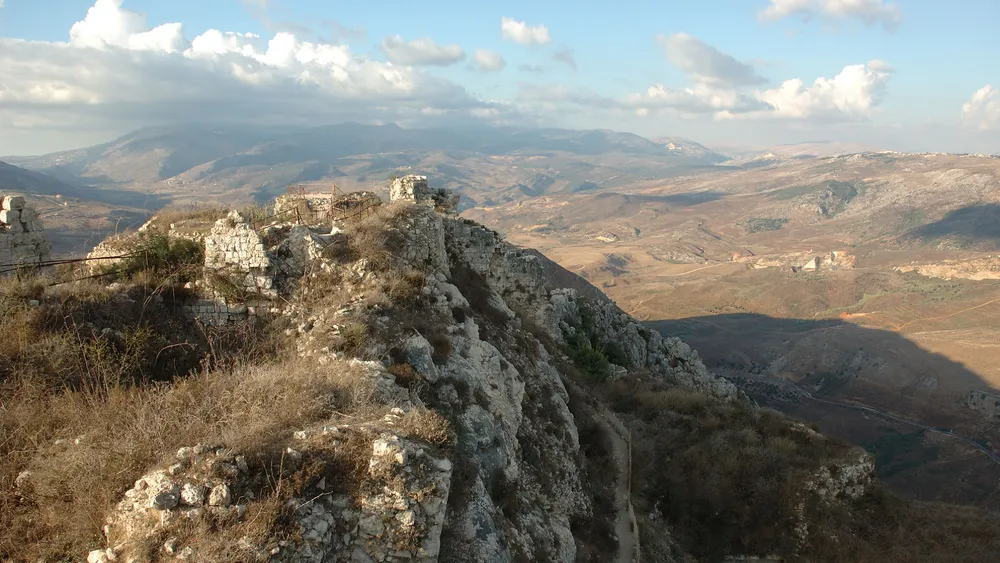
The castle sits on a cliff overlooking the Litani River in southern Lebanon. It has been used by the Crusaders, Saladin's army, the Mamluks, the Ottomans, the French Mandate, the Palestine Liberation Organization and now Israel — twice. In 2024, as Israel's previous war with Hezbollah escalated, UNESCO granted it provisional enhanced protection — the highest level of immunity against military use available under international law — as part of a package covering 34 Lebanese cultural properties. The castle had already sustained significant damage during the first occupation. Now Israeli troops are inside it again, and Katz says they intend to stay.
This is the deepest Israeli ground incursion into Lebanon in 26 years. More than 3,300 people have been killed since Israel's offensive in Lebanon began in March 2026, about 20 per cent of them women, children and first responders. More than 1.2 million have been displaced. Entire villages have been demolished. France has called the campaign unjustifiable and requested an emergency meeting of the United Nations Security Council. Lebanon's Prime Minister Nawaf Salam described it as a scorched-earth policy. Netanyahu's response was to order troops beyond the Litani River — the exact line the April ceasefire was meant to establish as a buffer — and plant a flag on a medieval castle that the international community had specifically protected from this.
There is a ceasefire between Israel and Lebanon. It has existed since April. Israel has violated it continuously since the day it was announced. As of January 2026, before the current escalation, Israel had already accumulated more than 2,000 documented ceasefire violations in Lebanon. The April agreement changed the name of what is happening. It did not change what is happening. Israeli troops remain in large swaths of southern Lebanon. Hezbollah continues to fire. The Lebanese state watches from Beirut while a foreign army demolishes its southern villages and names the ruins a security zone.
The Beaufort Castle is not a military objective in any conventional sense. Drone warfare has reduced but not eliminated the tactical value of elevated positions. What the castle offers Israel today is what it has always offered whoever holds it — a vantage point, a symbol and a message. In 1982 the message was that Israel could reach as far as it chose. In 2000 the message of withdrawal was that Hezbollah had forced a limit. The message today, with the flag raised again at a ceremony attended by the Defence Minister at a memorial for soldiers killed in the 1982 war, is that the limit no longer applies.
Iran's foreign ministry noted this week that any ceasefire breach in Lebanon breaks the broader ceasefire framework. Tehran has made its position clear throughout — a deal on the Iran war that does not include Lebanon is not a deal. Washington has been trying to negotiate the Iran ceasefire while its closest ally expands a ground war in a third country simultaneously, destroys villages, occupies a UNESCO-protected castle and announces it intends to stay. Secretary of State Marco Rubio spoke to Lebanese and Israeli leaders over the weekend to keep negotiations going. Israel kept advancing.
The last time Israel flew its flag over Beaufort Castle it stayed for 18 years. When it finally left in May 2000, residents returned and briefly removed an Israeli flag from the walls. The images went around the world. Now the flag is back. The Defence Minister says the soldiers will remain as part of the security zone. The castle has been occupied by many armies across nine centuries. None of them called it permanent either.