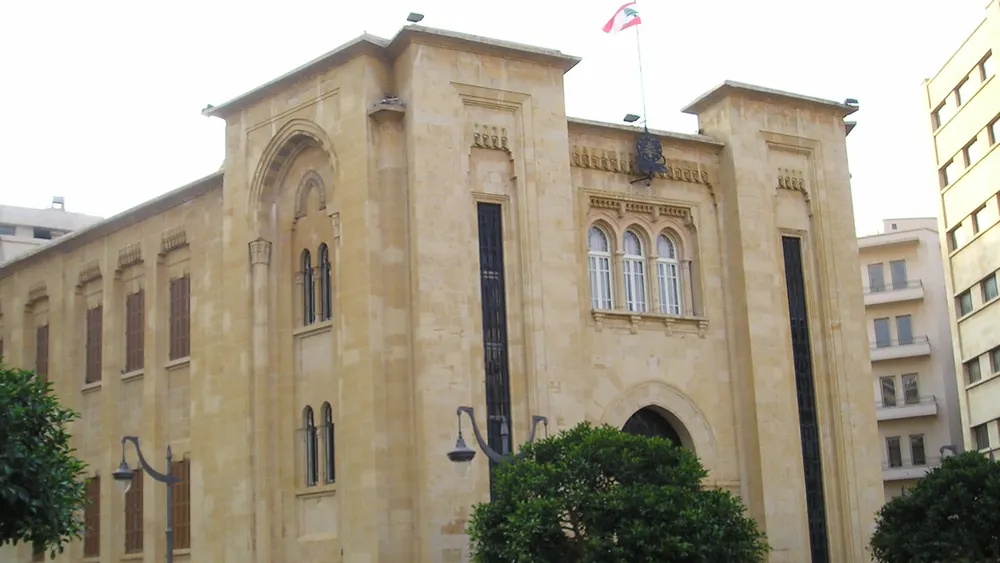
Last week, Nawaf Salam stood before a humanitarian appeal conference in Beirut and described the war being fought on his country’s territory. The fighting, he said, is ‘not being fought for our sake, but on our land and at the expense of our people.’ He was raising money for Lebanese civilians displaced by the conflict while Israeli bombs fell on the city’s southern suburbs. The conference he was hosting was attempting to do what Lebanese governments have done for decades: manage the consequences of a war they did not start, cannot stop and have no legal authority to end.
Salam is not a weak man or an ineffectual leader. He was until recently the President of the International Court of Justice. He is the most credible figure to lead a Lebanese government in a generation, backed by a president, Joseph Aoun, who was until January 2025 the commander of the Lebanese Armed Forces. Their administration came into office after a 26-month presidential vacancy, a period of institutional paralysis so complete that Lebanon had no head of state while the country was simultaneously dealing with economic collapse, the aftermath of a 13-month war with Israel and the destruction of its southern infrastructure. Salam and Aoun represent something genuinely new in Lebanese politics: a government with international legitimacy, reform credentials and a stated commitment to extending the Lebanese state’s authority over its own territory. They have been governing for sixteen months. Israeli bombs are still falling on Beirut.
The gap between Salam’s credentials and Salam’s actual authority is the subject of this piece. It is not a gap that can be attributed to personal failure or political weakness. It is built into the structure of the Lebanese state at its constitutional foundations, compounded by three decades of institutional underfunding and calcified by the specific armed realities of 2026. Understanding why Lebanon cannot assert sovereignty over its own territory requires going back to the document that defined Lebanon’s postwar political architecture, and being honest about what that document actually said.
The Taif Agreement was signed in the city of Taif in Saudi Arabia on October 22, 1989, ending fifteen years of civil war. It distributed political authority among Lebanon’s religious communities through a system of confessional power-sharing: the president would be Maronite Christian, the prime minister Sunni Muslim, the speaker of parliament Shia Muslim. This arrangement gave every major community a stake in the state’s continuation. It also required the dissolution of all Lebanese militias, whose members would be integrated into the national army or demobilised. Among the militias operating in Lebanon in 1989 was Hezbollah, which had emerged in 1982 following Israel’s invasion of Lebanon with Iranian support and formally announced its existence in an open letter in 1985, positioning itself as a resistance movement against Israel’s occupation of south Lebanon. Hezbollah was treated differently. It was permitted to keep its weapons as a national resistance force. The exception that Taif created for a specific political purpose in 1989 became the constitutional fact that has governed Lebanese politics ever since.
Seventeen years later, following the 34-day Lebanon War of 2006, the United Nations Security Council passed Resolution 1701. The resolution required an immediate ceasefire, the withdrawal of Israeli forces from south Lebanon, the deployment of 15,000 Lebanese troops and an expanded UNIFIL peacekeeping force to the area south of the Litani River, and the establishment of a zone free of any armed forces other than the Lebanese military and UNIFIL. It required, specifically, the ‘full implementation’ of the Taif Accords’ provisions on armed groups, meaning Hezbollah’s disarmament. The resolution passed unanimously. Both the Israeli and Lebanese governments confirmed it. For the two decades since, it has been violated continuously by every party to it. Hezbollah did not disarm. It did not withdraw north of the Litani. It rebuilt its arsenal into what had become, by 2024, the largest stockpile of rockets and precision missiles held by any non-state actor on earth. Israel continued conducting hundreds of airstrikes annually in Lebanese territory, which the resolution also prohibited. UNIFIL documented the violations and issued statements. No enforcement action was ever taken.
The Lebanese Armed Forces occupy a position in this architecture that is genuinely difficult to describe without sounding unkind, which is not the intention. They are a real institution with professional soldiers and a functioning command structure. They are also an institution whose enlisted personnel were, at the worst point of Lebanon’s economic collapse, earning approximately $80 a month in a country where the cost of living had not fallen proportionally. The Qatar Fund for Development stepped in with direct payments of $100 per soldier per month, an arrangement that continued through 2025. Qatar became, as one analysis put it, the de facto central employer of Lebanon’s national army. The army of a sovereign state was being paid by a foreign government with its own regional agenda. The army that Hezbollah was supposed to defer to was surviving on foreign charity while Hezbollah’s budget from Iran ran to hundreds of millions of dollars a year.
The 2025 defence budget illustrates the structural problem in numbers. Lebanon spent $800 million on defence. Sixty-seven per cent of that went to salaries. After operating costs, $24 million remained for training, modernisation and equipment. Israel, for comparison, spends more than $5 billion on military research and development alone. Per soldier, Lebanon spends $10,600 a year. Israel spends $273,560. The Lebanese Armed Forces are not a credible deterrent against Hezbollah, which has far more firepower, far more money and far more experienced fighters. They are a state institution carrying out the functions of a national army, including border patrols, internal security and, since the November 2024 ceasefire, deploying 10,000 troops to south Lebanon under the Resolution 1701 framework — short of the 15,000 the resolution specified but more than at any point in decades. They do this with the resources of a collapsed economy and the institutional pressures of a profoundly divided society.
The most important moment in Lebanon’s sovereignty story that received the least international coverage happened in August 2025. Lebanon’s cabinet voted to approve a five-phase roadmap tasking the Lebanese Armed Forces with drafting a plan to bring all weapons in Lebanon under state control by the end of the year. It was the first formal cabinet decision since the Taif Agreement to treat Hezbollah’s arsenal as a problem the Lebanese state was responsible for solving rather than a reality it was responsible for managing. Four Shia ministers walked out of the cabinet session. Hezbollah’s leadership described the vote as a ‘grave sin.’ The government’s decision stood. The army started drafting. Whether the plan could ever be implemented under fire was a different question, but the political fact was real: a Lebanese government had voted to reclaim its constitutional monopoly on the use of force for the first time in the country’s post-civil-war history.
This is the part of the Lebanon story that the current escalation is most actively threatening to destroy. The period between January 2025, when Joseph Aoun became president, and June 2026 represents the most credible attempt at Lebanese state-building since the end of the civil war. New president. New prime minister with international credibility. A functioning government with a formal disarmament roadmap. LAF troops deployed in the south in greater numbers than at any point in decades. Real GDP recording its first meaningful growth since 2019. These are not small things. They are the preconditions for what sovereignty would actually look like in Lebanon if it were ever to exist. The June 7 Israeli strikes on Dahiyeh, which Hezbollah used as justification for rejecting the US-brokered ceasefire, and the June 8 exchange of fire between Iran and Israel that followed, have set all of this back in ways that are difficult to quantify but straightforward to describe. Every escalation reinforces Hezbollah’s argument that disarmament would leave Lebanon defenceless. Every Israeli strike on Lebanese territory reinforces the same argument. The sovereignty project requires the absence of the conditions that the current war is creating.
Salam’s sentence from the humanitarian conference, that the fighting is not being fought for Lebanon’s sake but on its land, describes something more specific than the usual lament about proxy war. It describes the intersection of two specific problems: a Lebanese state that has taken its first serious steps toward genuine sovereignty in thirty years, and a regional conflict that is actively dismantling the conditions under which those steps could produce results. The June 7 strikes on Dahiyeh were not simply a continuation of a pattern. They fell on a country that had, eight months earlier, voted in cabinet to begin disarming the militia that Israel was bombing. Israel was bombing a militia whose disarmament the Lebanese government had formally committed to. Whether Israel’s strikes are designed to enforce that commitment or to undermine it by making Hezbollah’s security argument more credible is a question worth asking.
What resolution would actually require is more than a ceasefire. Lebanon has had ceasefires. It has had Resolution 1701, which passed unanimously and was violated continuously. What is different now is that Lebanon has a government that is attempting to implement what 1701 requires. The practical obstacles to that implementation, the disarmament of an armed organisation that controls more territory, more weapons and more financial resources than the Lebanese state, are enormous. They do not disappear when the shooting stops. They become slightly more addressable. The difference between ceasefire and sovereignty is the difference between the absence of active fire and the presence of functional state authority. Lebanon has had plenty of the first. The second requires the regional conflict to stabilise long enough for the processes started in 2025 to develop roots. Every week of the current escalation makes that harder.
This Analysis piece is free to read. Future Analysis pieces will be available to registered DiploPolis members first. Free registration takes 30 seconds. No credit card required.