Trump claimed credit for the ceasefire 80 times. Modi never contradicted him once. India sent seven multi-party parliamentary delegations — 59 members, 32 countries and the EU headquarters — to make one argument: Pakistan is a state sponsor of terrorism. Not one government said what India asked.
Pope Leo called for peace. Trump announced a deal. Strikes on Iranian civilian infrastructure continued through the night. There is a moment in every prolonged conflict when the moral vocabulary of the powerful becomes entirely decorative — when prayers are offered and bombs are dropped together.
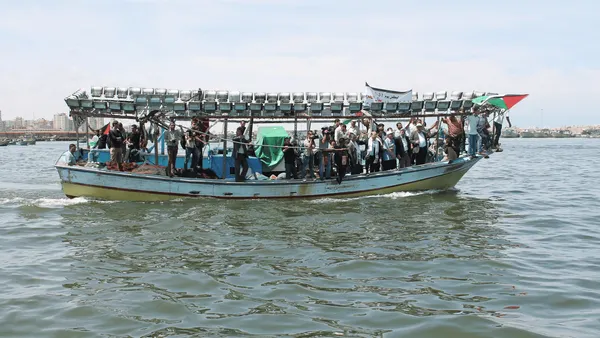
An Israeli naval vessel intercepted a European-flagged aid ship in international waters without legal basis. It was conducted anyway — because Israel has learned that the cost of violating international law in international waters is, for now, the price of a diplomatic protest.
Trump invoked the War Powers Act to declare the Iran conflict terminated. The strikes have stopped — for now. The naval blockade continues. The sanctions remain. The nuclear question is unresolved. The war has been declared over. The conditions that produced it have not changed.
Iran built its oil infrastructure as an economic asset. The United States turned it into a vulnerability. With tanker traffic through Hormuz restricted and storage sites targeted, the weapon has turned around. Iran’s leverage over global energy markets has become a liability it cannot easily defend.
The US-Iran ceasefire was announced before terms were agreed, signed before the verification mechanism was designed and celebrated before either side confirmed what it had committed to. This is not how durable agreements are made. It is how pauses are managed before the next round.
Mali’s military junta expelled French forces, invited Wagner in and declared a new era of sovereignty. The Bamako attack this week killed dozens in the capital. The junta bet that Russian mercenaries would deliver security where French forces had failed. The bet has not paid off.
The US-Iran ceasefire holds ‘until such time as’ a permanent agreement is reached. No timeline. No mechanism. No definition of what constitutes permanent. The clause renders the agreement structurally impermanent from the moment of signing. It is a war designed not to end.
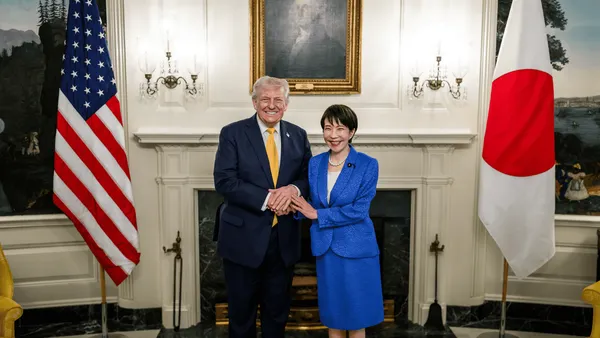
Japan has scrapped its postwar ban on arms exports. Framed as a response to North Korean missiles and Chinese naval expansion, the decision is also a generational shift in Japanese strategic culture — from the pacifism written into the constitution to the realism written by events.
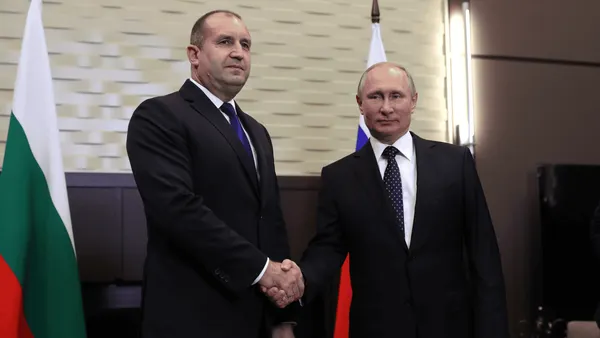
Bulgaria’s President Radev has resisted NATO pressure to close Black Sea ports to alliance logistics. The stand is not pro-Russian — it is a calculation about vulnerability. Sofia sits between two wars and is betting neutrality offers more protection than alliance solidarity.
The US naval blockade of Iranian oil exports did not end with the ceasefire announcement. It continued under different legal framing as a mechanism of pressure. Washington called it enforcement. Tehran called it a continuation of war by other means. Tehran was closer to the truth.
Ukraine’s war did not end with a peace agreement. It ended with an American pivot. Washington’s absorption in the Iran conflict left Kyiv without the political attention its position requires. Ukraine was not abandoned in a moment of decision — it was quietly deprioritised in a different crisis.