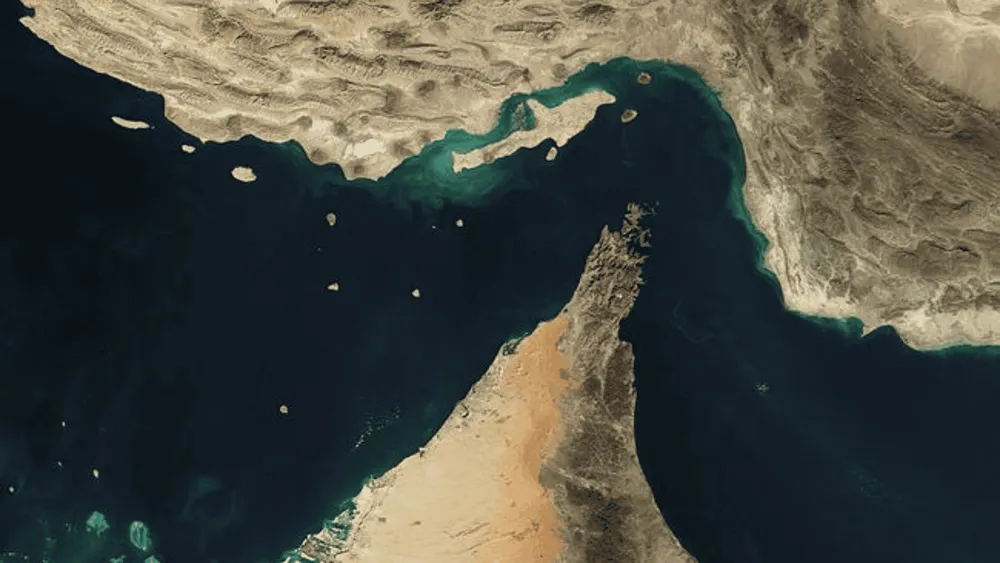
On April 17, Iran did the one thing Washington had demanded as the price of peace. It opened the Strait of Hormuz. Within 24 hours, it closed it again. Not because Iran changed its mind. Because the United States refused to lift a naval blockade that its own military described as having "completely" halted Iran's seaborne trade, the trade that powers roughly 90 per cent of Iran's economy.
The ceasefire was agreed on April 8. Its central term was the reopening of the Strait. Iran agreed, attempted to comply, then closed the Strait again because the blockade made compliance meaningless. There is a specific word for a peace agreement whose terms cannot be met because one party is simultaneously destroying the other's capacity to meet them. The word is not diplomacy.
The blockade took effect on April 13, after talks in Islamabad collapsed. It costs Iran $400 million a day in lost revenue. If it persists until April 26, it threatens the permanent damage or destruction of Iranian oil wells — not temporary disruption but structural, irreversible economic destruction. Iran's security council was direct: the blockade constitutes a breach of the ceasefire, and Tehran would prevent any conditional reopening of the Strait so long as it continued. Washington's answer was to keep enforcing it.
The architecture of this situation is not complicated. Iran cannot accept an open Strait while a naval siege bleeds its economy at $400 million a day. Washington will not lift the siege until Iran accepts nuclear terms it has not clearly articulated. The ceasefire's central condition and the blockade's continued existence are mutually exclusive. Someone in Washington knows this. The question is whether that was the point from the beginning.
Trump confirmed as much, posting on Truth Social that the Strait was completely open — while simultaneously announcing the blockade would remain in place until negotiations concluded. Both statements cannot be true. The Strait is not open to a country whose every departing and arriving vessel is turned back by the United States Navy. What Trump described as an open waterway is, for Iran, a sealed one. The language of peace is being used to administer a siege.
There is supporting evidence that the design preceded the announcement. Satellite imagery captured on April 10, during the ceasefire, showed Iranian engineering crews clearing rubble from missile base tunnels near Khomeyn, restoring access to facilities American strikes had tried to seal. Sam Lair of the James Martin Center for Nonproliferation Studies told CNN this was entirely expected: a ceasefire requires accepting that the adversary will reconstitute some of what you destroyed. Iran is rebuilding. Washington is blockading. Neither is negotiating in good faith.
Meanwhile, the people paying the highest price for this choreography are not the parties to it. The IMF cut its global growth forecast to 3.1 per cent for 2026. According to Capital Economics, Qatar's economy is projected to shrink by 13 per cent this year, the UAE's by 8 per cent, Saudi Arabia's by 6.6 per cent. These are Washington's partners in the region, not its adversaries. Bahrain, already among the world's most indebted states, saw its aluminium and oil exports collapse, its government revenue devastated. They are absorbing the consequences of a war launched without consultation and a blockade maintained without resolution.
This is what economic warfare looks like when it wears a ceasefire as a costume. Tehran suffocates. The Gulf contracts. Pakistan mediates in good faith between parties where one is negotiating and the other is strangling. The IMF revises its forecasts downward. And Washington frames all of it as a path to peace.
The ceasefire did not fail. It was never meant to succeed.
Find this piece interesting?
Dispatches by DiploPolis delivers sharp analysis and pointed commentary on power, politics, diplomacy, and world affairs — directly to your inbox.
No neutrality. No noise. Just argument.