Bezalel Smotrich told the Jerusalem Post last week that Israel's West Bank settlement expansion proceeds with 'full coordination and full backing' from the Trump administration for everything related to construction, regulation and security. He named names: Trump personally, Secretary of State Marco Rubio, Ambassador Mike Huckabee. And then, on whether the world still bothers to object: 'In the past, even building 50 housing units would lead to condemnation. Today it is very different.'
He was not wrong. It is very different. What changed is not Israel's behaviour. What changed is the permission structure around it.
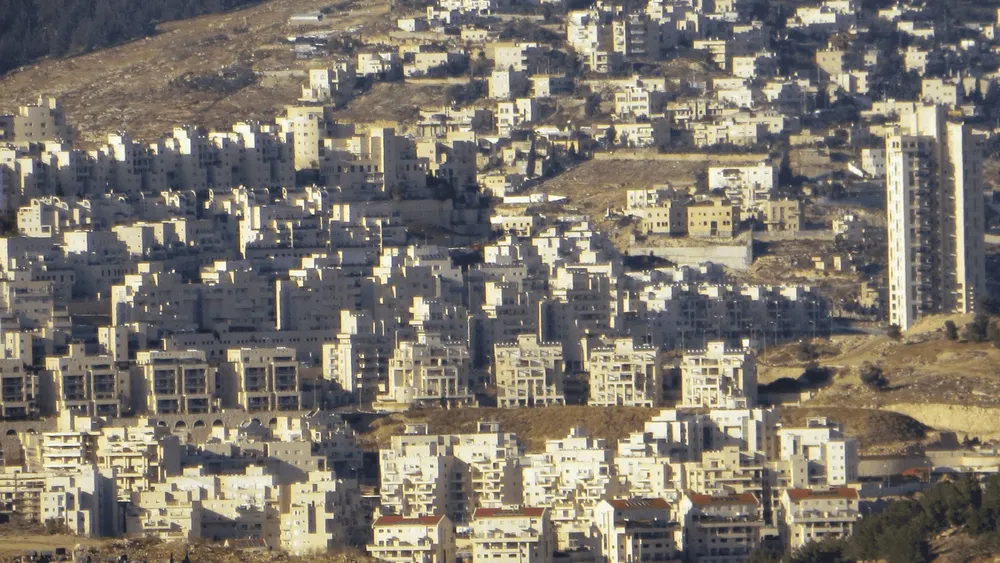
Look at what the West Bank looks like right now. In early April, Israel's security cabinet approved the establishment of 34 new settlements in a single classified meeting, the largest single-session approval in Israel's history. That figure is nearly six times the number formally approved in the entire 30 years following the Oslo Accords. The government has, since taking office in 2022, established or retroactively legalised 103 settlements in total. This is not expansion. Expansion implies the existence of borders it is pushing against. There are no borders here. There is only direction.
In February, the security cabinet rewrote land registration law to allow West Bank land to be declared Israeli state property unless Palestinians could prove ownership, a reversal of the evidentiary burden that has stood for decades. Israeli enforcement authority was simultaneously extended into Areas A and B, territory that falls under Palestinian Authority civil and security control under the Oslo framework. The cabinet did this, by the government's own account, while Israeli citizens were running to bomb shelters during the war with Iran. The urgency was not the bombs. The urgency was the land.
The numbers on the ground are not abstract. In the first ten weeks of 2026 alone, more than 1,500 Palestinians were displaced in the West Bank and eight were killed by settlers. A UN Human Rights Office report from March documented 1,732 incidents of settler violence in a single 12-month reporting period, making it difficult, the report said, to distinguish between state and settler violence. In April, Israel celebrated the reestablishment of Sa-Nur, a settlement in the northern West Bank evacuated in 2005, with cabinet ministers, Knesset members and settler activists in attendance. Smotrich, at the ribbon cutting, called it 'killing the idea of a Palestinian state.' He was describing government policy.
None of this is hidden. That is the point. Smotrich's governing principle for the West Bank is, in his own words, 'maximum territory with minimum Arabs.' He has said it to audiences, in parliament, to newspapers. He has described the E1 corridor plan, which would physically sever the West Bank in two, as 'Zionism at its best.' The UN has raised concerns of ethnic cleansing. Eighty-five countries issued a joint condemnation of Israel's West Bank measures in February. The condemnation changed nothing. The settlements continued. The violence continued. The displacements continued. Condemnation, it turns out, is the international community's preferred substitute for consequence.
The world's attention is on Hormuz. On enrichment percentages and Islamabad talks and the ceasefire that keeps almost-holding. Those things matter. But while everyone watches the strait, Smotrich is building roads and electricity infrastructure for settlements whose populations do not yet exist, on land whose Palestinian residents are being removed from it daily, systematically and without cost. The strategy does not require secrecy. It requires only time, and a world that is looking the other way.
Smotrich himself explained why today is different from yesterday. He does not have to hide what he is doing. He is doing it with American backing, in classified cabinet meetings, in press conferences, at ribbon cuttings attended by government ministers. He calls it sovereignty. The rest of the world calls it expansion and moves on.
The difference between those two words is a Palestinian state.
Find this piece interesting?
Dispatches by DiploPolis delivers sharp analysis and pointed commentary on power, politics, diplomacy, and world affairs — directly to your inbox.
No neutrality. No noise. Just argument.