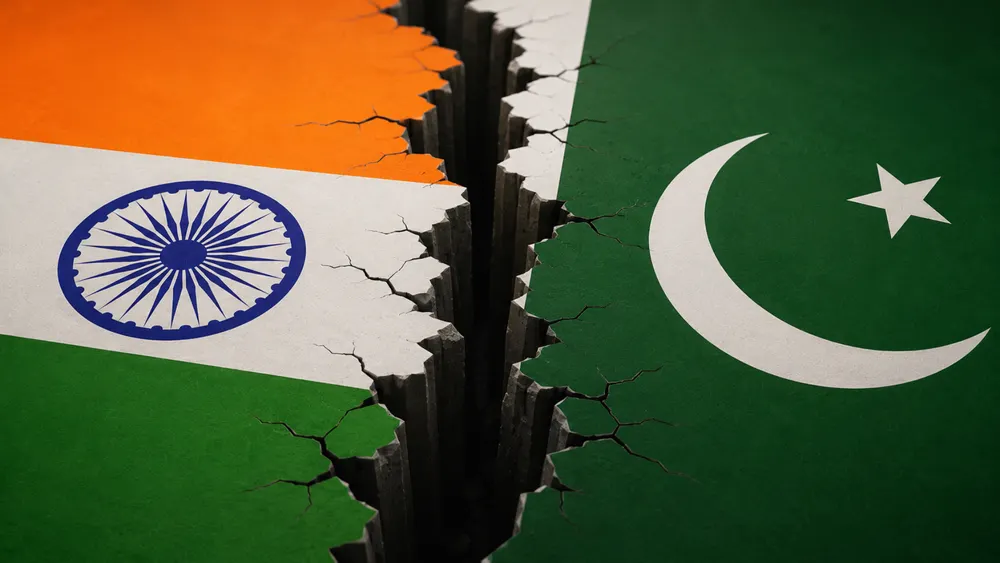
India sent seven multi-party parliamentary delegations — 59 members, 32 countries and the European Union headquarters in Brussels — to make one argument: Pakistan is a state sponsor of terrorism and the world must say so. They went to London, Paris, Berlin, Riyadh, Tokyo, Seoul, Jakarta, Doha and Johannesburg. The most ambitious parliamentary outreach India had mounted in a generation. They carried dossiers, gave press conferences and delivered the same message in thirty-two capitals.
Not one government said what India asked them to say.
One year ago today, India had launched Operation Sindoor in retaliation for a terrorist attack in Pahalgam on April 22, 2025, that killed 26 civilians, including tourists. Indian forces struck nine terror sites across Pakistan, the deepest military action since 1971. The headquarters of Lashkar-e-Taiba and Jaish-e-Mohammed were destroyed. Pakistani airbases were hit. Pakistan's army sought de-escalation through the DGMO hotline.
Speaking at an event in New Delhi ahead of the first anniversary, Defence Minister Rajnath Singh called Operation Sindoor a golden chapter in the country's military history.
All of that is true. What the anniversary commentary conveniently leaves out is everything else.
India's Deputy Chief of Army Staff Lieutenant General Rahul Singh stated on July 4, 2025, that China provided Pakistan with critical equipment, ammunition, live intelligence inputs, satellite imagery and real-time targeting support during the conflict. Chinese satellite imagery and cyber tools were extensively made available to Pakistan to monitor Indian activity. Pakistan utilised a sophisticated command and control system created by China, integrating radars, fighter aircraft and airborne control aircraft into a cohesive automatic response system. Over the past five years China has supplied 81 per cent of Pakistan's imported weapons. As India fought Pakistan, it also absorbed the battlefield consequences of China's decision to support its ally in real time, without firing a single shot and without attracting a single diplomatic consequence.
At 5:37 PM on May 10, the ceasefire was announced by US Secretary of State Marco Rubio, who attributed it to intervention by President Trump. Trump has claimed credit for the ceasefire over 80 times since May 10. He said he threatened 200 per cent tariffs. He said he saved 30 to 50 million lives. He said he settled a nuclear war. Pakistan's prime minister publicly thanked him. Pakistan nominated Trump for the Nobel Peace Prize. India's defence minister called the claims baseless. The US President repeated the claim without ever being refuted once by his good friend Prime Minister Narendra Modi.
From a state-sponsored terrorism question, Trump had reframed the crisis into a nuclear standoff requiring American management. India's central argument — that Pakistan must be named and isolated — did not survive that reframing. The world did not come away from Operation Sindoor thinking about Pakistan's terror infrastructure or China's military support. It came away thinking about Trump's peacemaking and two irrational nuclear neighbours who needed an adult in the room.
The 59 lawmakers who visited 32 countries were asking the world to see Pakistan as a terrorist state. The world instead watched Trump announce the ceasefire, heard Pakistan thank him and moved on. Pakistan promoted Asim Munir to Field Marshal ten days after the ceasefire. His army emerged domestically stronger. Washington embraced him — not as the head of a terrorism-sponsoring state but as the indispensable broker whose phone number worked when America needed Iran brought to a table. And China, which had provided Pakistan with the satellite eyes and the weapons systems that complicated India's military operation, faced no diplomatic consequence from New Delhi whatsoever.
The Indus Waters Treaty remains in abeyance. A court of arbitration has ruled it cannot be unilaterally suspended and reaffirmed its jurisdiction. India rejected the ruling. The rivers still flow at the same volume into Pakistan. A threat not carried through does not deter. It reassures.
Seven delegations. Fifty-nine parliamentarians. Thirty-two countries. One golden chapter. One year later. India got nothing.
Find this piece interesting?
Dispatches by DiploPolis delivers sharp analysis and pointed commentary on power, politics, diplomacy, and world affairs — directly to your inbox.
No neutrality. No noise. Just argument.