When Iran closed the Strait of Hormuz on February 28, the logic was simple and the leverage was real. Twenty per cent of the world's oil passes through that narrow waterway. Close it and you impose costs on everyone who depends on it — which is to say, everyone. Washington would feel the pressure at the petrol pump. Allies would feel it in their energy bills. The global economy would feel it in its growth projections. Iran's calculation was that the pain of closure would be distributed widely enough, and fall on enough American political constituencies, to force a negotiated exit from the war. It was a rational calculation. It is now turning around on the country that made it.
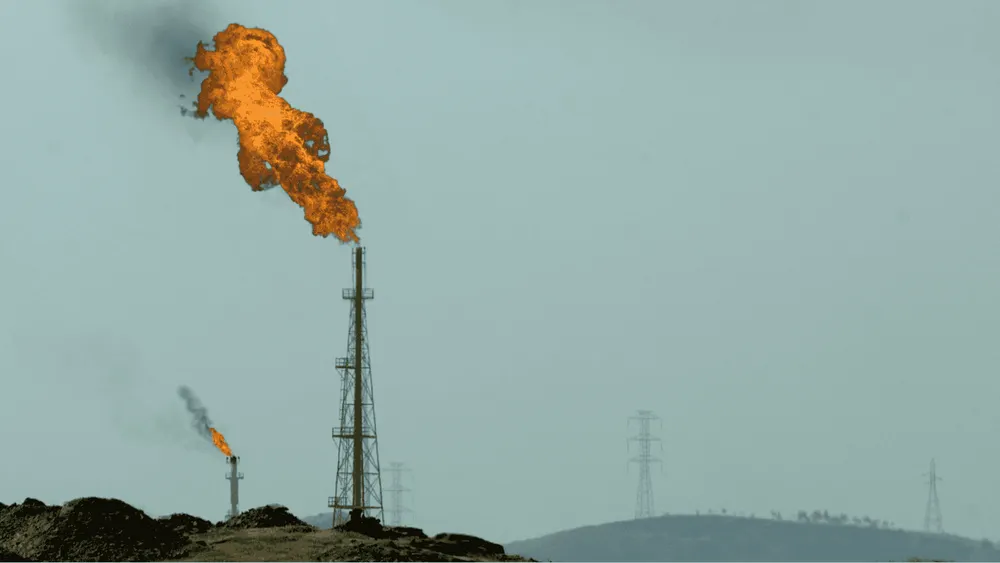
According to Bloomberg, citing Kpler, Iran has between 12 and 22 days of unused crude oil storage capacity remaining. Iranian crude exports, which averaged 1.85 million barrels a day in March, have collapsed to 567,000 barrels a day — a fall of roughly 70 per cent since the US naval blockade took hold in early April. Kpler has not observed a single tanker successfully evading the blockade. When the storage runs out, which could happen before the end of May, Iran will be forced to cut daily oil output by a further 1.5 million barrels per day. It has already curtailed 2.5 million barrels per day, according to Goldman Sachs. A country that closed a strait to inflict economic pain is running out of places to put its own oil.
The irony is structural, not incidental. Iran's entire Hormuz strategy depended on being able to sustain the closure long enough for the political costs to accumulate on the other side. What it did not fully account for was the simultaneity of two blockades — its own closure of the strait to outbound tankers, and Washington's naval blockade of Iranian ports. The combination has created a trap with no clean exit. Iran cannot reopen the strait without appearing to capitulate on its most significant source of leverage. It cannot keep it closed without watching its own oil infrastructure seize up from the inside.
There is a detail in the Kpler analysis that complicates the picture further. Despite the storage crisis, Iran is unlikely to feel the full financial impact for another three to four months. Iranian crude cargoes typically take two months to reach Chinese ports, the primary destination for sanctioned Iranian oil, often routed through opaque intermediaries designed to circumvent Western restrictions. Buyers then have a further two months to settle payments. The revenue from March's exports — when Iran was still shipping 1.85 million barrels a day — has not yet fully arrived. This lag gives Tehran some financial breathing room even as its physical infrastructure approaches crisis. It also means the negotiating pressure that Washington expects the storage crisis to generate may not materialise as quickly as the raw data suggests.
Which brings us to today's diplomacy, such as it is. Iran has put a new proposal on Trump's desk: reopen Hormuz, end the war, defer nuclear talks to a later phase. Trump's national security team met this morning to discuss it. Marco Rubio said it was better than expected but fell short of Washington's red lines. Trump told reporters Iran had submitted something 'much better' without specifying what changed. The White House press secretary declined to get ahead of the President. Meanwhile Araghchi flew to St. Petersburg to brief Putin, who says he received a personal message from Iran's new Supreme Leader — a man who has not been seen publicly since he was announced as his father's successor. The diplomacy is moving. The storage is running out. The two timelines are not aligned.
The deeper question the Kpler data raises is about the nature of the weapon Iran chose. The Strait of Hormuz is the most powerful economic lever a mid-sized power has ever held over the global economy. Iran has deployed it. The deployment has imposed real costs — the Dallas Federal Reserve estimated it removed 20 per cent of global oil supplies and knocked 2.9 percentage points off annualised global GDP growth in the second quarter. Brent crude is at $108 per barrel. The Global South is rationing fuel. The UN Secretary-General has warned of a food emergency. The weapon worked. It is simply also destroying the arsenal it was fired from.
Iran did not miscalculate that closing the strait would hurt Washington. It did. What it may have miscalculated is how long it could sustain the closure before the instrument of pressure became a source of existential damage to itself. Twelve to 22 days of storage is not a negotiating position. It is a countdown. And when the countdown ends, the question will not be whether Iran opens the strait. It will be whether anyone in Washington was paying attention to the clock.
Find this piece interesting?
Dispatches by DiploPolis delivers sharp analysis and pointed commentary on power, politics, diplomacy, and world affairs — directly to your inbox.
No neutrality. No noise. Just argument.