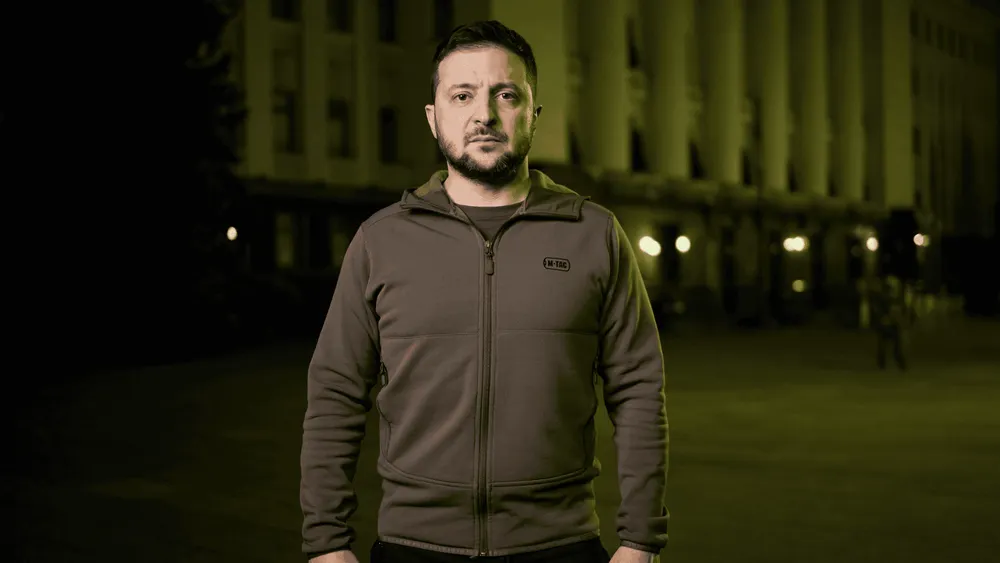
On March 17, 2026, Volodymyr Zelensky stood before the British Parliament and called Russia and Iran 'brothers in hatred.' He was asking Europe not to look away. The appeal had the quality of a man who already knew the answer.
He was right to be afraid.
The US-Israel war on Iran, now in its seventh week, has done what four years of Russian bombardment could not. It has pushed Ukraine off the table. Not with a decision. Not with a declaration. With something quieter and more consequential: a change in what Washington considers urgent.
The arithmetic is brutal. The Pentagon is considering diverting weapons originally earmarked for Ukraine to the Middle East as the Iran war depletes critical munitions. The interceptor missiles being eyed for redirection are the same Patriot systems that form Ukraine's backbone defence against Russian ballistic missiles. Russia knows this. In February 2026, it launched some of its highest-intensity missile salvoes in four years of war, with up to 30 ballistic missiles in a single overnight wave. Ukraine is being hit harder at precisely the moment its air defences are being looked at for parts.
Bloomberg has reported that Ukraine could run out of money entirely by June. Not ammunition. Money. The kind that pays soldiers.
Meanwhile oil trades above $84 a barrel. Russia's 2026 budget needed $59 Urals crude to balance. It is getting considerably more. The Iran war, which shut the Strait of Hormuz and sent energy prices surging, has handed Moscow a windfall it could not have manufactured on its own. Asian buyers who relied on Gulf oil are turning to Russia. Deputy Prime Minister Alexander Novak said it plainly: 'Russian oil is in demand. We will sell it if it is purchased.' The sanctions architecture that was supposed to strangle Russia's war economy is being quietly undermined by a war Washington chose to fight on a different front.
This is not accident. It is consequence.
None of it was designed to help Russia. Washington did not go to war with Iran in order to rescue Moscow's budget or strip Kyiv of air defences. But intentions are not outcomes. The effect is the same regardless of the intention behind it.
Zelensky has spent the weeks since February 28 doing what small nations do when the powerful lose interest: making himself useful. He toured Gulf states in late March, selling Ukrainian drone expertise to countries suddenly desperate to defend against Iranian Shaheds. Two hundred Ukrainian specialists were deployed to Qatar, Saudi Arabia and the UAE to coordinate air defences alongside American personnel. He offered to help reopen the Strait of Hormuz, drawing on Ukraine's experience securing the Black Sea corridor. He positioned Ukraine as a partner in Washington's new war, hoping that proximity to the priority would keep the aid flowing for his own. The spectacle of a country fighting for its survival moonlighting as a defence contractor for the Gulf is not a strategy. It is an act of desperation dressed as diplomacy. It is a dignified performance under the circumstances. It should not have been necessary.
The cruelty is in the timing. Ukraine was not losing before February 28. It was not winning either, but it was holding. The war had settled into something painful and sustainable. Then Washington opened a second front, and the logic of finite resources did the rest.
There is a name for what happened to Ukraine. It is called being lost in the bargain. No one voted to abandon it. No president announced a change in policy. Washington simply found something it wanted more. And Ukraine, which had done everything asked of it, discovered that doing everything asked is not the same as being indispensable.
Russia did not defeat Ukraine on the battlefield.
Washington's priorities did.
Find this piece interesting?
Dispatches by DiploPolis delivers sharp analysis and pointed commentary on power, politics, diplomacy, and world affairs — directly to your inbox.
No neutrality. No noise. Just argument.