

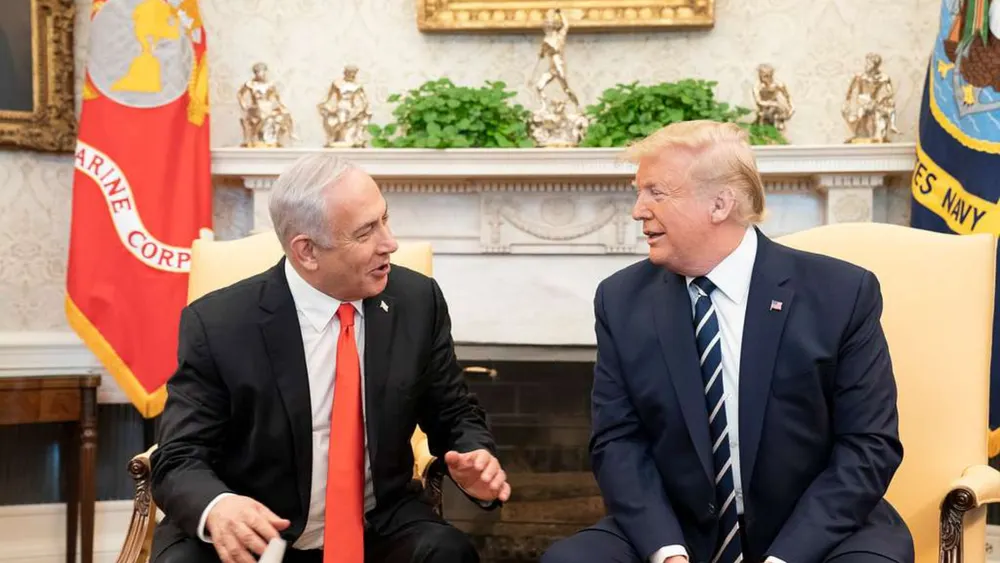
On Sunday evening, after Iran launched missiles at northern Israel in response to the Dahiyeh strikes, Trump gave the Financial Times a quote that will define this week. 'I call the shots,' he told the newspaper. 'I call all the shots. He doesn't call the shots.' He was speaking about Benjamin Netanyahu.
Within hours, Israel struck military targets in Tehran, Tabriz and Isfahan. By Monday morning, the Israeli Air Force confirmed it had also hit a petrochemical complex at Mahshahr in southwestern Iran. The shots had been called. In Jerusalem.
The sequence of events across Sunday and Monday is the clearest possible statement of what this relationship is. Trump told Netanyahu not to retaliate. He said a deal was close, that he believed something good could happen as early as Monday. He called Netanyahu by phone. Israel struck Iran anyway. Iran suspended its operations and warned that any continuation of strikes on Lebanon would bring a more severe response. Netanyahu announced that Israel had halted its attacks on Iran, stopping short of calling it a ceasefire. Nobody called it a ceasefire because it is not a ceasefire. It is an interval.
Today is the 100th day of the US-Israel war on Iran. The war that Washington called a limited operation has produced exactly the logic limited operations always produce: the definition of limited expands until it includes everything. What started as strikes on Iranian military infrastructure has become direct exchanges between Iran and Israel, Lebanese civilians dying in Dahiyeh, Houthi threats against Red Sea shipping and an American president announcing on television that his ally does not call the shots, immediately before his ally calls the shots.
The question DiploPolis has been asking since April is not whether Netanyahu is defying American authority. That is now settled. The question is what Netanyahu is defying it for. The answer is becoming clear. He is methodically pushing the conflict beyond any boundary that a deal could contain. Every unilateral strike deepens the domestic pressure in Tehran to walk away from negotiations. Every new front opened, Lebanon, Iran's energy infrastructure, now the Strait, makes the map of any agreement larger and harder to draw. Netanyahu is making the deal that Trump wants structurally impossible. Whether that is the intention or the consequence is the only remaining question, and the answer does not change the outcome.
Israel is pushing the envelope beyond what any American administration has historically absorbed without consequence. Strikes on Lebanon while ceasefire talks run. Strikes on Iran after Trump says stop. A petrochemical plant in Mahshahr the morning after the president tells the world he controls what his ally does. Each step tests whether Washington will move from concern to cost. Each step has found the same answer: Washington will not.
Trump told the FT that Netanyahu will have no choice but to accept whatever agreement Washington reaches with Iran. The framing reveals the problem. An agreement that Netanyahu has no choice but to accept is not an agreement that will hold. An Israeli prime minister who defies explicit American requests on the night of a major escalation has already calculated that the price of defiance is manageable. He has been paying it for a hundred days: phone calls, statements of concern and anonymous briefings to Axios that Washington was not informed in advance. It has proved affordable.
The question is not what Netanyahu's war aims are. The question is what consequence Trump is prepared to impose for the war continuing on terms he did not choose. So far the answer is none. Until it changes, the shots will be called in Jerusalem regardless of what the president tells the Financial Times.


