In 1938, a British prime minister flew to Munich, made an agreement with Adolf Hitler and returned to London announcing that he had achieved peace for our time. In the decades that followed, Munich became something more than a historical event. It became a lesson. Appeasement equals capitulation. Negotiation with dictators is weakness. The lesson was applied to Korea, Vietnam, Cuba, the Gulf War, Iraq and, most recently, to every diplomatic conversation with Russia, Iran and China that anyone wants to foreclose. Munich did not merely happen. It became a word that ends arguments.
That is the problem Howard LeRoy Malchow's History and International Relations sets out to address. Not Munich specifically, but the habit it exemplifies: the conversion of complex historical moments into portable moral lessons, stripped of their context, their contingency, their uncertainty and their specific human texture, and pressed into service as theory. International relations, as a discipline, has made this habit its working practice. Munich means appeasement. Vietnam means quagmire. 1914 means miscalculation. Nuremberg means justice. The history becomes shorthand. Shorthand becomes doctrine. Doctrine closes the mind to the next event, which is never quite the same as the last one. The best historical thinking does the opposite of all this. It makes shorthand impossible.
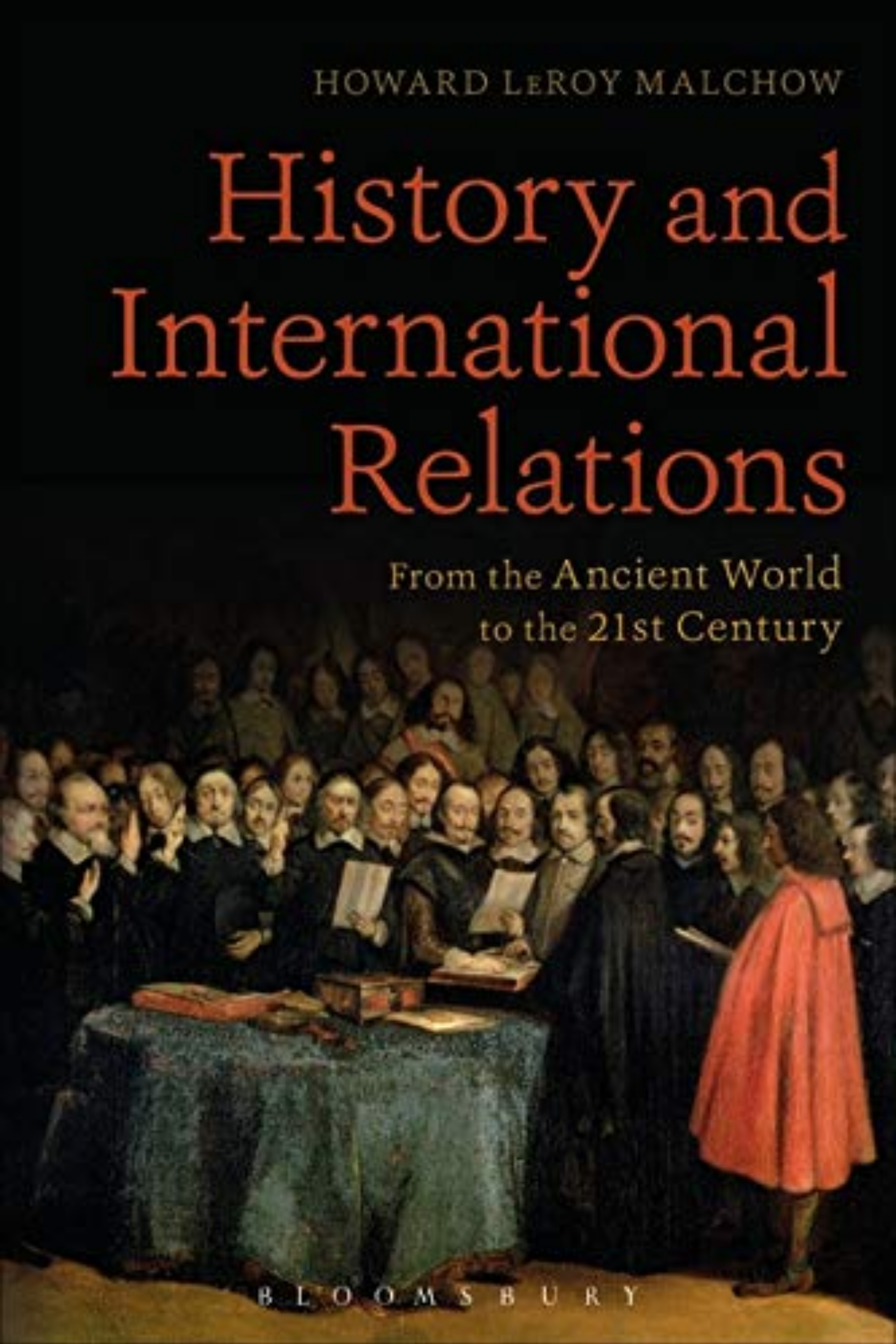
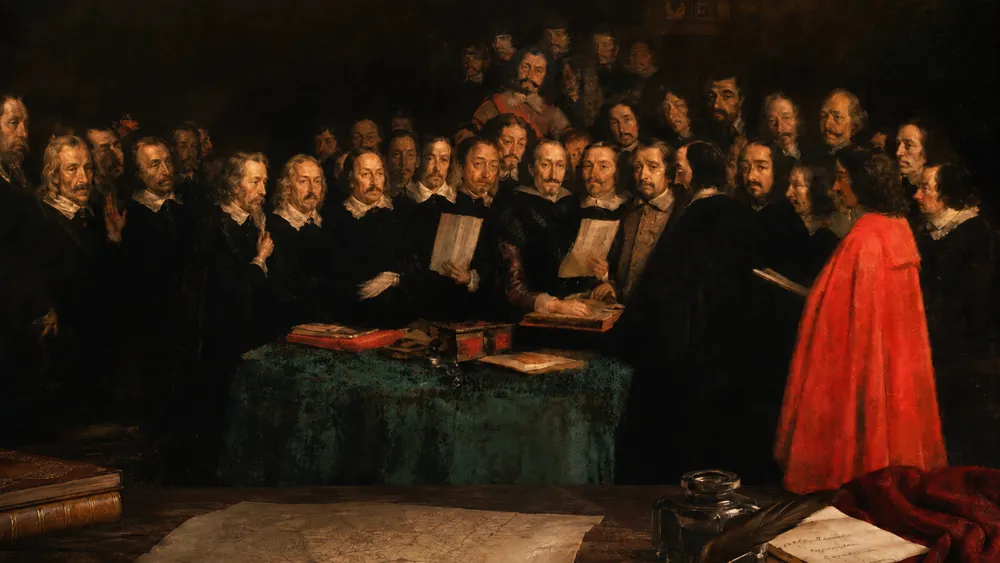
Malchow, Walter S. Dickson Professor of English and American History at Tufts University, writes from the historian's side of a disciplinary divide that has rarely been crossed with sufficient honesty in either direction. His book is framed as an introduction to international relations from a historian's perspective, covering the development of IR theory from its origins to the present day, the key moments in war and peace that shaped the discipline and the relationship between historical narrative and theoretical abstraction. That framing is deliberately pedagogical, aimed at students of both history and IR who need to understand what each discipline can offer the other. But beneath the pedagogical surface lies a more uncomfortable argument: that IR has been shaped by the history it claims to study, and that it often does not know this about itself.
That is the most important insight in the book, and it is worth dwelling on before discussing its limits. Realism did not fall from the sky. It emerged from the ruins of idealism after the Second World War, from the intellectual trauma of watching liberal internationalism fail to prevent catastrophe and from the anxieties of American power in an unstable world. Liberalism in IR carries the optimism of post-war institution-building and the ideological commitments of the Cold War. Constructivism emerged partly as a response to the failure of both realism and liberalism to anticipate the peaceful end of the Cold War. Every major IR theory is, in this sense, a historical document as much as an analytical framework. It carries the fears, the hopes, the blind spots and the political circumstances of the moment that produced it. Malchow's insistence on historicising IR itself, rather than simply deploying history as IR's raw material, is the book's genuine intellectual contribution.
This is where the DiploPolis reading pushes beyond what Malchow articulates. History does not merely need to be better integrated into IR. It needs to interrupt IR's appetite for simplification. The disciplinary habit is not just that IR uses too little history. It is that the history IR uses has already been processed through theoretical categories that predetermine what that history means. The Cuban Missile Crisis becomes a game-theoretic problem. The Congress of Vienna becomes a case study in successful balance-of-power management. The Rwandan genocide becomes a failure of collective security. Each framing captures something real. Each one also loses something irretrievable: the human interior of the event, the contingency of the outcome, the possibility that different actors, different weather, different timing would have produced a different result.
Serious historical thinking resists that kind of retrospective tidiness. A historian reading the same events inhabits their uncertainty rather than explaining it away. The Cuban Missile Crisis could have ended in nuclear war and very nearly did, and that near-miss matters more for how we should understand deterrence than the clean rational-actor narrative that IR absorbed from the event afterwards. The Congress of Vienna was shaped by personal animosities, physical exhaustion, ballroom politics and the specific limitations of the men in the room in ways that any theory of great power management needs to acknowledge. History makes the argument that things could have been different. Theory, too often, implies they could not have been anything else.
Malchow's second edition expanded its treatment of non-Western history and its critique of the Eurocentric nature of IR theory and practice. That expansion is valuable and the book is better for it. But the review should say clearly what acknowledging Eurocentrism does not do. Western IR's problem with non-Western history is not simply that it has paid too little attention to it. It is that when it does pay attention, it tends to process what it finds through categories the non-Western world had no hand in building. China becomes a case for power transition theory. India becomes a case for non-alignment or rising-power behaviour, its thousand years of precolonial diplomacy, its maritime trade networks, its traditions of interstate conduct all compressed into the question of how a postcolonial democracy fits inside a Western-designed international order. The Middle East becomes a case for sectarianism or state failure. Africa becomes a case for weak states or postcolonial disorder. The local history is invited into the theory only after the theory has already decided what kind of history it is. That is not engagement. It is absorption.
The deeper methodological point is one that the best historical scholarship about South Asia, Africa and the Middle East has been making for decades: the categories themselves are historical, and their origins are not neutral. Sovereignty, the state, the balance of power, anarchy, national interest, deterrence: these concepts were forged in European wars, European diplomacy and European philosophy. When IR applies them universally, it is not simply describing the world as it is. It is describing the world as it was shaped by European power, then presenting that description as objective analysis. History, properly used, would show this. It would make the categories themselves strange rather than transparent.
History and International Relations is a serious and useful book. It is most valuable for readers coming to IR theory for the first time who need to understand what kind of intellectual enterprise they are entering and why the theories they are about to learn look the way they do. Read it for the historicisation of IR itself, which is the book's best argument. Read it for the critique of Eurocentrism, which points in the right direction even if it does not travel far enough. Then press the argument further than Malchow takes it. The book earns that pressure by asking the right question, and the right question is worth asking as forcefully as possible.
History is not a warehouse of examples. It is a discipline of resistance. It resists false analogy, premature pattern and the theorist's desire to make the world simpler than it is. The greatest service a historian can do for international relations is not to provide better case studies. It is to insist, again and again, that Munich was not a lesson. It was a moment. And moments, unlike lessons, cannot be applied.
This Book Review is free to read. Future Books Reviews will be available to registered DiploPolis members first. Free registration takes 30 seconds. No credit card required.
Find this piece interesting?
Dispatches by DiploPolis delivers sharp analysis and pointed commentary on power, politics, diplomacy, and world affairs — directly to your inbox.
No neutrality. No noise. Just argument.