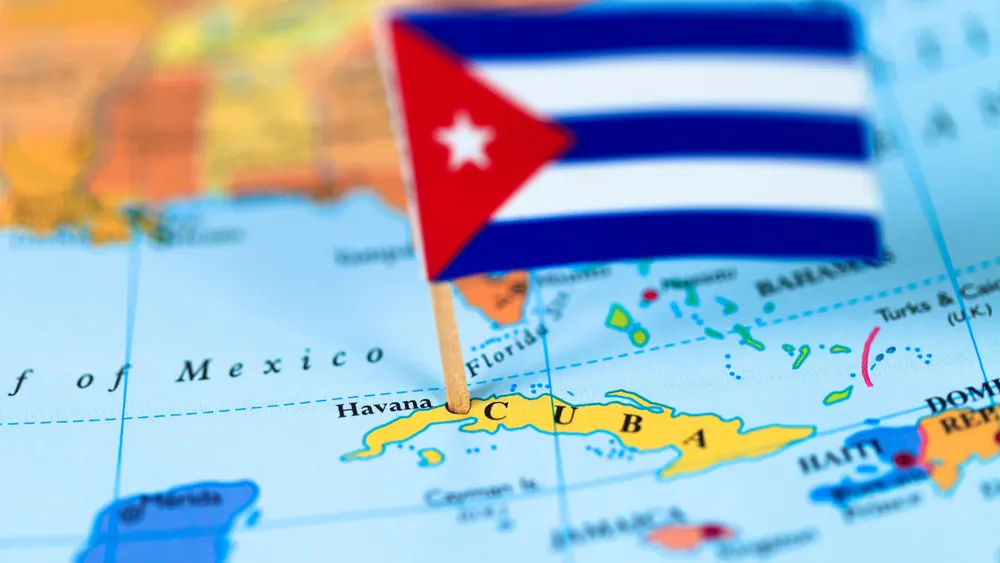
On May 20 — Cuban Independence Day, chosen deliberately — the United States Department of Justice unsealed an indictment charging former Cuban President Raúl Castro with four counts of murder, conspiracy to kill American nationals and destruction of aircraft. The charges relate to the 1996 shootdown of two civilian planes flown by Cuban-American exiles. Castro is 94 years old. He has not left Cuba in years. He will never appear in a Miami courtroom. The indictment was not designed to produce a trial. It was designed to produce a justification.
The USS Nimitz arrived in the Caribbean the same day.
Washington has run this sequence before and recently. Fuel blockade. Economic collapse. CIA deadline. Criminal indictment of the head of state. Carrier group. Each step is individually explicable — the blockade targets Venezuelan oil, the indictment addresses a genuine 30-year-old crime, the carrier group is described as maritime exercises. Together they form a pre-conflict playbook that CNBC, not known for alarmism, described in those precise words on Friday. The Trump administration has been running it since January, when US forces captured Venezuelan President Nicolás Maduro — Cuba's primary economic lifeline — and the oil stopped flowing.
Washington has imposed over 240 sanctions measures on Cuba since January, including an effective oil embargo that has slashed Cuban fuel imports by 80 to 90 per cent. Seven oil tankers heading to the island have been intercepted. Cuba says it is out of oil and diesel. The dollar has hit a record on the informal black market. Blackouts are nationwide and ongoing. CIA Director John Ratcliffe flew to Havana in person and told Cuban officials the window for talks would not stay open indefinitely. Trump said on camera: 'It looks like I'll be the one that does it.' Rubio said force remained an option. The acting Attorney General held a press conference in Miami. The Nimitz is in the Caribbean.
The indictment is 30 years late and will never be enforced. Its purpose is not legal. It is sequential. In the logic Washington is building, Cuba's government is not merely authoritarian — it is criminal, its former head of state a named murderer, its continued existence therefore not a political question but a law enforcement one. This is how interventions are prepared in the modern American playbook. Not with a declaration of war. With a criminal filing.
Cuba has promised fierce resistance. It has also pardoned 2,010 prisoners in the past week — the largest such release in years — a signal that Havana is calculating rather than simply defying. The Cuban government knows the difference between a bluff and a sequence. It is watching the sequence complete itself step by step and responding with the only leverage it has: the cost of occupation. Cuba is not Iran. It does not have a strait to toll or a nuclear programme to negotiate. It has 11 million people, a history of surviving American pressure and a government that has outlasted ten US presidents. The eleventh is threatening to be the one that finally acts.
He may be right. Or the sequence may stall, as it has stalled before. But the playbook is open. Every page is visible. And nobody who has watched Washington run it before should be surprised by what comes next.