On the evening of July 3, standing at Mount Rushmore in South Dakota, Donald Trump made a brief mention of the Iran war. 'They're dying to settle,' he said. 'They want to settle so badly. We gave them a week off for a funeral because we're nice.' Later that same night, he told Axios: 'They are all there. One shot and we can take them all out, but we are not going to do that because then we would have nobody to negotiate with.'
The man whose funeral it is was killed by a US-Israeli strike on February 28.
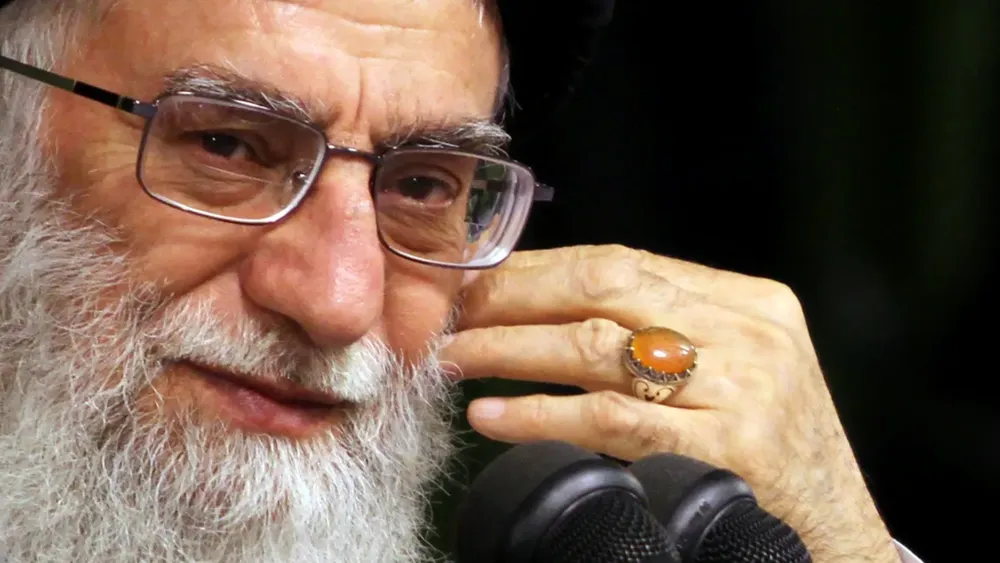
Ayatollah Ali Khamenei led the Islamic Republic for thirty-four years. He was the supreme authority over a country of 90 million people, the commander of its armed forces, the final word on its nuclear programme. Washington killed him in the strike that opened the war. His body is currently being carried through seven cities in two countries, with an estimated 35 million Iranians expected to line the route. His son and successor has not appeared in public since the same strike wounded him. The funeral procession reaches Mashhad for burial on July 9.
Trump described this as a week off. Given as an act of niceness.
The two statements together are more revealing than either alone. 'We gave them a week off because we're nice' describes the pause in pressure as generosity. 'One shot and we can take them all out, but we are not going to do that because then we would have nobody to negotiate with' describes the calculation underneath the generosity. Washington is not pausing because it is nice. It is pausing because it needs someone alive to sign a document. The niceness is the packaging. The calculation is the policy.
This is not how Iran understands the negotiation. Tehran has paused diplomacy for the funeral and negotiators will not return until after July 9. The 60-day window from the Islamabad Memorandum does not register in Tehran as a countdown gifted by Washington's benevolence. It registers as a deadline that Washington proposed and is already treating as flexible. Iran's parliament speaker has described the funeral as an occasion for the Iranian people to convey their call for avenging the Supreme Leader's blood. The crowds at the Grand Mosalla in Tehran this weekend carried red flags symbolising retribution. A eulogist called for Trump's killing. These are not the expressions of a country that is dying to settle.
The Mount Rushmore remarks were not a diplomatic communication. They were thirty minutes of July 4 address to a crowd celebrating America's 250th anniversary, delivered in front of the carved faces of four presidents. The Iran reference lasted two sentences. It was received with loud cheers and what journalists in the crowd described as cheeky laughter. What it communicated was simple: we are winning, they are begging, we are being magnanimous. None of that is an accurate description of a nuclear negotiation whose two language versions still say different things about enrichment and whose 60-day clock is running down with the central question unresolved.
In Mashhad, on July 9, Khamenei will be buried at the shrine of Imam Reza. Whether his son and successor attends his own father's funeral will depend on whether Iranian security can guarantee his safety. The man who now leads the country that Trump described as dying to settle has not been seen by his own people in four months.
Washington is being nice. Iran is burying its dead. The 60-day clock does not know the difference.