

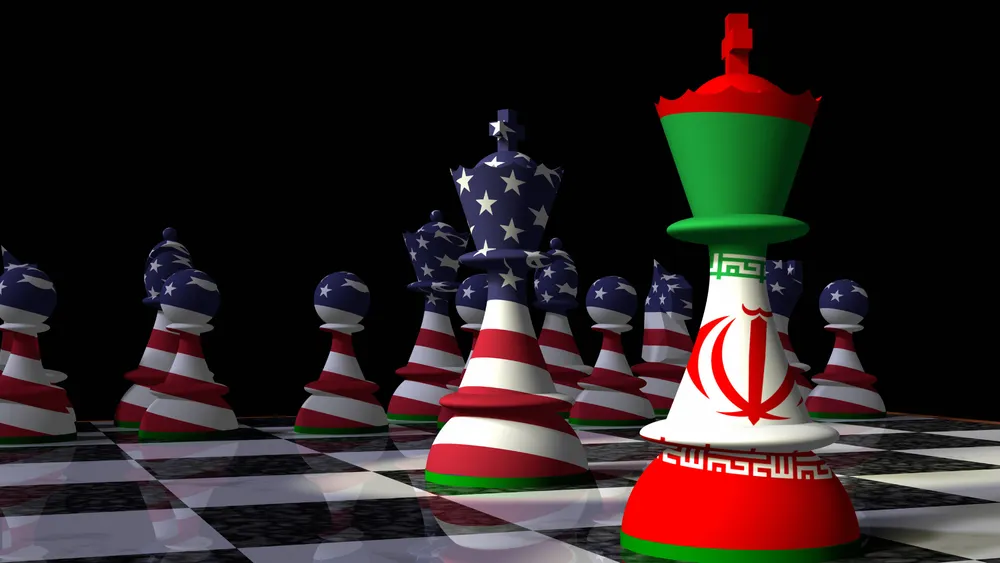
On June 17, 2026, at the G7 summit in Évian-les-Bains, Donald Trump was asked whether the memorandum of understanding his administration had signed with Iran was final. His answer: ‘No, it’s not final. It’s a memorandum of understanding, and if I don’t like it, we’ll go back to shooting at them, dropping bombs on their head. If I don’t like it, if they don’t behave, we’ll go right back to dropping bombs right smack in the middle of their head.’
That answer, delivered to assembled G7 leaders who had just applauded the deal, contains the entire story of the Iran war. The agreement is contingent on Trump’s mood. The Strait of Hormuz reopens on Iran’s schedule. The nuclear programme, the ballistic missiles, the proxy network and the government structure the United States spent four months trying to destroy remain intact. The world’s most powerful military fought a country with the GDP of Texas for nearly four months, killed more than 7,000 people, disrupted global energy markets and signed a memorandum of understanding that changes nothing essential about Iranian power.
The G7 leaders welcomed it. Trump called it ‘a great deal for a lot of reasons.’ It was. For Iran.
What Was Promised
The objectives were stated with precision. On March 4, 2026, White House Press Secretary Karoline Leavitt enumerated four of them: destroy Iran’s ballistic missiles and raze its missile industry to the ground; annihilate the Iranian navy; sever the regime’s support for terrorist proxies; guarantee that Iran can never obtain a nuclear weapon. Secretary of State Marco Rubio stated the objectives were clear and unchanging. Defence Secretary Pete Hegseth described the campaign as dismantling Iran’s ability to threaten the United States and the free world. The name chosen was Operation Epic Fury. The language was categorical.
Trump added a fifth objective depending on the day: regime change. He described the war at various points as creating ‘the conditions necessary for regime change in Tehran,’ said the regime was ‘largely decimated,’ and claimed that killing Supreme Leader Ali Khamenei in the opening strikes of February 28 constituted regime change in itself. The killing was real. The regime change was not. The Islamic Revolutionary Guard Corps, the clerical council and the parallel state structures that have governed Iran since 1979 remained in place. The IRGC continued to operate. Hezbollah continued to fire rockets into northern Israel throughout the ceasefire.
At the G7 summit, Trump was asked about regime change. ‘I never cared about regime change,’ he said.
What the MOU Delivers
The memorandum of understanding does three things: it extends the existing ceasefire by 60 days, commits to the reopening of the Strait of Hormuz and starts a 60-day negotiation period to address Iran’s nuclear programme. The text was not released publicly ahead of the Geneva signing. ‘Nobody knows what it is,’ Trump told the G7 press conference, ‘but it’s very strong, and most people seem to be very happy.’ US officials described the document as incredibly vague, mainly intended to create a more favourable environment for future talks. Iran’s semi-official Fars News Agency was more direct: Iran ‘has made no commitments in this agreement regarding handing over nuclear stockpiles, removing equipment, closing facilities, or even pledging not to build a nuclear bomb.’
This is not a dispute about interpretation. It is a description of what the document contains and what it does not. The MOU does not address Iran’s ballistic missile programme. It does not require the dismantling of IRGC proxy forces. It does not require the transfer of Iran’s stockpile of highly enriched uranium — approximately 440 kilograms of material enriched to 60%, stored in facilities the IAEA cannot currently access. Asked about the uranium at the G7, Trump said: ‘You could make the case, why even bother? It’s not very valuable stuff.’ This was the president who, four months earlier, had said one way or another Iran would have to relinquish its enriched uranium as a non-negotiable condition of any deal.
The Strait of Hormuz, which Iran closed and which cost the United States its Strategic Petroleum Reserve stocks at nine million barrels a week, reopens under Iranian supervision. Multiple Iranian media outlets close to the IRGC reported the critical waterway would remain under Iranian control. Iran did not surrender that leverage. It agreed to allow shipping to resume. The distinction matters. A country that closes a strait and then agrees to reopen it on its own terms has demonstrated something about coercive power that every government in the world is now calculating.
What Iran Kept
The IRGC is intact. Hezbollah is still in Lebanon, still firing rockets, still insisting that any permanent deal require Israeli withdrawal as its price. Iran’s nuclear infrastructure, severely damaged, is being rebuilt. Satellite imagery shows Iran accelerating construction at underground facilities near Natanz and Isfahan, including the Kūh-e Kolang Gaz Lā site — a tunnel complex buried under a mountain deeper than Fordow, the facility American bunker-busters struggled to reach in the June 2025 strikes. The 60-day nuclear talks beginning under the MOU will address what to do about the enriched uranium stockpile. Iran’s opening position is already known: sanctions relief first, everything else later, and the highly enriched uranium is ‘under the rubble’ and therefore no longer Iran’s problem to surrender.
Iran kept its government. Khamenei died on February 28. The system he led did not. The Islamic Republic was not established by one man and cannot be ended by one. The clerical council, the Revolutionary Guards, the parallel institutions of revolutionary governance, the ideological apparatus that has run the country since 1979 — these survived the most intensive American air campaign launched against any country since Iraq in 2003. The Chicago Council on Global Affairs assessed in April that the war was likely to produce a more hardline regime more determined to seek nuclear weapons than the one that preceded it. Nothing since has altered that assessment.
Iran also kept the narrative. Tehran’s position throughout has been that it was defending itself against illegal aggression by two nuclear-armed states. The war killed more than 7,000 people, the overwhelming majority in Iran and Lebanon. More than a million Lebanese were displaced. Iranian cities absorbed strikes that destroyed infrastructure built across decades. Iran withstood that campaign, kept its government, held the Strait of Hormuz as leverage and signed a memorandum of understanding that requires 60 more days of negotiation before any hard question is answered. In the court of Global South opinion, which watched every development, that is not a defeat.
The G7 and the Verdict
The leaders of Britain, Canada, France, Germany, Italy and Japan assembled at Évian-les-Bains and welcomed the US-Iran agreement. They had no role in negotiating it. They had not seen its text. They were applauding a document described by US officials as incredibly vague, whose most difficult provisions were explicitly deferred and whose central requirement — that Iran not build a nuclear weapon — is a restatement of Iran’s official position since the 1970s.
The G7 also demanded an ‘immediate robust ceasefire’ in Lebanon. Israel said it would not withdraw from Lebanon, Syria or Gaza. Iran said Israeli withdrawal was a requirement for any permanent settlement. The G7 communié has no mechanism to close that gap. The leaders committed to diversifying energy supply routes to reduce dependence on the Strait of Hormuz — an acknowledgement that Iran demonstrated, conclusively, that it holds a chokepoint through which 20 per cent of the world’s oil passes and that no amount of military pressure eliminated that leverage. The response is to build pipelines.
What the applause at Évian confirms is that the world’s wealthiest democracies needed this war to end, accepted the terms available and will call whatever emerged a success because the alternative is politically intolerable. The gap between the official narrative and the actual outcome is not subtle. It is the size of 440 kilograms of enriched uranium buried in a mountain.
Every government without nuclear weapons is watching and calculating. The lesson is not complicated. Iran was attacked by the two most militarily capable states in the world. It absorbed four months of strikes. It lost its supreme leader. It signed a memorandum of understanding that requires further negotiation on every hard question. Its nuclear programme is damaged and rebuilding. Its government is intact. Its proxies are intact. Its leverage over the Strait of Hormuz was demonstrated and then bargained away on its own terms.
Contrast this with Libya in 2003, when Muammar Gaddafi surrendered his nuclear weapons programme under American pressure and received diplomatic recognition in return. In 2011, NATO bombed him from power. His country has been in civil war ever since. The lesson of Libya was already clear to most of the world before the Iran war began. The Iran war has made it explicit.
Trump will call the Geneva signing a historic deal. The G7 will applaud. The Strait of Hormuz will open. And in Pyongyang, in Islamabad, in every capital currently calculating the costs and benefits of nuclear capability, the analysis will be the same: Iran fought the United States to a memorandum of understanding. The memorandum does not contain what the United States demanded when it started the war. That is the outcome. Everything else is ceremony.
This Analysis piece is free to read. Future Analysis pieces will be available to registered DiploPolis members first. Free registration takes 30 seconds. No credit card required.
Find this piece interesting?
Dispatches by DiploPolis delivers sharp analysis and pointed commentary on power, politics, diplomacy, and world affairs — directly to your inbox.
No neutrality. No noise. Just argument.


