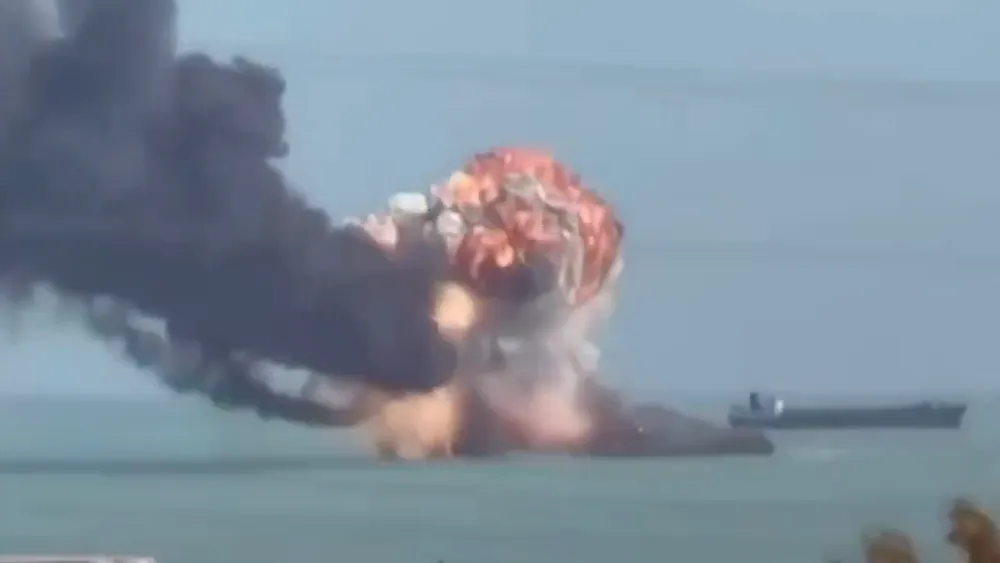
Iran's Foreign Minister Abbas Araghchi and Parliament Speaker Mohammad Bagher Ghalibaf landed in Doha on Monday for peace talks with Qatari mediators. They were Iran's most senior negotiators. The talks were the most substantive since the ceasefire — Iran's nuclear stockpile was on the table, with officials working to iron out key sticking points in a proposed memorandum to halt the violence. Hours later, US Central Command announced strikes on missile launch sites and boats in southern Iran. The military called it self-defence. Trump posted on Truth Social that negotiations were 'proceeding nicely.'
Both things happened on the same day. Washington struck Iran and called it restraint. Washington struck Iran and called it a ceasefire. Washington struck Iran while Iran's foreign minister was at a table in Qatar trying to end the war.
There is a word for a negotiation in which one party bombs the other mid-session. It is not diplomacy.
Iran said the United States had violated the ceasefire. Rubio said that negotiating a deal to halt the conflict could take a few days. The bombs fell. The talks continued. The language held. Iran's IRGC threatened to retaliate. Deutsche Bank analysts wrote that the strikes were 'clearly a warning shot' but that optimism for a deal remained 'elevated.' Markets measured optimism. Southern Iran measured the craters.
The official CENTCOM statement was a masterpiece of simultaneous contradiction. The strikes were conducted 'in self-defence.' The military was 'using restraint during the ongoing ceasefire.' The targets included missile launch sites and Iranian boats attempting to emplace mines — active threats, CENTCOM said, posed by Iranian forces. Every sentence was individually defensible. Together they described a country conducting a military campaign it was calling a ceasefire.
Rubio, speaking from New Delhi on Tuesday, delivered the underlying message without packaging. The Strait of Hormuz will be open, he said, 'one way or the other.' What is happening there is 'unlawful, illegal, unsustainable for the world, unacceptable.' No country supports Iran's tolling system. Not Russia. Not China. Not anyone. 'One way or the other' is not a negotiating position. It is an ultimatum with a ceasefire painted over it.
The pattern has been consistent since February 28. Washington bombed Iran and called it the elimination of threats. Washington announced a ceasefire and called it peace. Iran built a toll booth on the Strait and Washington called it illegal. Washington struck Iran again and called it self-defence. Trump said he would only sign an agreement 'if we get everything we want.' With each passing day, Iranian and US officials are raising their demands, hostilities are flaring between Israel and Hezbollah in Lebanon, and civilians are being killed — raising the stakes of negotiations that were never designed to produce equality between the parties.
Now there is a new development that makes the Doha session more significant than it first appeared. Trump is expected to gather his Cabinet at Camp David on Wednesday for a meeting at a high-stakes moment for the US war with Iran. A Camp David Cabinet session the day after strikes on Iran during active peace talks is either a coincidence or a sequence. Given the pattern of the past three months it is almost certainly a sequence. Washington strikes. Washington talks. Washington meets at Camp David. The diplomacy and the military action are not competing tracks. They are the same track.
Iran's negotiators stayed in Doha after the strikes. That tells you something about the calculation Tehran is making — that leaving the table is more dangerous than staying at a table where the other side is bombing you. It also tells you something about what kind of agreement is being negotiated. A deal reached under these conditions is not a settlement between parties. It is terms dictated to the weaker side while the stronger side demonstrates, with missile strikes on southern Iran, exactly what refusal costs.
Trump said he wants Saudi Arabia, Qatar, Pakistan, Turkey, Egypt and Jordan to join the Abraham Accords as part of any deal. He is using a ceasefire negotiation to reshape the entire regional order simultaneously. The strikes on Monday were not a disruption to the diplomacy. They were part of it — a reminder, delivered in southern Iran, of who sets the terms and who signs them.
The negotiators stayed at the table in Doha. They did not have a better option. That is what this negotiation is.