Forty-seven people in Lebanon were dead by Friday morning, according to the Lebanese health ministry, killed in Israeli airstrikes that continued into the very hour a new ceasefire was due to begin. By Saturday, Israeli strikes had killed dozens more, including in the southern village of Qennarit, even as Washington and Tehran prepared to send envoys to Switzerland to discuss the deal that was supposed to end exactly this.
Israel was never going to be at that table. It has said so itself.
The Islamabad Memorandum that Donald Trump signed in Versailles last Wednesday calls for an immediate and permanent end to military operations on all fronts, Lebanon included. Israel is not a signatory. A senior Middle Eastern official told CBS News that Israeli officials viewed the inclusion of Lebanon in the memorandum as a concession to Iran made by Trump's own envoys, bypassing efforts by Secretary of State Marco Rubio to keep the Iran war and the Israel-Hezbollah conflict diplomatically separate. Netanyahu's government has said outright that Israel does not consider itself bound by the memorandum's Lebanon provisions.
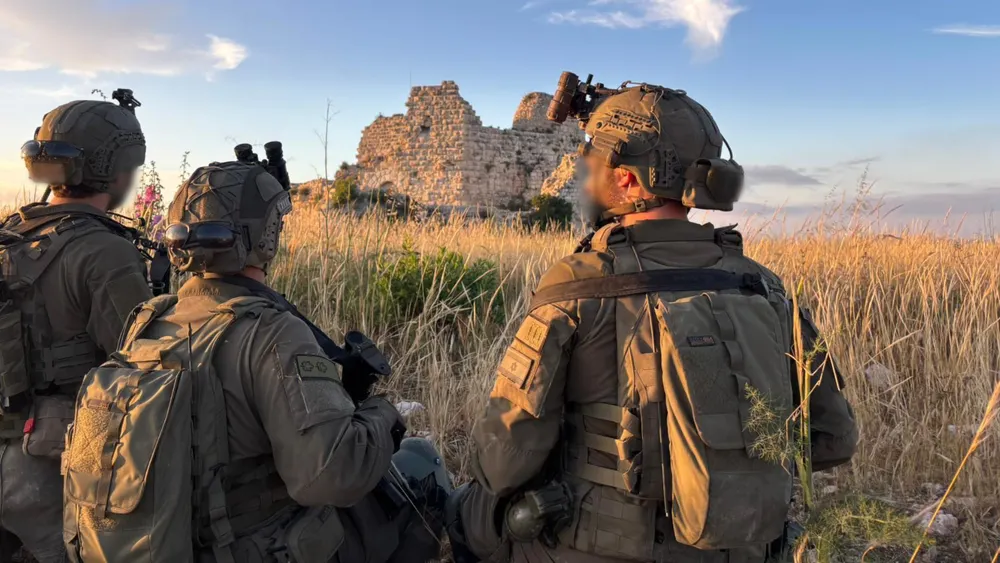
So Israel kept fighting. A ceasefire with Hezbollah was announced Friday at four in the afternoon, brokered by the United States and Qatar with Iranian backing. Israeli strikes were reported in southern Lebanon at the exact moment the truce was meant to take hold. By the time the guns paused, the Lebanese health ministry's emergency operations centre said rescue teams could not reach the wounded for hours, because the strikes had not actually stopped.
The fighting was serious enough to derail the diplomacy built around it. Friday's planned talks in Bürgenstock were postponed, and JD Vance cancelled his trip to Switzerland after the new Israeli strikes in Lebanon cast doubt on the entire framework. Trump told NBC News he had personally asked Israel to agree to the ceasefire, calling it 'a little icing on the cake.' He would not say whether he had spoken to Netanyahu directly.
Hezbollah's position has not moved. Foreign Minister Abbas Araghchi has said Iran will treat any attack on Beirut as a complete breach of the truce, and that the war will not end on Iran's terms until it also ends in Lebanon. Iran has made Lebanon a precondition of its own compliance with the memorandum it just signed. Israel has made clear it considers Lebanon outside that document's reach entirely. Two parties to the same negotiation, holding two incompatible positions about the same clause, and neither one is wrong about what the document actually says, because Israel never agreed to be bound by it in the first place.
Here is what the memorandum actually achieved on the question of Lebanon: nothing enforceable. Trump signed a document that names a country as a party to peace without that country's consent. Israel did not break a promise this week, because it never made one. The promise was made on its behalf, by an administration that does not control it, in a deal that requires Israel's restraint without requiring Israel's signature.
Talks are now expected to resume in the coming days. Pakistan and Qatar will mediate. American and Iranian officials will sit at the table to discuss compliance with a memorandum whose central Lebanon clause is being violated, in real time, by the one government whose actions actually determine whether it holds. They will negotiate the terms of a peace that the country doing the bombing was never asked to accept.