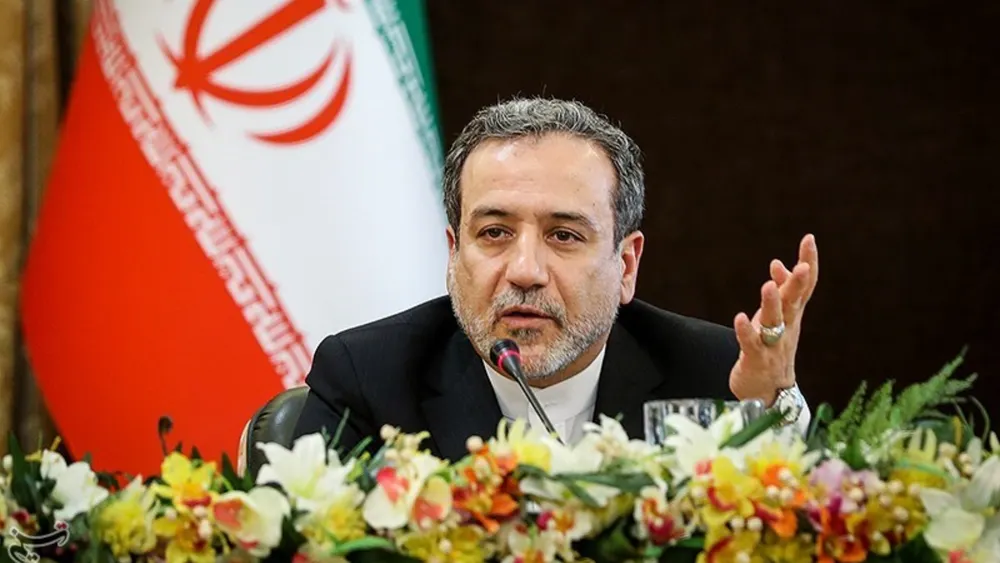
Sometime during the six-day funeral for Ali Khamenei, a mob found Abbas Araghchi in the crowd and pelted him with rocks. The death chants called him a traitorous sellout. Araghchi is Iran's Foreign Minister. He negotiated the Versailles MOU. He is the man who has, more than anyone else in the Islamic Republic, kept the channel to Washington open across five months of war. He fled.
On Monday morning, mediators passed Iran a proposal for a 10-day ceasefire to find ways to revive the interim deal that Araghchi signed. The man the hardliners tried to stone is the man the diplomats need back at the table.
This is not irony. It is a description of how the Islamic Republic has always functioned: two registers, one system. The Foreign Ministry says it wants to talk. The hardliners who filled Khamenei's funeral say talking is treason. Both are Iran. The question the ceasefire proposal cannot answer is which Iran has the authority to make an agreement hold.
The hardline case, reported by CNN, is specific. Mojtaba Khamenei, named Supreme Leader after his father's killing in February, has been effectively invisible since the strikes. He has not appeared in public. He has issued no operational guidance. He has not endorsed the MOU, the negotiations, the ceasefire or anything that has happened since he was named to the position. In his absence, Ghalibaf, Pezeshkian and Araghchi have become the visible faces of post-war Iran. The hardliners have drawn the only conclusion available to them: the negotiators are running the country without the Supreme Leader's sanction. They are calling it a coup. 'Mojtaba's continued absence means that they don't have access to him and also that Ghalibaf and allies are effectively in charge of the country,' Iran expert Arash Azizi told CNN. 'The ultra-hardliners have thus accused Ghalibaf and Pezeshkian of plotting a coup against Mojtaba.'
Whether Mojtaba is incapacitated, in hiding for his own security or deliberately invisible while others manage the consequences of the February strikes, the effect is the same. The men doing the negotiating have no visible supreme authority behind them. Every concession Araghchi makes can be characterised as unauthorised. Every ceasefire he signs can be repudiated as illegitimate. The hardliners threw rocks at him at a funeral and called for his death. That is not fringe behaviour in a moment of grief. It is a political statement about who has the right to speak for the Islamic Republic.
The 10-day ceasefire proposal arrives into this. Mediators — Qatar and Oman — are proposing a pause long enough to find a path back to the MOU framework. Washington has downplayed the prospect of Trump accepting it. 'Right now, President Trump is focused on making Iran pay for their violations of the MOU and their continued acts of terrorism in the Strait of Hormuz,' a US official said. The White House is not saying yes. Tehran's hardliners are not allowing yes. And the Supreme Leader, if he has a view, has not expressed it.
The hardliners at the funeral were not simply mourning. They were conducting a political audit of the war's management. Their verdict: the men who negotiated in Washington signed away the revolution's commitments without the revolution's authorisation. Before the MOU was signed, one faction warned: 'If the leader's conditions are not fulfilled, it will be us, the blade and your throat.' That warning was not retracted when the MOU was signed anyway.
Washington is proposing ten more days of ceasefire. Tehran's diplomats are receiving the proposal. The Supreme Leader has not been seen since February. The man the mediators need has rocks thrown at him in public.
A ceasefire requires two parties. Iran has several.