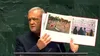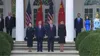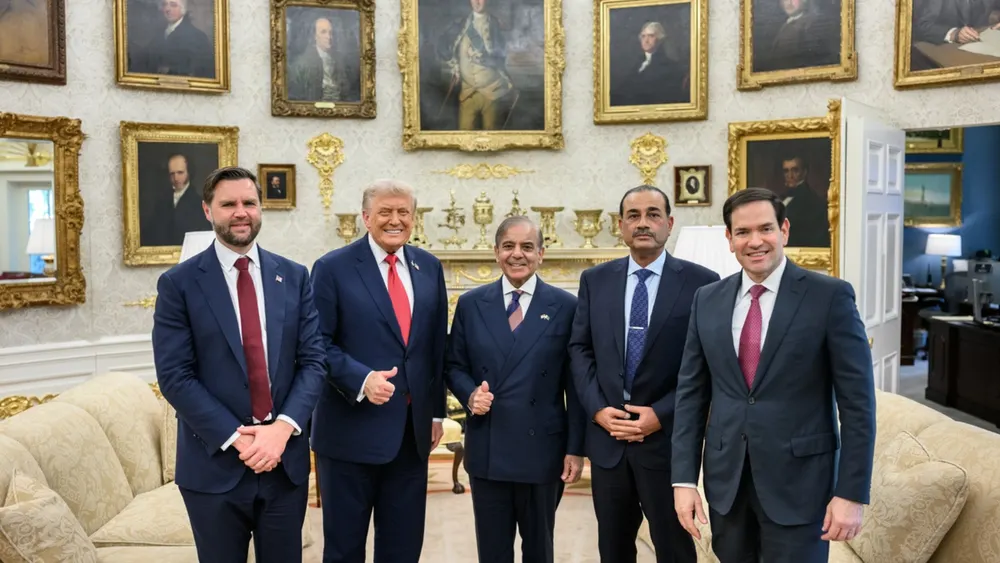
JD Vance arrived at the Bürgenstock Resort overlooking Lake Lucerne and paused before the cameras to make a joke. 'I have two very important people in my life,' he told reporters. 'An Indian and a Pakistani. The Indian is my wife, and the Pakistani is Field Marshal Munir.' The assembled diplomats laughed. The joke landed precisely because of what it described: the army chief of a country Trump called nothing but 'lies and deceit' eight years ago had become Washington's indispensable man in the most consequential Middle East negotiation in a generation.
On January 1, 2018, Trump posted on X that the United States had 'foolishly given Pakistan more than 33 billion dollars in aid over the last 15 years, and they have given us nothing but lies and deceit, thinking of our leaders as fools.' The post remains on the platform. Eight years later, Trump told reporters that Munir and Sharif had been 'absolutely great' and that the United States was 'grateful for Pakistan's efforts.' The gratitude was specific. Pakistan had produced something Washington had failed to produce in five decades: direct talks between American and Iranian officials.
What changed between 2018 and 2026 is not Pakistan. The institution that produced the bad actor designation is the same institution now occupying the mediator's chair. Field Marshal Asim Munir is a former ISI chief, the intelligence service that Western governments and their think tanks spent two decades documenting as the principal enabler of militant networks in Afghanistan and Kashmir. Abdul Qadeer Khan, the architect of Pakistan's nuclear programme, admitted transferring centrifuge designs to Iran — the IAEA found records of a 1987 meeting between Khan and Iranian officials and evidence that Pakistani components reached Iran in 1994 or 1995. The military establishment that sheltered and then pardoned Khan is the same establishment that Vance is now crediting with 'consistent efforts, perseverance and patience.'
The question the joke at Bürgenstock did not answer is what Pakistan received in exchange. The Stimson Center noted in April that Pakistan's domestic motives for the mediation were acute: it shares a 900-kilometre border with Iran, imports roughly 90 per cent of its oil through the Gulf, and has a Shia population of 15 to 20 per cent whose protests after the killing of Ayatollah Khamenei left at least 23 dead in street violence. Pakistan needed this war to end. The mediation was not charity. It was survival presented as statesmanship, and Washington accepted it as the latter because it needed the former.
What it accepted alongside it was more complicated. In May, CBS News reported, citing US officials, that Pakistan had allowed Iranian military aircraft including an RC-130 reconnaissance variant to park at Nur Khan airbase outside Rawalpindi during the April ceasefire period, potentially shielding them from American strikes. Pakistan denied it. Senator Lindsey Graham said he did not trust Pakistan 'as far as I can throw them' and questioned whether Washington should be looking for someone else to mediate. Trump said Pakistan had been 'great' the same day. The aircraft stayed where they were.
The CFR analysis published in April noted the arc plainly: Pakistan's relations with the United States had turned sour within a decade of 9/11. Its military was described in a 2011 Atlantic piece as the US 'ally from hell,' and Trump's first term was marked by the suspension of military aid. What restored the relationship was not reform. It was utility. Pakistan happened to have the right relationships, the right geography and the right incentives at the moment the United States needed a back channel to Tehran. The ISI's documented history of cultivating the very instability it was now being asked to resolve was not a disqualification. It was, in the logic of the transaction, exactly the qualification.
Senator Graham's misgiving did not change the outcome. The Islamabad Memorandum was signed. Pakistan announced it on X before Washington did. Prime Minister Sharif said it was the greatest diplomatic achievement in Pakistan's history. Munir attended Bürgenstock alongside Vance and the Iranian delegation and received credit from both. The 2018 post about lies and deceit is still on the platform. Nobody is pointing at it.
The bad actor designation expired the moment it arrived. Pakistan was useful.
The Ledger, Pakistan, Iran, United States, Asim Munir, Islamabad Memorandum, AQ Khan, J.D. Vance