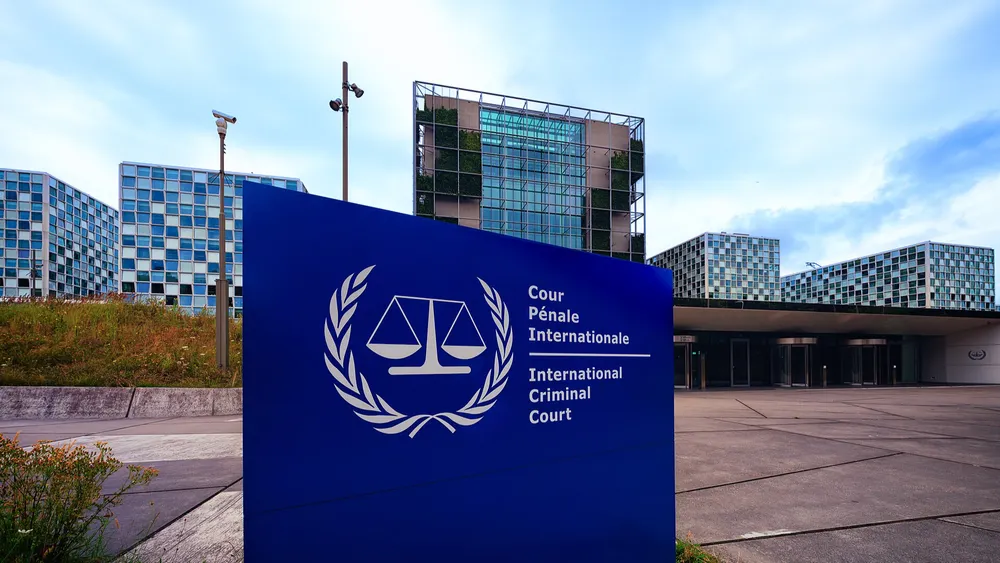
Judge Reine Alapini-Gansou of Benin cannot use her credit card. She cannot access banking services, book travel, use Amazon or Google, or obtain health insurance. She is a sitting judge of the International Criminal Court. On June 24, she filed a lawsuit in the US District Court for the Southern District of New York alongside Judge Kimberly Prost of Canada and Judge Solomy Balungi Bossa of Uganda. Their argument: the sanctions the United States government imposed on them are unlawful, designed to punish them for doing their jobs, and amount to what the complaint calls a financial death penalty.
This is the first time sitting ICC judges have sued the Trump administration themselves. It is the fifth lawsuit challenging Executive Order 14203, which Trump signed on February 6, 2025, declaring ICC investigations into US nationals and allied states a national emergency. Within a week, ICC Chief Prosecutor Karim Khan was sanctioned. By December 2025, at least 11 ICC officials — judges, prosecutors, deputy prosecutors — had been added to the list. The declared emergency was not a terrorist attack or a military crisis. It was judges doing their jobs.
The sanctions were imposed because the ICC issued an arrest warrant for Israeli Prime Minister Benjamin Netanyahu in November 2024 and had previously opened an investigation into US personnel in Afghanistan. Secretary of State Rubio sanctioned Alapini-Gansou and Bossa in June 2025, describing them as having 'actively engaged in the ICC's illegitimate and baseless actions targeting America or our close ally, Israel.' Judge Prost was sanctioned in August 2025 for a ruling she made in 2020 authorising the Afghanistan investigation — five years before Washington decided to punish her for it. Prost noted the logic herself: sanctions are supposed to change conduct or deter future action. The Afghanistan investigation is dormant. There was nothing left to deter.
Four previous courts found EO 14203 unconstitutional on First Amendment grounds as applied to Americans assisting the ICC. Those rulings did not help Alapini-Gansou. She is not American. She cannot make a First Amendment argument. What she can make — what the three judges are making in Manhattan — is that the order exceeds the authority granted by the International
Emergency Economic Powers Act, violates the Administrative Procedure Act and denies Fifth Amendment due process. She is asking a US federal court for the right to access her bank account for doing her job.
The United States helped draft the Rome Statute. American negotiators were key participants in Rome in 1998, assisting in drafting significant parts of the final version. The principles the court embodies — no immunity for heads of state, individual criminal responsibility for mass atrocity — trace directly to the Nuremberg Charter that American lawyers helped write in 1945. Washington championed those principles when they applied to defeated German officials. It is sanctioning the judges when those same principles are applied to an ally it has chosen to shield.
A judge from Benin is suing in Manhattan for the right to use her credit card. The US built the court. The US built the law the court applies. The US declared both a national emergency.