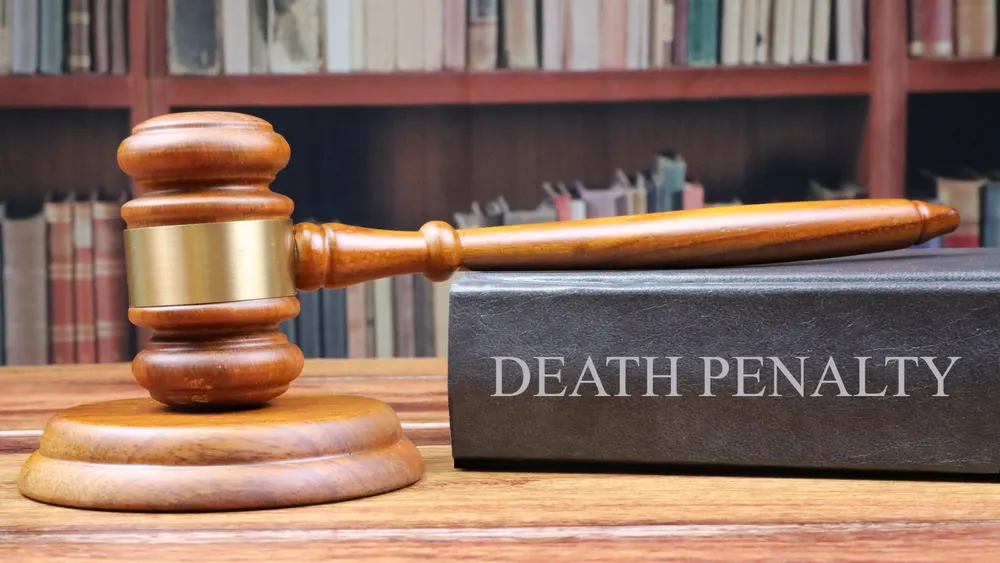
On August 11, Lebanon's parliament voted to abolish the death penalty. A majority of the 128-member assembly supported the legislation, introduced by lawmaker Abdul Rahman Bizri and amended in session. All existing death sentences — 85 people at the end of 2025, according to the Lebanese Ministry of Justice's Directorate of Prisons — were replaced with life imprisonment with aggravated hard labour. Justice Minister Adel Nassar walked out of parliament and told reporters: 'I just came to tell the Lebanese people that the death penalty was lifted and this is a historic day for Lebanon. Lebanon is regaining its leading role in the region and worldwide.' The law must be transmitted to President Aoun for signature and published in the Official Gazette before entering into force — a step that is expected but not yet completed.
Lebanon is the first country in the Middle East to formally end capital punishment. It had maintained a de facto moratorium on executions since January 2004 — twenty-two years of choosing not to kill — but courts had continued sentencing people to death throughout those decades, producing a death row of 85 people who knew they had been condemned to die without any expectation of when or whether the sentence would be carried out. Amnesty International's Regional Director Heba Morayef described the vote as transforming 'a precarious hiatus in executions into lasting legal protection upholding the right to life.' On August 11, those 85 people woke up under sentence of death and went to sleep serving life sentences. The parliament had made a decision about human dignity and state power that no other Middle Eastern government has made.
The same parliament cannot enforce Israeli withdrawal from Lebanon's south. The same state cannot prosecute anyone for the Beirut port explosion. The same government cannot fund the rebuilding of the villages that Israeli forces demolished during the occupation. Those things are true, and they are not a reason to diminish what the parliament did on August 11. They are the context in which what the parliament did should be understood: a state operating at the edge of its institutional capacity made the most ambitious moral statement a government can make about the value of human life.
What Lebanon's Parliament Can and Cannot Do
The list of what Lebanon's government cannot do is long and documented. It cannot enforce the ceasefire provisions that require Israeli withdrawal from the south, because Israel refuses to withdraw and neither the Lebanese army nor the international monitoring force has the means to compel it. It cannot prosecute those responsible for the August 4, 2020 port explosion, because the investigation — completed by Judge Tarek Bitar in March 2026 and referred to the public prosecutor — is still awaiting the prosecutor's response six months later. It cannot fund hospital salaries or civil servant pay at levels that prevent medical professionals from emigrating, because the Lebanese pound's collapse and the state's debt structure have not been resolved despite years of IMF negotiations. It cannot rebuild southern Lebanese villages that Israeli forces systematically demolished — by bombing heavy machinery, destroying prefabricated housing units and targeting workers clearing rubble — because reconstruction requires both funding and Israeli withdrawal, and neither is available.
Hezbollah's parliamentary bloc voted against the abolition, arguing that eliminating the death penalty alongside an amnesty law could reduce sentences for bombings and crimes against the Lebanese Armed Forces. The Free Patriotic Movement and independent MP Jihad Samad also voted against it. Their argument was not theological — Lebanon is a multi-confessional state in which no single religious authority governs criminal law — but political: the concern that abolition, combined with the broader amnesty legislation passed on August 12, would reduce accountability for serious political violence.
The concern is not unreasonable in the Lebanese context. The port explosion killed 220 people. Nobody has been convicted. The political class that blocked the investigation for five years exists inside the same system that just voted to abolish the death penalty. The moral ambition and the institutional failure are not in different Lebanese institutions. They are in the same parliament, expressed by different blocs, in consecutive legislative sessions.
The First in the Region
The significance of Lebanon being the first Middle Eastern country to abolish the death penalty requires the regional context to land properly. Saudi Arabia carried out 172 executions in 2022 and has continued executions since at comparable rates. Iraq executes prisoners by hanging, frequently in large groups, for crimes including drug offences. Yemen's conflict has produced both state and non-state executions with no functioning accountability mechanism. Egypt executes prisoners regularly, including those convicted after proceedings that international observers have described as falling short of fair trial standards. Iran executes more people per capita than almost any country in the world.
Against that regional backdrop, Lebanon's parliament did something specific and unprecedented: it decided that the state should not kill its citizens as a form of punishment, that the existing framework — in which courts sentenced people to die and the government then chose not to carry out the sentence for two decades, leaving those people in a state of suspended condemnation — was an institutional contradiction that needed resolution. The resolution it chose was not to resume executions. It was to eliminate the category.
The National noted that Saudi Arabia, Iraq, Yemen, Egypt and Somalia continue to carry out executions, while Algeria, Morocco and Tunisia have not done so in over a decade. Djibouti, a member of the Arab League but located in the Horn of Africa, had previously abolished capital punishment. Lebanon is the first country in the region that most defines the Arab world — the Levant, the cradle of the civilisational and political arguments about governance, dignity and statehood that have animated the Middle East for a century — to make this decision.
What Nassar Said and What It Means
Justice Minister Adel Nassar's statement outside parliament — 'Lebanon is regaining its leading role in the region and worldwide' — is the kind of declaration that risks sounding like the inflation of a parliamentary vote into a civilisational claim. It deserves to be taken seriously rather than dismissed.
Lebanon's historical claim to regional leadership was cultural, intellectual and institutional. Beirut was the Arab world's publishing capital, its university city, its place of relative press freedom and legal pluralism. The civil war that ran from 1975 to 1990 damaged all of that. The Taif Agreement that ended the war preserved the confessional system that had produced the war. The thirty years since have involved successive institutional failures — the port explosion, the currency collapse, the migration of the educated professional class, the Israeli occupations — that have progressively narrowed what the Lebanese state can do and what Lebanon's claim to regional significance means.
Nassar's statement is a claim about reclaiming something. On human rights, specifically, Lebanon has historically tracked with international norms more closely than its neighbours. The abolition of the death penalty is a specific step toward an international human rights standard that the region's more powerful states actively resist. It is a statement that Lebanon, despite everything, retains the capacity to make decisions based on principle rather than purely on power.
The irony is precise and worth naming: the state that cannot enforce its own sovereignty in its own south, that cannot prosecute the deaths of 220 of its own citizens in its own port, has just decided that the state should not have the power to take a human life as punishment. The specific things Lebanon's state cannot do involve failures of enforcement, of resources and of political will against entrenched interests. The thing it just did required a parliamentary majority, a principled argument and the willingness to move against a regional consensus. Those are different categories of capacity.
What the Vote Tells Us About the New Government
The vote reflects something real about the political character of the Nawaf Salam government that took office in early 2025. Salam came to office explicitly promising institutional reform, accountability and alignment with international human rights norms — a departure from the transactional, clientelist politics that had governed Lebanon since Taif. The death penalty abolition is the most visible expression of that commitment in the legislative record so far.
The amnesty law passed on August 12, the day after the death penalty vote, releasing categories of prisoners and reducing overcrowding in Lebanese prisons, is part of the same legislative programme: a government attempting to bring Lebanon's criminal justice institutions into alignment with international standards it had previously only nominally observed. Both votes represent the Salam government using the parliamentary majority it holds to make decisions that the previous political order was unwilling to make.
The limitation of this programme is visible too. The Beirut port explosion investigation remains with the public prosecutor. The south remains under Israeli occupation. The reconstruction bill remains unpaid. The institutional ambitions of the Salam government have not yet produced accountability for the most consequential institutional failure of the Lebanese state in modern history. The abolition of the death penalty is a genuine achievement and a genuine signal of direction. It is not a resolution of Lebanon's deeper institutional crisis.
Nassar was right to call it a historic day. He would have been more precisely right to call it a necessary but insufficient one. Lebanon's parliament has demonstrated, on August 11, that it can make a decision about human dignity that no other Middle Eastern parliament has made. What it has not yet demonstrated is that it can make the decisions — on accountability, on reconstruction, on sovereignty — that would make Lebanon's historic day mean something to the people it cannot yet protect.
This Analysis piece is free to read. Future Analysis pieces will be available to registered DiploPolis members first. Free registration takes 30 seconds. No credit card required.
Find this piece interesting?
Dispatches by DiploPolis delivers sharp analysis and pointed commentary on power, politics, diplomacy, and world affairs — directly to your inbox.
No neutrality. No noise. Just argument.