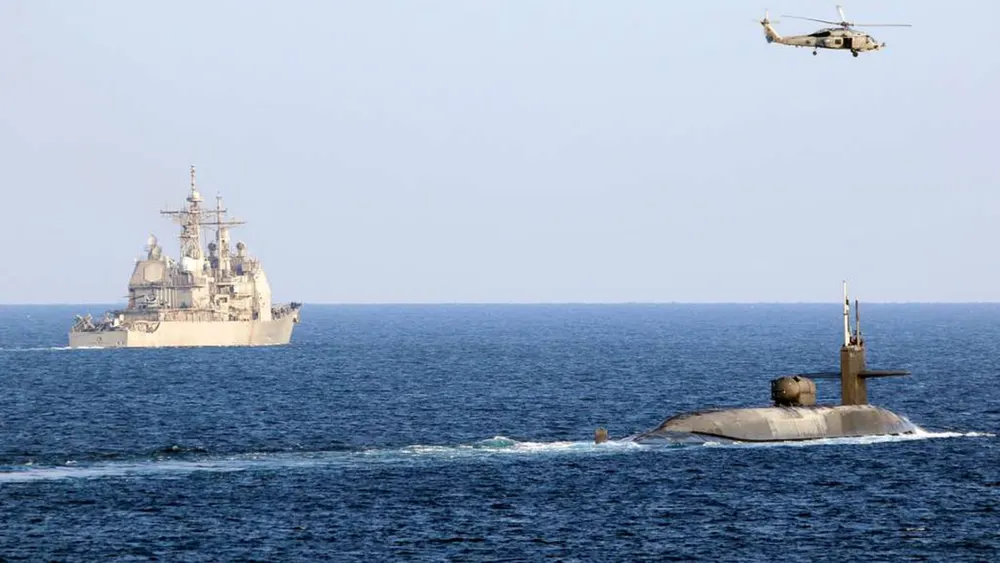
On Tuesday evening, Trump told reporters on the tarmac at Andrews: 'We have total control over the Hormuz Strait right now. They don't have control. We have total control. We own it.' On Wednesday, he posted on Truth Social: 'The U.S.A. has total control over the Strait of Hormuz. I THINK WE WILL KEEP IT!' The war was launched on February 28 to restore freedom of navigation in the Strait of Hormuz. The war is now on its 166th day. The president of the United States has declared he intends to keep control of the world's most important energy shipping channel. Permanently. In capital letters.
The specific reversal is worth tracing. In June, Secretary of State Marco Rubio said in the Middle East that no country was allowed to charge tolls or fees on an international waterway — that was existing international law. DiploPolis wrote about that in July when Trump announced a 20 per cent toll on cargo passing through the Strait, using Rubio's own words to describe what his president was doing. The toll was dropped when Gulf kings offered investment instead. That was July 16. Now it is August 13. The toll is gone. The claim of permanent control is in its place. The Strait has passed through four regimes in five months: Iranian sovereign assertion, Iranian toll, American toll, American control. Freedom of navigation — the principle that launched the war — has not been restored. It has been replaced.
On Tuesday — the same day Trump told reporters the US owns the Strait — the US Navy fired missiles at a civilian cargo ship attempting to transit the waterway in violation of the American blockade. Not an Iranian warship. Not an IRGC vessel. A civilian commercial cargo ship navigating what has been an international shipping channel for centuries. The country that went to war to protect freedom of navigation has fired on a civilian ship to prevent it from exercising freedom of navigation. Kpler data shows Tuesday's vessel count fell to eight ships — below the 10-day average of 12, the lowest since August 5. The principle is consistent. It is consistently being violated by the country that declared it.
Iran's newly appointed national security chief Mohsen Rezaei responded to Trump's declaration by hardening his country's conditions. The Strait would not be fully reopened, he said, unless Washington unfreezes Iranian assets, ends its naval blockade and ends Israel's wars in both Lebanon and Gaza. Those demands now go beyond the memorandum of understanding signed in June — which said nothing about Gaza. Iran has expanded its conditions in direct response to Trump expanding his claim. Both parties are asserting permanent positions over the same waterway. The Strait of Hormuz has, in effect, become the subject of a territorial dispute between two countries, one of which was at war with it six months ago over the right of other countries to use it freely.
The broader picture on Wednesday is similarly precise. Hamas publicly committed to Trump's 15-point Gaza plan — the same plan Netanyahu publicly rejected on Sunday. The party designated as the peace obstacle has accepted the peace plan. The party whose security was the stated justification for the Iran war has rejected it. Trump described his negotiations with Iran as 'only semi-negotiating' — 'we are just watching Iran with its huge inflation and the fact they have no money.' The peace plan has no side willing to implement it from Israel. The Iran negotiations are being described by their lead party as semi-negotiations. The Strait has been declared American property.
'I think we will keep it.' That sentence was not in any congressional authorisation, because there has been no congressional authorisation. It was not in any treaty, because no treaty governs this. It was not in the memorandum of understanding signed at Versailles in June, because the MOU was about ending the war, not about what the ending would produce. It was on Truth Social, on Wednesday, in response to a question about the war's trajectory. The answer is now on the record. The war that was launched to restore an international principle has produced a declaration that the country which launched it intends to keep the thing the principle was supposed to protect from being kept by anyone.
Rubio said no country was allowed to charge a toll. Trump said he thinks the US will keep the Strait. Both statements describe existing international law. Only one of them is following it.