Netanyahu told his Cabinet on Sunday: 'Israel rejects the 15-point document.' He said he had heard people claiming he had not said this. 'So here I am saying it again,' he added. He said the IDF would not carry out any withdrawal until Hamas was fully disarmed. Then he said the thing that has now been said openly, on the record, by a sitting Israeli prime minister, in a Cabinet meeting, for the first time.
No Palestinian state will be established — not in Gaza, not in the West Bank — as long as he is prime minister. He posted the same statement on X: 'Not Fatahstan and not Hamasstan.'
Trump received the news and said he had a 'good response' from Netanyahu on the Gaza plan. Not disappointment. Not concern. A good response. The president who announced the 15-point document as a significant diplomatic achievement received the news of its complete rejection by the prime minister it was designed to move, and described the rejection as good. Both men have now spoken. Neither is embarrassed.
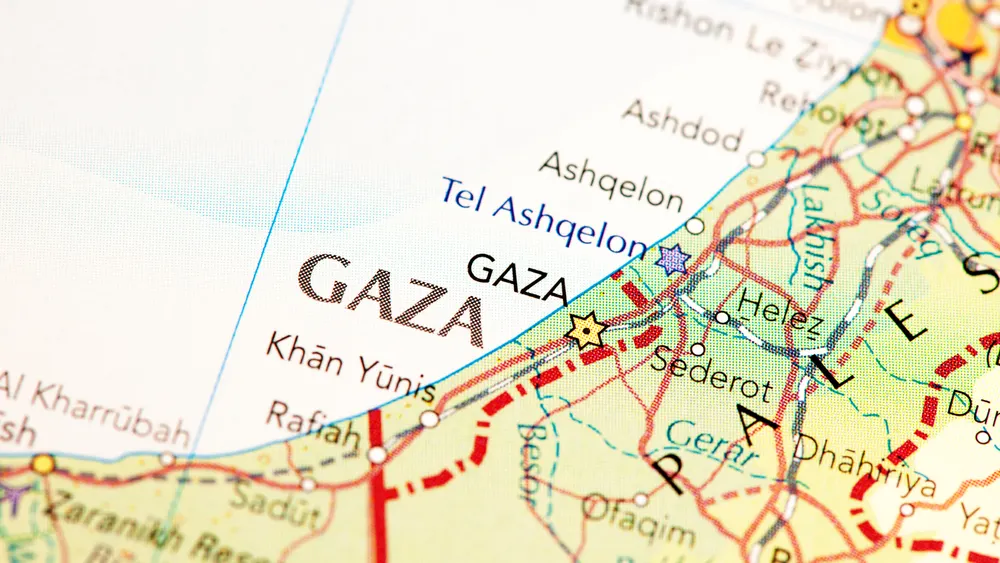
The 15-point Board of Peace document called for Hamas to disarm, for Israeli forces to withdraw progressively from Gaza, for a Palestinian governing authority to assume control of the territory and for reconstruction to begin. It was the framework around which Trump had been building his Gaza diplomacy for months. It was described by his own officials as a historic step. Netanyahu rejected every element on Sunday. He said the IDF will not withdraw. He said no Palestinian state. He said it clearly, with the specific instruction that it should not be misquoted again.
For thirty years, Israeli governments maintained the official position that a two-state solution was the theoretical, eventual, conditional endpoint of Israeli-Palestinian negotiations. The Oslo Accords of 1993. UN Security Council Resolutions 242 and 338. The Annapolis conference. The quartet framework. The Arab Peace Initiative. Every diplomatic architecture for ending the conflict has been premised on the eventual existence of two states as the shared goal. Even the governments that made two states impossible in practice said two states in principle. Netanyahu has now removed the principle. There is no two-state endpoint. There is his statement: not in Gaza, not in the West Bank.
DiploPolis published a piece on May 19 arguing that the disarmament demand had never been a path toward Palestinian statehood — that it was the occupation's instrument, dressed in the language of peace. A framework that required one party to disarm while the other expanded its military footprint, broke the ceasefire's terms and destroyed the infrastructure any successor government would require was not a peace process. It was the formalisation of defeat. On Sunday Netanyahu confirmed the argument. He rejected the plan that required disarmament. He added that no Palestinian state would follow it. The two positions together are the complete picture: Hamas must disarm, and when it does, there will be no state. The disarmament is not the path. It is the end.
The ICJ has found it plausible that genocidal acts are being committed in Gaza. It has issued binding provisional measures ordering Israel to prevent such acts. Netanyahu has said no Palestinian state will be established. The court's provisional measures remain in force. The military operations continue. The IDF will not withdraw until Hamas disarms. Hamas will not disarm without assurances of statehood. Statehood will not be established. This is the declared position of the prime minister of Israel, stated on Sunday in his Cabinet meeting, in response to a peace plan his closest ally described as historic.
Trump said it was a good response. The PBS account of what followed noted that details of the Iran-Oman Hormuz deal were continuing to emerge. The world moved on to the next story. Netanyahu's statement stayed on the record.
Not in Gaza. Not in the West Bank. He said it again. Trump said good. The plan was historic.