Iran walked into the Islamabad talks knowing the Americans could not deliver.
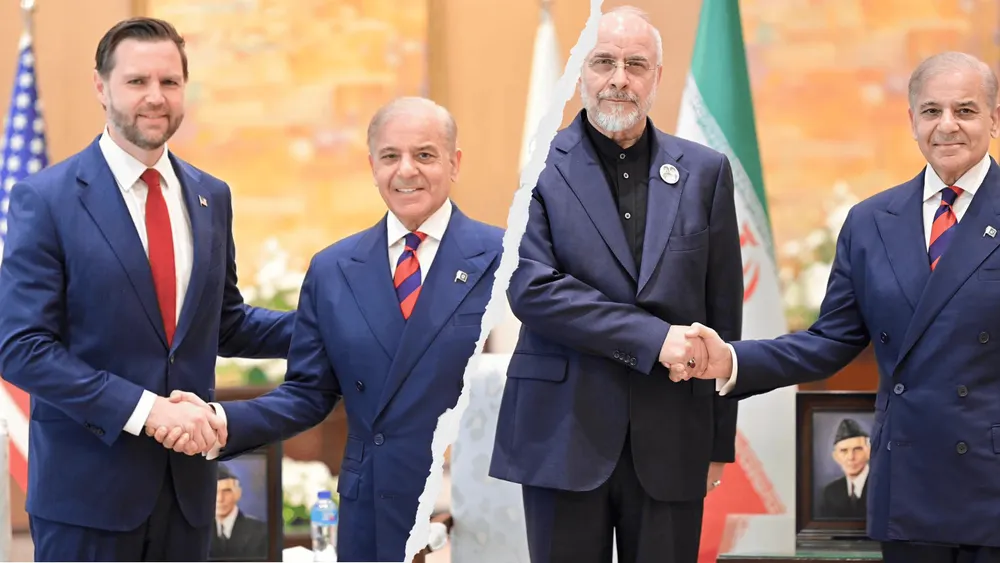
For 21 hours on Saturday and into Sunday morning, American and Iranian negotiators sat in the Serena Hotel in Pakistan's capital, conducting the first face-to-face talks between Washington and Tehran since the Obama administration negotiated the nuclear deal in 2015. Vice President JD Vance arrived with Jared Kushner and Steve Witkoff, the men who delivered the Gaza ceasefire that never quite held, and presented Iran with what he called a 'final and best offer.' Iran's parliament speaker Mohammad Bagher Ghalibaf had signalled, on arrival in Islamabad, exactly what he thought of American good faith. 'We have goodwill,' he said, 'but we do not have trust.'
He was not being rhetorical.
As the talks were under way in Islamabad, Israeli warplanes struck south Lebanon. Israeli strikes killed ten people in the Nabatiyeh district, among them a member of Lebanon's civil defence and two paramedics, emergency workers, while the United States was presenting itself as a broker of regional peace. Israel was not party to the Islamabad negotiations. Nobody asked it to stop.
Iran had made its position clear before the talks began. A ceasefire in Lebanon was a precondition for any serious dialogue, not a side request. The United States could not deliver one. Benjamin Netanyahu said, as negotiations proceeded, that Israel's campaign against Iran was not over and that his country had more to do. He was not being rhetorical either.
The Americans asked Tehran to commit to peace at a table where they demonstrably could not restrain their own partner. That is not a negotiating failure. It is a structural exposure of American power in this war: Washington cannot act as a peace broker in a conflict it is actively prosecuting alongside an ally it will not restrain. The demand that Tehran trust the United States was, in practice, indistinguishable from the demand that Tehran trust Benjamin Netanyahu. Tehran saw no reason to do that.
There is a particular kind of diplomatic blindness that mistakes American sincerity for Iranian reassurance. Vance described the US approach as 'quite flexible' and 'quite accommodating.' He may have believed it. What he could not see, or would not acknowledge, was what accommodation looks like from the other side of the table: a government asking for Tehran's trust while its partner bombed Lebanese emergency workers outside any ceasefire framework.
Vance's framing on departure was instructive. 'They have chosen not to accept our terms,' he told reporters, as though the collapse were an Iranian decision rather than the consequence of a condition no sovereign state could accept. Those terms included the complete abandonment of Iran's nuclear programme, not a cap, not a monitored rollback, but full surrender of its nuclear infrastructure, tabled in the opening session of the first direct talks since a war began that has killed more than 2,000 Iranians by Tehran's own count. This, from a government whose ally was bombing Lebanon while the ceasefire held in name only.
Within hours of Vance boarding Air Force Two, Trump announced on Truth Social that the US Navy would begin blockading the Strait of Hormuz. The two-week ceasefire, already disputed between the parties over whether it applied to Lebanon, now has no agreed framework and no clear timeline for what follows. A naval blockade is not a peace proposal. It is what comes after one fails.
Tehran's delegation left having confirmed what they had believed before they boarded their plane. The United States negotiates with conditions, not compromises, and with an ally it cannot restrain. The mistrust Ghalibaf named on arrival was not a bargaining position.
Islamabad proved him right.
Find this piece interesting?
Dispatches by DiploPolis delivers sharp analysis and pointed commentary on power, politics, diplomacy, and world affairs — directly to your inbox.
No neutrality. No noise. Just argument.