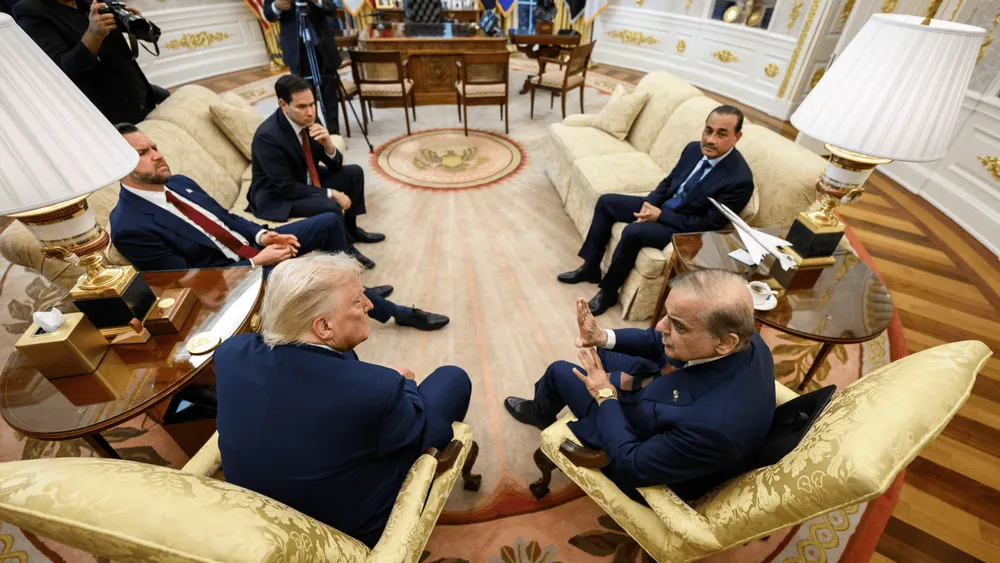
Nobody won. That is the first thing to understand about the ceasefire that came into force Tuesday night, brokered by Pakistan and announced by Donald Trump on Truth Social in his customary register of triumphalism and capital letters.
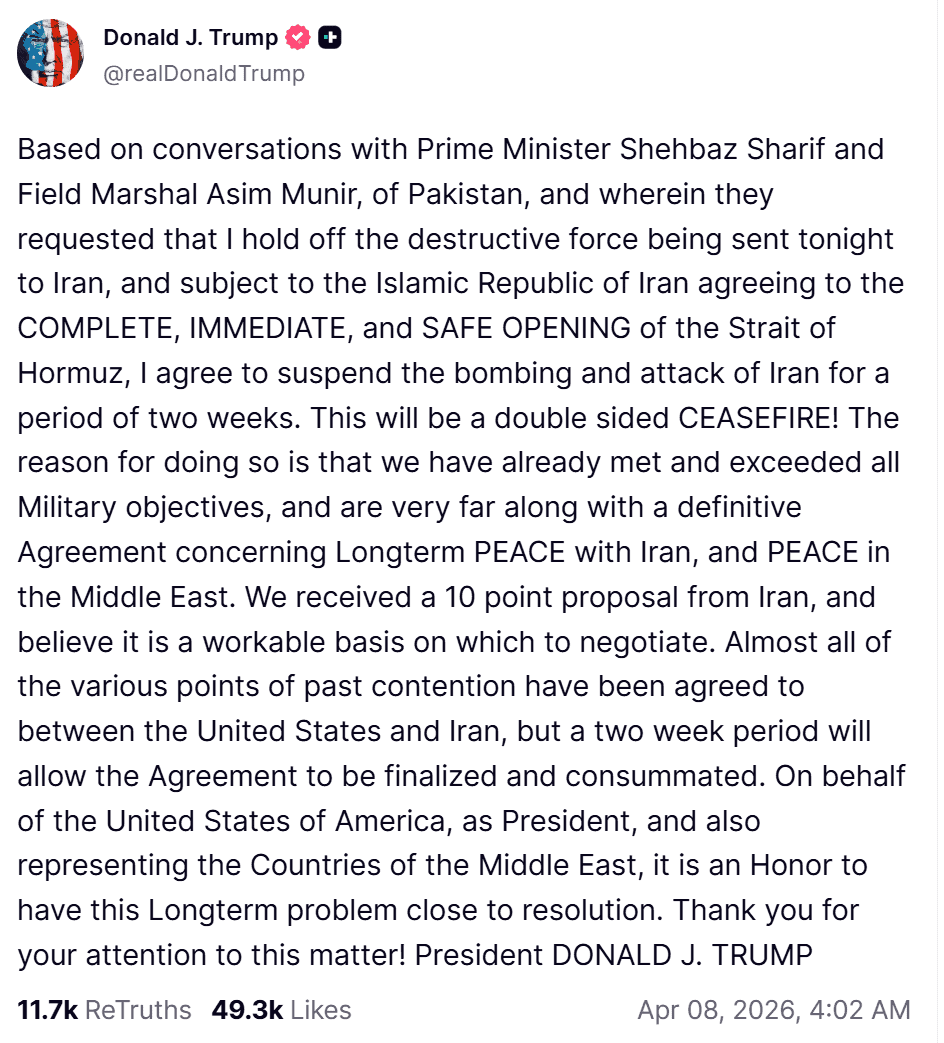
Iran didn't surrender. The Strait of Hormuz didn't open because Washington broke Tehran's will to fight. It opened because both sides ran out of appetite for what was to come next: the destruction of power plants and desalination infrastructure on both sides and the deliberate killing of civilians on an industrial scale. What was coming forced a reckoning that five weeks of war did not.
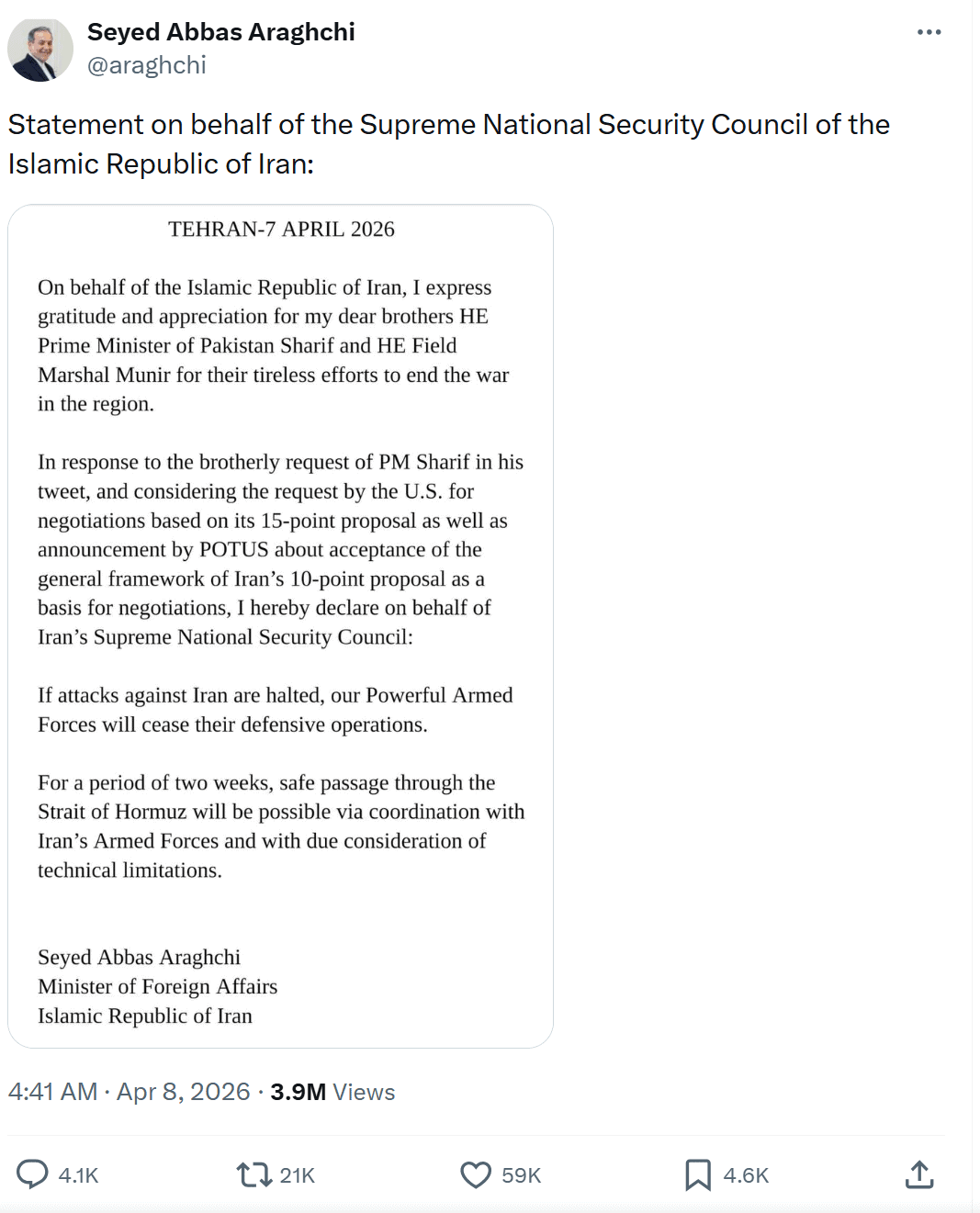
So the guns went quiet. For two weeks, at least.
The question now is what holds, and who threatens to break it first. The answer is not Iran.
Before the ink was dry on Trump's Truth Social post, Israeli missiles were still hitting Iranian targets. That was the immediate tell. The deeper one came a day earlier, when it emerged that Netanyahu had called Trump on Sunday — ostensibly to congratulate him on the rescue of two downed American airmen — and used the call to warn against agreeing to a ceasefire at this stage. A senior Israeli official told Channel 12 that Netanyahu believed a truce carried "significant risks." Trump, for his part, told him a ceasefire was possible if Iran met American demands, and moved on. Netanyahu did not move on.
The same day, Netanyahu told his own officials that Israeli operations against Hezbollah in Lebanon would continue regardless of whatever Washington and Tehran agreed. He wasn't asking. He was informing.
This is the shape of the problem going forward. Washington's real challenge now is not managing Iran — Tehran has just handed the Americans two weeks of diplomatic space and demonstrated, whatever else you think of the Islamic Republic, its functional interest in not being bombed.
The challenge is managing Israel. Specifically, keeping Netanyahu on a tight leash.
Netanyahu's political survival is fused to the Iran threat in ways that have no clean diplomatic resolution. He has spent decades building his career on the singular proposition that Iran is an existential danger and that he alone understands it clearly enough to confront it. A durable ceasefire — let alone a negotiated settlement that leaves the Islamic Republic intact and governing — is not just a policy setback for him. It is a biographical one. His far-right coalition partners, meanwhile, opposed the ceasefire that ended last June's Twelve-Day War and will oppose this one too. Israel's National Security Minister Itamar Ben-Gvir does not want a deal. He wants a different Middle East. Calling the conflict an “absolute necessity”, Ben-Gvir considers the war a “once-in-a-lifetime opportunity” to prevent the “Nazi regime” in Tehran from obtaining nuclear weapons.
Trump, for all his noise, actually does want a deal. The ceasefire language — "we have already met and exceeded all military objectives" — is the language of a man looking for an exit that doesn't look like an exit. He called Israel his "little brother" last week and downplayed its role in rescuing the downed American pilot. Netanyahu responded by reframing the call as a celebration of Israeli strength. The two men are not reading from the same script.
They haven't been for a while. Early in the war, Netanyahu was quietly asking White House officials whether the Americans were conducting secret talks with Iran behind Israel's back. The White House denied it.
Islamabad talks are now scheduled for Friday, April 10. Vice President Vance is expected to lead the American delegation. Netanyahu is not invited and there is confusion on Tehran's demand to extend the ceasefire to Lebanon, where Israel has stressed that the fight with Hezbollah is “independent” from the war on Iran.
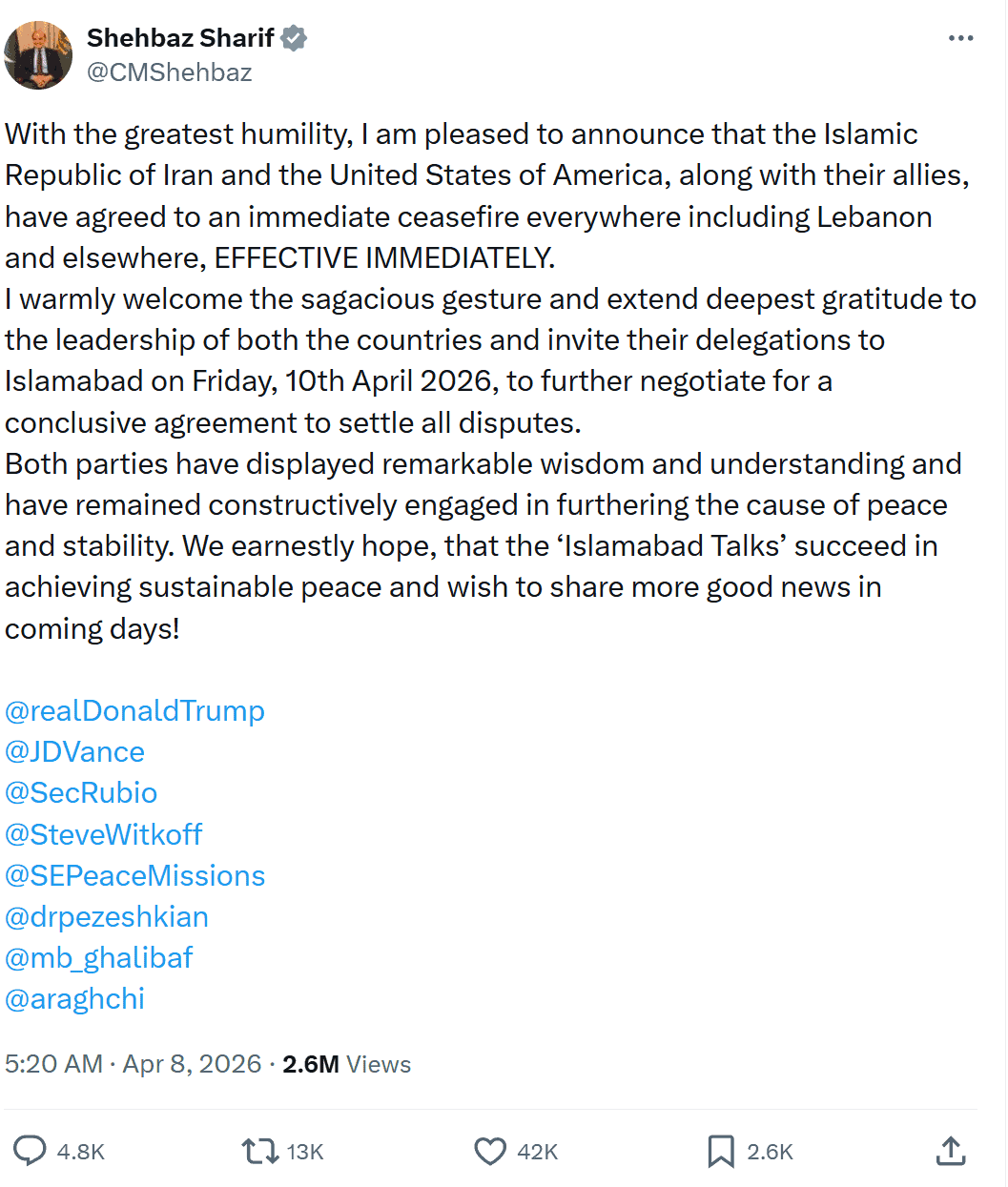
Peace talks have a way of clarifying who the principals are. Washington and Tehran are talking, with Pakistan in the room. Israel is on the outside of that conversation, and Netanyahu knows it.
The next two weeks will test whether the ceasefire is a pause or a turning point. Iran has its own hardliners who think any deal with Trump is a humiliation. The Strait is not yet fully open. Missiles were still flying hours after the announcement. The ground is not stable.
But the fundamental dynamic has shifted. The United States has its off-ramp. The question is whether Netanyahu lets Washington take it — or whether he finds a way to blow it up first.
He has done it before.
Find this piece interesting?
Dispatches by DiploPolis delivers sharp analysis and pointed commentary on power, politics, diplomacy, and world affairs — directly to your inbox.
No neutrality. No noise. Just argument.