Iran's Supreme National Security Council accepted the ceasefire on Wednesday with a statement that was, in its honesty, more revealing than any diplomatic communiqué. 'This does not signify the termination of the war,' it said. 'Our hands remain upon the trigger, and should the slightest error be committed by the enemy, it shall be met with full force.' Trump has issued a similar warning. In a social media post, he wrote, US forces will remain in and around Iran until 'real agreement' is reached and compliance is enforced.

That is the posture both delegations will carry into Islamabad on Saturday: ready to talk, and prepared to walk away. Not the language of powers preparing to make concessions.
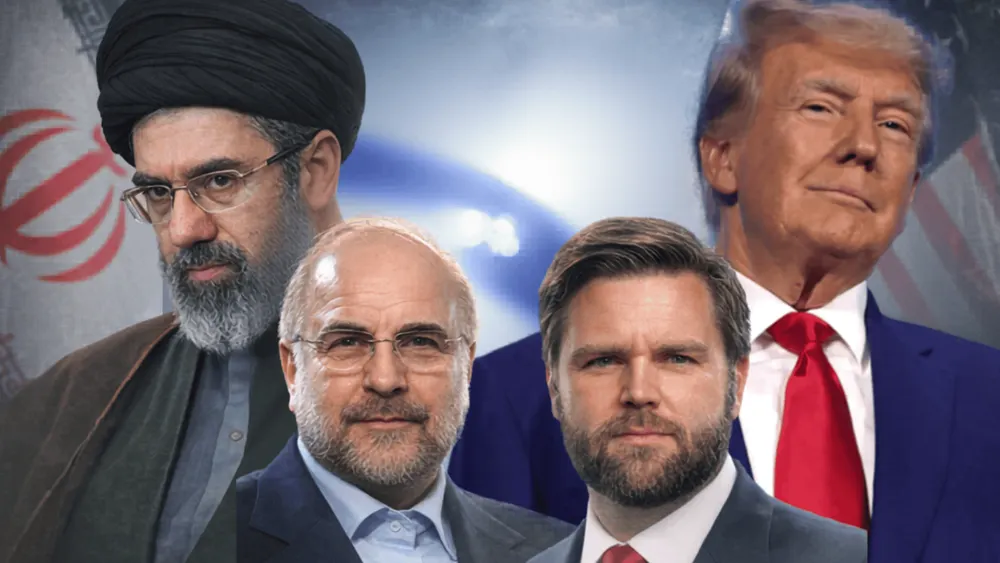
In Islamabad, the table is set for talks. The US delegation will be led by Vice President JD Vance, with Steve Witkoff and Jared Kushner. Iran’s will be led by Parliament Speaker Mohammad Bagher Ghalibaf.
After forty days of war, two countries that were bombing each other until last week will now sit in the same room. That matters. But what they will discuss in that room is far from certain.
There are several proposals on the table and neither side appears to know who is reading what.
Iran's original 10-point proposal — which Trump called 'not good enough' — demanded Iranian control over the Strait of Hormuz, the right to enrich uranium, the lifting of all primary and secondary sanctions, compensation for the war, a full withdrawal of US combat forces from the region, and a ceasefire covering Lebanon. Washington found it fundamentally unserious and walked away.
Then came a revised Iranian counterproposal which Trump called 'a workable basis on which to negotiate' — the document that is believed to have led to the ceasefire. But apparently, this proposal has multiple versions. In the Farsi version circulated by Iranian state media the phrase 'acceptance of enrichment' appeared. However, in the English version shared with international journalists, the phrase was missing. No explanation was offered. Iran was saying different things to different audiences.
Washington has been doing the same. Trump declared the ceasefire represented 'total and complete victory' and that Iran had agreed to 'almost all' points of contention. Vance described the ceasefire as a 'fragile truce'. The US 15-point proposal demands the dismantling of Iran's nuclear programme, the surrender of its enriched uranium stockpile, limits on missile capabilities, an end to regional proxy support, and reportedly an acknowledgment of Israel's right to exist. Iran previously called these demands 'largely excessive, unrealistic and unreasonable.'
Neither side has explained how 'almost all points agreed' and 'completely unreasonable demands' describe the same negotiation.
The ceasefire had already been violated before a single handshake was exchanged. On its very first day, Israel launched its largest wave of strikes on Lebanon since the war began — 100 targets in 10 minutes, killing more than 300 people. Iran's President Pezeshkian said the strikes rendered the Islamabad talks 'meaningless'. Under pressure from Washington, Netanyahu announced he would open direct negotiations with Lebanon — while simultaneously vowing to continue bombing it. The Strait of Hormuz remains largely closed. On Thursday, Trump himself complained on social media that Iran was doing a 'very poor job' reopening the waterway — the same day his delegation was boarding its flight to Islamabad.
A ceasefire that is already disputed before the parties meet is not a ceasefire. The fighting has paused. The argument has not. Iran's own delegation arrived under a cloud — the Iranian Ambassador to Pakistan deleted a social media post confirming their arrival within hours of posting it. No explanation was given.
Yet a deal is not impossible. Exhaustion sometimes achieves what reason cannot. But exhaustion without clarity about what each side will accept is not diplomacy. In war, it means more death and destruction.
The table is set in Islamabad. Nobody agrees what is on it.
Find this piece interesting?
Dispatches by DiploPolis delivers sharp analysis and pointed commentary on power, politics, diplomacy, and world affairs — directly to your inbox.
No neutrality. No noise. Just argument.