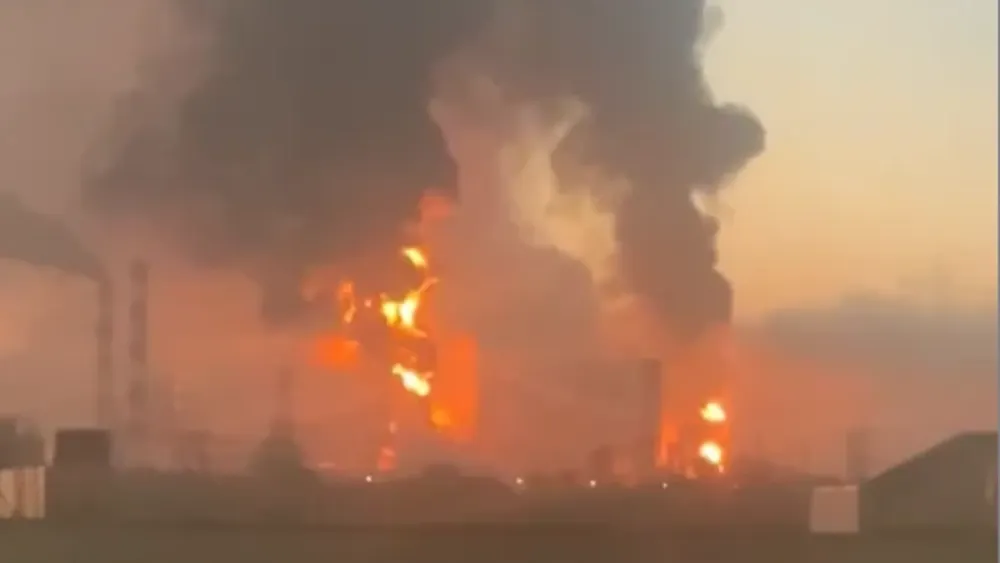
On the night of September 19 to 20, Ukraine launched its largest drone attack on Moscow since the full-scale war began. More than 1,600 drones were shot down on all approaches, Moscow Mayor Sergei Sobyanin said on Sunday. Among the targets: the Moscow Oil Refinery in the Kapotnya district, one of Russia's ten largest. Both of its primary crude distillation units caught fire. By Monday September 21, the refinery had halted crude processing entirely. Fuel from the Moscow refinery was no longer being offered for sale on the St Petersburg International Mercantile Exchange.
Reuters confirmed the shutdown on Monday, citing three industry sources. The refinery's AVT-6 unit, processing 21,400 metric tonnes of crude per day and accounting for 53 per cent of the plant's total capacity, caught fire. So did the Euro+ combined processing unit, which accounts for the remaining 47 per cent. Both units down. Repairs could take several weeks. In 2024, the refinery processed 11.6 million tonnes of crude, approximately 230,000 barrels per day, and produced 2.9 million tonnes of petrol, 3.2 million tonnes of diesel and 1.3 million tonnes of bitumen. It supplies approximately 40 per cent of Moscow's fuel market and 70 per cent of the Moscow region's demand for petrol and aviation gas.
Zelensky said the attack targeted oil and logistics infrastructure supporting Russia's war effort and confirmed that a Pelican ballistic missile was used in the operation, the first publicly confirmed combat use of the system. The Ukrainian General Staff said the refinery's AVT-6 unit, its integrated crude oil processing unit and its isomerisation unit were all struck. A major fire also broke out at the Sofyino logistics technopark in the same attack. Two people died and 20 were injured in drone strikes across the Moscow region, according to regional Governor Andrey Vorobyev.
The strike happened on the final day of Russia's State Duma elections. Russians were voting across three days, September 18 to 20. The results confirmed what ISW's September 21 assessment described as the Kremlin's continued militarisation of the Russian government. Ukraine chose the election's final day, the most visible day domestically, to launch its largest attack on the capital this year. The timing was not incidental.
The Moscow refinery had been struck before. In June 2026, during what Meduza described as a record drone attack on the capital, the same refinery was damaged and temporarily stopped operating. It restarted sooner than Reuters had predicted then. Whether it does so again on the same timeline, or whether this attack's damage to both primary units simultaneously extends the shutdown, is what the industry sources Reuters cited declined to specify. Several weeks is the estimate. The refinery has not offered fuel on the exchange since September 21.
The refinery strike was the latest indication that neither Ukraine nor Russia has signed up to an energy truce that US President Donald Trump claimed on September 14 had been agreed with the warring sides. Trump announced the truce publicly. Ukraine struck Moscow's largest oil refinery six days later. On September 20, Trump spoke to Zelensky by phone. Axios reported, citing sources familiar with the call, that Trump expressed concern about Ukrainian strikes on Russian oil refineries, specifically because they were driving up global diesel prices at a moment when Trump is trying to lower energy costs before November's midterm elections. The call in which Trump raised his concern about the refinery strikes happened on the same day Ukraine conducted the largest refinery strike of the war.
The Ukraine war and the Iran war are connected in the one way that neither Washington nor Moscow will state directly: they are competing for the same American political attention, the same weapons inventory and the same diplomatic bandwidth in the same midterm election window. Trump's approval ratings are under pressure from gas prices driven by the Iran war. Ukraine's strikes on Russian refineries are driving diesel prices further. Trump's concern, expressed to Zelensky on September 20, is that his two wars are compounding each other's energy price effects at exactly the moment he needs both to be moving toward resolution. Ukraine struck Moscow anyway. The refinery is not producing. The truce Trump announced six days ago has not been observed by either side.
The smoke over Kapotnya on Sunday morning was visible across Moscow. The plumes were photographed by AFP and published across international wire services before the final Duma votes were counted. Russia's largest oil refinery in its largest city stopped processing crude on the final day of its parliamentary election. Both things are in the record of September 20, 2026.