The thirty-first Conference of the Parties to the UN Framework Convention on Climate Change opened in Antalya on Monday. The venue is Turkey. The presidency is shared with Australia. The United States is absent. This arrangement, two coal-dependent middle powers presiding over climate negotiations while the world's second-largest historical emitter sits outside, tells you something about where the multilateral climate process finds itself in November 2026.
The 1.5 degree Celsius target, agreed in Paris in 2015 as the threshold the international community would try to hold warming to, has effectively been abandoned. Murat Kurum, Turkey's environment minister and COP31 president, said from the opening session that this was "the first COP where it is clear beyond a reasonable doubt" that the target will be overshot. What he did not say, and what every delegate in the room knew, is that it will be overshot at least in part because two of the world's largest emitters have spent the past several years actively withdrawing from the frameworks designed to prevent it.
The United States under Trump withdrew from climate negotiations at the start of his second term, as it had at the start of his first. China, the world's largest emitter, is in Antalya but has resisted binding commitments on its coal expansion. The EU and Canada are present and engaged, but they combined account for roughly ten per cent of global emissions. The countries negotiating hardest in Antalya are, in many cases, the countries contributing least to the problem: the 54-nation African Group, small island states facing existential flooding and South Asian and Southeast Asian nations whose populations are on the front line of extreme heat.
Their demands are specific. They want clear and binding commitments from wealthy nations on climate finance, to help poorer countries adapt to impacts that are already arriving, recover from disasters they did not cause and transition away from fossil fuels without taking on debt they cannot service. The African Group's agenda proposals were backed by most of the developing world at Antalya and opposed by the EU and Canada. The pattern is familiar from every previous COP: the countries most affected by climate change want money, and the countries that could provide it want to rephrase the question.
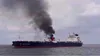
The backdrop to Antalya is a year that the Copernicus Climate Change Service says is on track to be the second-hottest on record. The closure of the Strait of Hormuz, a consequence of the Iran war, has pushed fuel and fertiliser prices higher, which has in turn accelerated some governments' interest in renewable energy. This is a perverse way to get the energy transition moving, and the people paying most for the disruption are in the Global South, not in Washington or Brussels.
Turkey's choice of theme for its presidency, "Acting on existing commitments," is diplomatically neutral and substantively inadequate. COP29 and COP30, in Azerbaijan and Brazil respectively, ended without agreement on emissions reductions and without mentioning fossil fuels in their final texts. COP28 in Dubai agreed to transition away from fossil fuels, a formulation that has not yet been reflected in anything a major economy has done to its coal, oil or gas production. The gap between the language of these summits and what happens after them is now its own recurring story.
What Simon Stiell, the UN climate chief, called the choice between "electric or shock" is a memorable formulation. What it does not capture is the structural reality of COP31: that the countries being asked to choose are largely the countries already experiencing the shock, without the finance to build the alternative. The question of who pays for that is not a technical one. It is the only political question that matters at Antalya, and it has been the only political question that matters at every COP since Paris. The difference this year is that the question is being asked in a room where the country most responsible for the answer is not present.