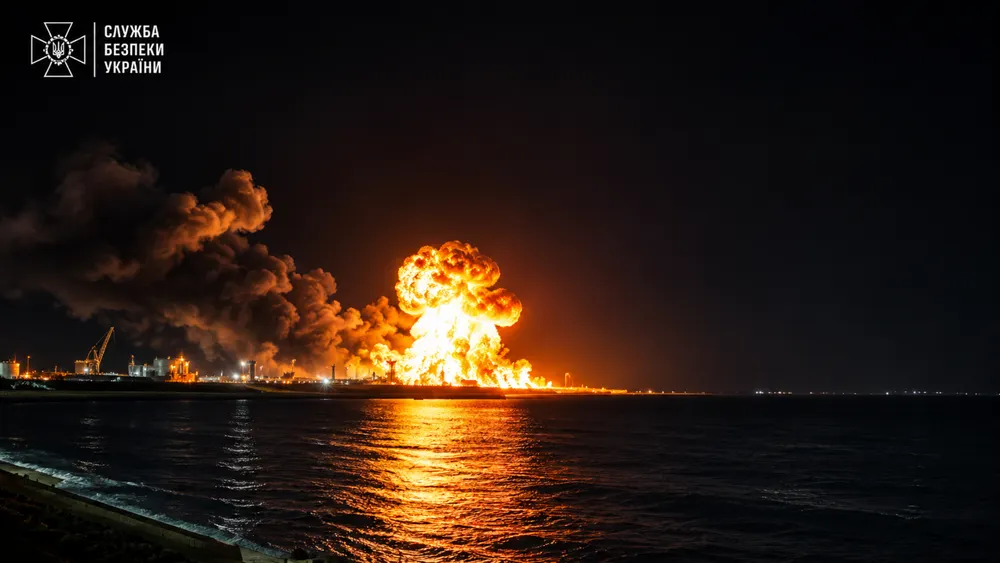
On 22 November, Ukraine struck the Benghazi Naval Base in Libya using seven naval drones, sinking the Russian corvette Merkury and damaging the cargo vessel MV Angara. A Ka-27 helicopter was destroyed. Ten Libyan and Russian nationals were wounded. President Zelensky called it 'exemplary'.
The Merkury was not an incidental target. It was operating as part of Russia's military logistics network in Libya, supplying Khalifa Haftar's Libyan National Army. Its sinking is the first confirmed Ukrainian naval strike in the Mediterranean and the first to reach African soil. The war has a new theatre.
Russia has used Libya's eastern ports — particularly Benghazi and Tobruk — as a logistics hub since at least 2019. Haftar's LNA provides Russian forces with access, basing, and cover. In return, Wagner Group and its successor structures have trained LNA units, supplied materiel, and deepened Russia's hold on Libya's oil infrastructure. The Merkury was not visiting. It was based there.
Ukraine's intelligence services have been tracking Russian naval movements in the Mediterranean for months. The Merkury strike was not opportunistic — it was the result of a campaign to extend the war's operational radius beyond the Black Sea, beyond Ukrainian territorial waters, to wherever Russian military assets operate.
The strike demonstrates Ukraine's capacity to reach Russian military assets across a Mediterranean supply route that Moscow has treated as secure. It also complicates Russia's posture in Libya, which is already under strain following the death of Yevgeny Prigozhin and the partial reorganisation of Wagner operations under the Africa Corps.
Libya's internationally recognised Government of National Unity, based in Tripoli, has condemned the strike. Haftar's administration in Benghazi has not publicly responded. The diplomatic fallout — Libya hosting a warship that became a Ukrainian target — will be managed quietly.
Zelensky does not call operations 'exemplary' without intent. The word is a message to Ukrainian military planners, to Russia, and to Western partners who have debated the range restrictions on weapons supplied to Ukraine. It says: we have already extended the war's geography without your authorisation, using assets you did not give us, and we intend to keep doing it.
The naval drone programme's reach signals that Ukraine has chosen not to wait for permission to operate beyond its declared borders. That is a strategic decision, not a tactical one, and it changes the terms of any future negotiation about where and how this war is fought.
The sinking of the Merkury is not a battle. It is a statement about the war's scope. Russia has treated Africa as a secure rear. Ukraine has just told Moscow that there is no secure rear — that any Russian military asset, in any port, within naval drone range, is a target. Libya is now part of this war whether Tripoli wishes it or not. That is Kyiv's point.