On 19 November, the International Court of Justice ruled by nine votes to six that Myanmar committed genocide against the Rohingya during the 2016–17 military crackdown in northern Rakhine State. It is the first time in the court's history that a state has been found responsible for genocide. The evidence showed that Myanmar's security forces killed at least 10,000 Rohingya, carried out widespread sexual violence, inflicted extreme violence against children, and attacked civilians fleeing to Bangladesh. The court found genocidal intent was 'the only reasonable inference' from the pattern of conduct.
The ruling is final. It cannot be appealed. And it will almost certainly not be enforced.
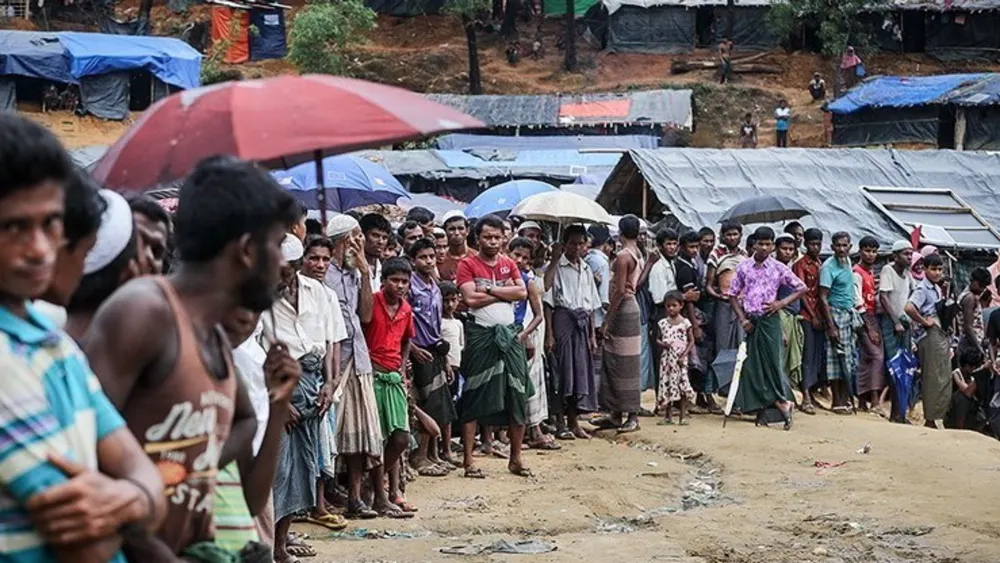
Myanmar is ordered to stop its ongoing violations, facilitate the safe return of the displaced, investigate and prosecute perpetrators, and pay reparations. Over 730,000 Rohingya fled to Bangladesh in 2017; more than 1.3 million remain displaced across South and South-East Asia, including 1.2 million in the Cox's Bazar camps in Bangladesh alone. The junta that now controls Myanmar — the same military apparatus that conducted the crackdown — has given no indication it will comply with any of this.
If a party does not comply with an ICJ judgment, the other side may refer the matter to the UN Security Council, which may then recommend or decide upon enforcement measures. The Security Council has never used this power in response to an ICJ judgment. It will not use it now. China, which has deepened its economic and political ties with Myanmar's junta, holds a permanent veto. Russia holds another. The referral path exists on paper. It leads nowhere.
ASEAN has said nothing. The bloc's foundational principle of non-interference — a doctrine designed by authoritarian-adjacent governments to protect themselves from external accountability — has served Myanmar's junta well for a decade. It will continue to serve it. The only concrete response from a major state came from the United Kingdom, which said it would expel Myanmar's defence attaché and call for an urgent Security Council session. The Council session, if held, will produce a statement. The statement will produce nothing.
The case was brought by Gambia in 2019 under the Genocide Convention — a legal instrument adopted in 1948 specifically to ensure that 'never again' meant something. Gambia, with no direct stake in the outcome and no coercive power of its own, used the Convention's mechanism to do what larger, more powerful states declined to do. It won. The Rohingya have a legal verdict in their favour. They do not have a home to return to, and they do not have a mechanism to compel one.
The ruling will influence other pending cases. South Africa's case against Israel under the same Genocide Convention is before the same court. The ICJ's finding that genocidal intent can be inferred from a pattern of conduct — without direct documentary evidence of orders — sets a precedent that lawyers in that case will cite immediately. The court has quietly expanded the evidential threshold for genocide findings, and that expansion will outlast this ruling's practical consequences for the Rohingya.
What the ruling does not do is alter the situation on the ground in Rakhine State, where the Arakan Army has also been committing abuses against the Rohingya as it consolidates control. The people for whom this verdict was delivered are in camps in Cox's Bazar, in Malaysia, in Thailand, in Indonesia — stateless, undocumented, unable to return and unable, in most cases, to settle permanently where they are. The court has named what happened to them. It has not changed what is happening to them.
An international legal order that can find genocide but cannot stop it has told us something important about itself. The Genocide Convention, the ICJ, the Security Council — these are not a system of accountability. They are a system of documentation. They record what states do. They do not constrain what states do. The Rohingya have been documented. They have been found, in the highest legal forum available, to be victims of genocide. And they remain, as they were before the ruling, without remedy. That is not a failure of this judgment. It is a description of the order that produced it.