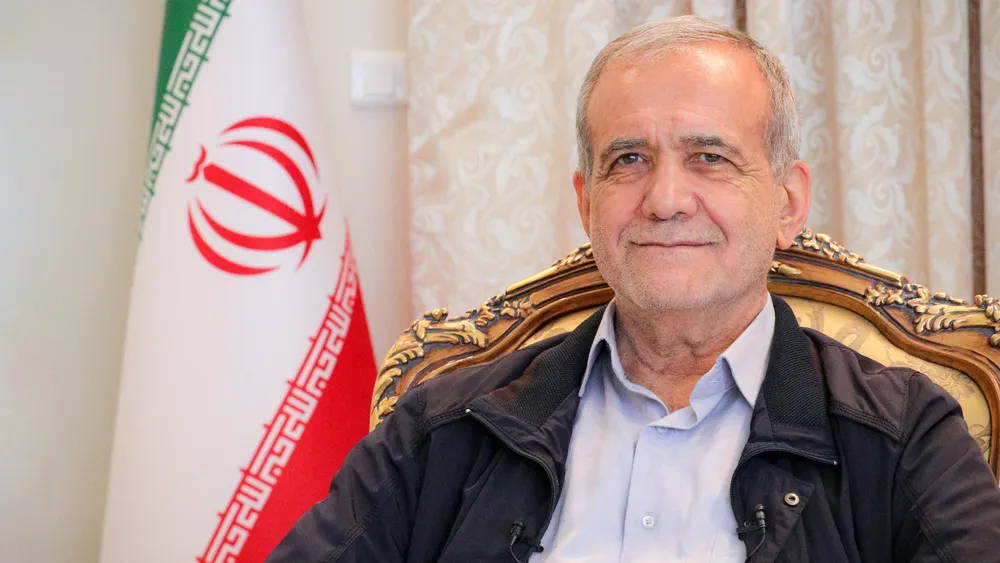
Iran's president said it publicly on Sunday. At two appearances in Tehran on August 23, Masoud Pezeshkian defended the Versailles MOU — the memorandum that his Supreme Leader has publicly associated with American violations and that the new Supreme Leader Mojtaba Khamenei has described through his spokespeople as no longer relevant. 'One day, a decision must be made to save the country from the state of neither war nor peace,' Pezeshkian said, in remarks reported by state news agency IRNA. 'By implementing this memorandum, we can resolve the problems with logic and dignity.' All those directly involved in the negotiations, he added, believed it was the best way forward.
Mojtaba Khamenei's position is different. His position is revenge. The kill list published by Hamshahri. The vow that those named will not die peacefully in their beds. The shift to a fully offensive military posture announced when the MOU expired on August 17. Iran's foreign ministry has said the 60-day discussion is basically no longer relevant. Iran's Revolutionary Guard has said the Strait is under Iranian control and management. And Iran's president, standing in Tehran, is publicly defending the agreement that his own Supreme Leader's government has declared dead.
Treasury Secretary Scott Bessent told CNBC that Washington was preparing 'the greatest coordinated economic isolation in the history of the world.' JD Vance described the war as entering a 'new phase' of economic pressure rather than military escalation. Washington is moving toward sanctions. Tehran's president is moving toward diplomacy. Tehran's Supreme Leader is moving toward revenge. The three vectors do not point in the same direction.
The Democracy Now August 21 headline captured the American framing: 'You Are Either With Us or Against Us.' Bessent's warning is specifically aimed at countries continuing to do business with Iran — China, India, Turkey among them. China's foreign ministry responded that American sanctions and pressure 'will not help resolve the issue.' The countries being told to choose sides are making the same calculation Iran's president is implicitly making: that the war cannot continue forever, that a decision must eventually be made and that the question is only who makes it and when.
Pezeshkian has made his position clear. He is not the most powerful man in the Iranian system — that is Mojtaba Khamenei, whose position on the MOU is the opposite of his president's. But the president's public statements are not incidental. In the Islamic Republic, no senior official publicly disagrees with the Supreme Leader's position without consequence. Pezeshkian's remarks at two public appearances in Tehran on Sunday are the most specific public indication yet of a divergence within Iran's leadership about whether the war should continue.
The divergence matters because it is the mechanism through which negotiations have historically become possible. The 2015 JCPOA was negotiated when reformist elements within Iran's system found sufficient space to conclude that a deal was preferable to continued pressure. The 2026 MOU was negotiated under broadly similar conditions. The MOU collapsed. The conditions are different now: the new Supreme Leader has publicly vowed revenge and the military has declared an offensive posture. But Iran's president is publicly saying 'one day a decision must be made' — which is a specific kind of signal from a specific kind of official at a specific kind of moment.
The decision has not been made. The offensive posture is the official position. The president's words are on the record. The sanctions campaign is being assembled. The war is in its 178th day.