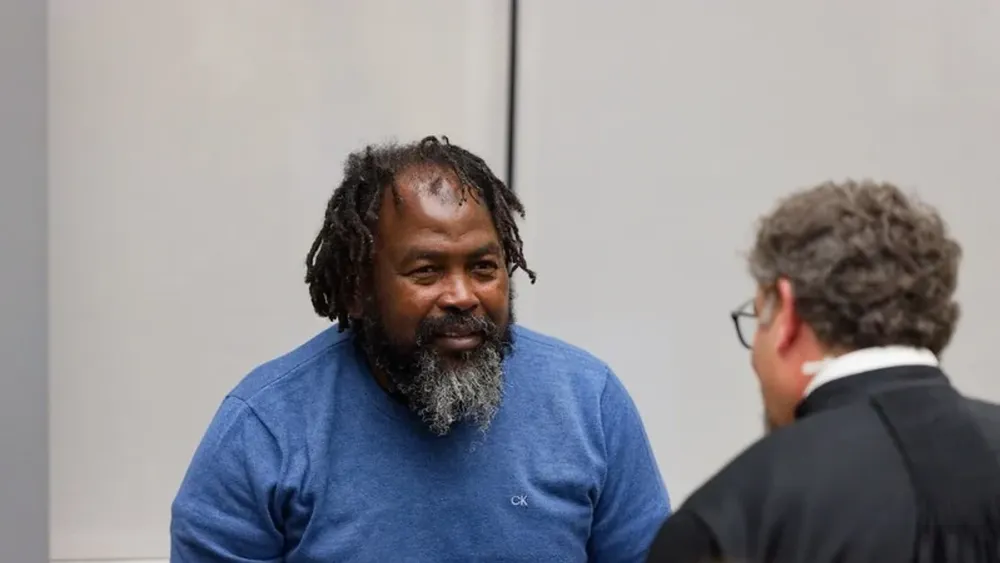
On September 23, 2026, presiding Judge Miatta Maria Samba sat at the bench in The Hague and read aloud the conditions of the detention facility in Bangui that Mahamat Said Abdel Kani had commanded. The prisoners were beaten. They were tortured. The conditions were inhumane. After an hourlong hearing, Said was convicted on four counts of crimes against humanity: torture, persecution and unlawful imprisonment, for his role overseeing a Seleka militia prison during the Central African Republic's 2013 civil war. He shook his head multiple times as the judge detailed the crimes. The International Criminal Court was doing what it was built to do. A sentence will follow at a separate hearing.
On September 24, Benjamin Netanyahu addressed the United Nations General Assembly in New York. On September 28, he made an unannounced visit to the United Arab Emirates. He entered and exited both countries under an active International Criminal Court arrest warrant for war crimes and crimes against humanity, issued in November 2024. The warrant is active. The court cannot execute it. No country visited by Netanyahu since the warrant's issuance has arrested him.
One week. One court. Two men. Two entirely different outcomes.
The International Criminal Court has now secured eight convictions since it opened in 2002. Every convicted person is from a sub-Saharan African country. The court has issued warrants for Vladimir Putin of Russia and Benjamin Netanyahu of Israel. It cannot collect either of them. The pattern is not coincidental. It is structural.
What the CAR Conviction Proves
The conviction of Mahamat Said Abdel Kani is a genuine act of justice for the people who suffered in his detention facility in Bangui. The crimes were real. The investigation was thorough. The ICC has been investigating the violence in the Central African Republic since 2014, twelve years of work that produced the arrest of Said in custody, his transfer to The Hague and a four-year trial. A victim who believes her son and brother were abducted by the militia told reporters: 'a small victory.' The conviction is real. The court's work in the CAR is real.
Said is the first Seleka member to be convicted by the court. The ICC had previously convicted two anti-Balaka leaders: Alfred Yekatom, sentenced to fifteen years for twenty war crimes and crimes against humanity, and Patrice-Edouard Ngaissona, sentenced to twelve years for twenty-eight counts. Both convictions were genuine. The pattern of prosecution across the CAR's confessional violence, both the Muslim Seleka and the Christian anti-Balaka now convicted, demonstrates prosecutorial even-handedness within the case. The ICC has done, in the Central African Republic, exactly what it was established to do.
The Human Rights Watch assessment of the September 23 verdict was: 'a significant milestone in the fight against impunity.' And then: the verdict is 'likely the end of the road for justice at the ICC for victims in the Central African Republic.' The court has completed its prosecutorial work in a country whose population of fewer than six million people has been subjected to a decade of militia violence that the court has now, in its measured way, addressed. The fight against impunity reached Bangui. The end of the road for ICC justice arrived at the same time.
What made the CAR prosecutions possible is precisely what makes the Netanyahu prosecution impossible: Said was in custody. The ICC cannot try suspects in absentia. It cannot convict someone who is not in the courtroom. Said was arrested by Central African Republic authorities, transferred to The Hague in 2021, tried and convicted. The mechanism worked because the mechanism's first requirement was met: the suspect was physically delivered to the court.
The mechanism's first requirement has not been met for Netanyahu. Hungary was referred to the Assembly of States Parties for hosting him in April 2026 and subsequently withdrew from the ICC. The United States hosted him at UNGA without triggering any formal ICC referral process, because the US is not an ICC member state and therefore has no legal obligation under the Rome Statute. The UAE is also not an ICC member state. Each country Netanyahu visits that is not an ICC member state provides the same answer to the question of whether the warrant reaches him: it does not.
The Geography of Accountability
The eight convictions the ICC has secured since 2002 describe a geography. Thomas Lubanga Dyilo, Democratic Republic of Congo. Germain Katanga, Democratic Republic of Congo. Ahmad al-Faqi al-Mahdi, Mali. Bosco Ntaganda, Democratic Republic of Congo. Alfred Yekatom, Central African Republic. Patrice-Edouard Ngaissona, Central African Republic. Dominic Ongwen, Uganda. Mahamat Said Abdel Kani, Central African Republic. The court that was built to apply universal jurisdiction has, across twenty-four years, applied it universally within sub-Saharan Africa.
The African Union has raised the geographic critique repeatedly and at volume. In 2016, the AU called for mass withdrawal of African states from the ICC, arguing the court had become an instrument of Western power applied selectively to African defendants. The withdrawal campaign failed to materialise at scale, though Burundi, South Africa and Gambia briefly initiated withdrawal procedures before reversing. The critique was not wrong in its factual observation; every ICC conviction at that point was African. But it was used to shield sitting African leaders from accountability for ongoing crimes. The argument about the court's selectivity is valid. The argument that the solution is impunity for African leaders is not.
The DiploPolis Nuremberg Paradox piece, published in April, identified the structural condition: the ICC was designed by the powerful to look universal while remaining selective. The conviction of Mahamat Said Abdel Kani and the simultaneous uninterrupted travel of Netanyahu across Washington, New York and Abu Dhabi within a single week is not a failure of the institution. It is the institution operating as designed, for the audiences it was designed to serve, reaching the defendants it was designed to reach.
Lewis Mudge of Human Rights Watch said the conviction was 'a significant milestone in the fight against impunity.' He is right. The milestone is also a boundary marker. It shows where the fight against impunity has arrived and, by implication, where it has not. Bangui is inside the boundary. Abu Dhabi is outside it.
The Record the Week Produced
The permanent record of the week of September 22 to 28, 2026 contains the following ICC-related entries. September 23: Mahamat Said Abdel Kani convicted, four counts of crimes against humanity, Bangui, Central African Republic, 2013. September 24: Benjamin Netanyahu addresses UNGA, active ICC arrest warrant for war crimes and crimes against humanity, Israel-Gaza, November 2024. September 28: Netanyahu visits UAE, unannounced, same warrant active, no arrest.
The record also contains the Trump-Xi summit, in which no progress was made on the ICC question; Trump has been sanctioning ICC judges and prosecutors for issuing the Netanyahu warrant, and the summit produced no change in that policy. It contains Pezeshkian's September 23 photographs at UNGA, the same day Said was convicted in The Hague, and his question about whether this is how the world's most powerful country practises international law. It contains Trump's annihilation threat from the same week.
The court convicted Mahamat Said Abdel Kani for what he did in a detention facility in Bangui. The conviction required twelve years of investigation, an arrest, a transfer, a four-year trial and a one-hour verdict reading. The same court cannot require Netanyahu to appear for any of those steps. The court that reached Bangui this week is the same court that has not reached Abu Dhabi in two years of trying. Both are true. The distance between them is the measurement of what international accountability means when it works and what it means when it cannot.
This Analysis piece is free to read. Future Analysis pieces will be available to registered DiploPolis members first. Free registration takes 30 seconds. No credit card required.
Find this piece interesting?
Dispatches by DiploPolis delivers sharp analysis and pointed commentary on power, politics, diplomacy, and world affairs — directly to your inbox.
No neutrality. No noise. Just argument.