

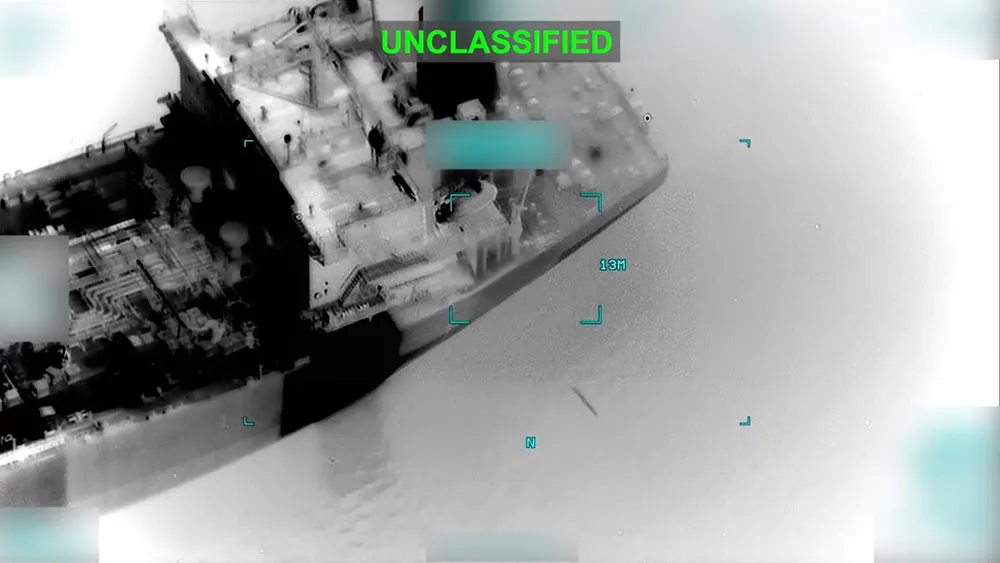
On the morning of June 10, Bhargavi in Visakhapatnam waited for the message her husband sent every day. Patnala Suresh, 44, chief engineer aboard the MT Settebello, had not missed a morning in months. In his last phone call he had told her he was cancelling his contract and coming home by June 24 to celebrate their fifteenth anniversary. That day the message did not come. She waited, telling herself he was simply busy; at that hour he would not normally be on deck. The ship had been struck by US forces in the Gulf of Oman, precision munitions fired into the engine room after, Washington says, the crew repeatedly failed to comply with American directions. Suresh was killed alongside Aditya Sharma, 23, a deck cadet from Hamirpur in Himachal Pradesh and Shivanand Chaurasia, a fitter from Surauli village in Deoria and the sole earner for a family with two children.
India summoned the US chargé d'affaires. Twice. Then Jaishankar called Rubio. His statement afterwards was precise: 'I reiterated India's strong protest at the attacks by the US Navy in the Gulf that killed three Indian mariners. Such lethal actions against commercial shipping are not justified.' He used the word mariners, named the problem and called it unjustified.
Hours later, the State Department issued its own account of the same call. No mention of three dead Indians. No condolence. No acknowledgement that anyone had died. The readout did not use the words India, Indian, mariners or killed. According to principal deputy spokesperson Tommy Pigott, Rubio had 'stressed that all commercial vessels should immediately comply with orders from US forces.' He had also 'underscored that violations of the US blockade and the illicit transport of Iranian oil will not be tolerated.'
Note the word illicit. India's foreign minister called to protest the deaths of Indian mariners. Washington's response described those mariners as participants in illegal activity and then instructed a sovereign state that its vessels must comply with American military orders in international waters. The United States has declared a unilateral blockade, defined what constitutes a violation and reserved the right to use lethal force against any vessel it deems non-compliant. Its message to the country whose citizens it just killed: ensure compliance. That is not a diplomatic exchange. It is a command, and Washington delivered it while India's foreign minister was trying to register a protest.
The question India's response still does not answer is a simple one: what does New Delhi do when a friendly power kills its citizens and tells it to fall in line? The answer, so far, is to register a complaint, absorb a lecture about compliance and return to the architecture of the relationship. Which means the architecture remains undisturbed by the bodies.
The government that has spent years marketing itself as a Vishwaguru, Sanskrit for teacher of the world, has produced a different lesson here. It has demonstrated that the United States can kill Indian civilian maritime workers in international waters, describe them as smugglers, instruct India to ensure its vessels obey American military commands and walk away without apology, accountability or any indication that a future Indian death would produce a different outcome. No foreign minister of a rising power should have to absorb that in silence.
India has more than 300,000 sailors in global shipping fleets, close to 15 percent of the world's maritime workforce. Shivanand Chaurasia's neighbour in Surauli said he had struggled to get the sea job and was gradually improving his family's situation. Three young men became casualties, the neighbour said. The more precise word for what they were is expendable: workers carrying other people's cargo through other people's wars, covered by a passport that guaranteed very much less than they were told.
Bhargavi's morning message never came. Washington's did. It said: comply.
New Delhi registered the complaint and kept the relationship warm. Call that what you like. Do not call it a protest.


