Xi Jinping arrived in Cairo this week for the first time in a decade. NPR described the visit simply: it illustrates China's growing ambitions at a time when US influence has been weakened by its war in Iran. The sentence contains the essential geopolitics of September 2026 in fourteen words. The US is in Iran. China is in Egypt. Both are pursuing influence in the same region. One of them is bombing. The other one is visiting.
Egypt is the Arab world's most populous country and its historical cultural capital. Its relationship with the United States has been the anchor of American Middle East strategy since the 1979 Camp David accords gave Washington a reliable ally in Cairo in exchange for the largest US aid package in the world outside of Israel. The Iran war has disrupted that architecture in specific ways. Egypt closed its airspace to US military aircraft transiting to the region in the early weeks of the war. It joined the 22-nation EU emergency statement calling for stronger border controls after the Morocco-Spain Ceuta crisis in August. It has maintained back-channel diplomatic contact with Iran through the Arab League. Its position on the war is careful: not opposition, not support, but the studied non-alignment that Egyptian foreign policy has cultivated for decades as a hedge against being consumed by great power competition.
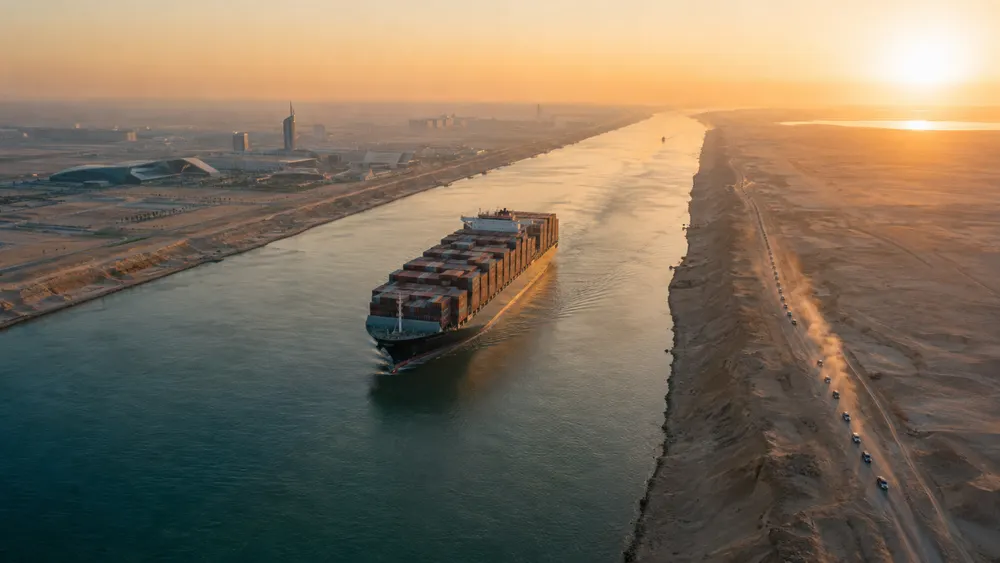
Xi's visit is the other side of that calculation. China is Egypt's largest trading partner by bilateral trade volume. Chinese companies are major investors in the Suez Canal Economic Zone — the development corridor Egypt has been building along the Canal since 2015. The Belt and Road Initiative runs through Egypt on its Mediterranean corridor. China's relationship with Egypt predates the Iran war. What the visit signals is that the relationship is being actively tended at a moment when American attention is entirely elsewhere, and that Beijing understands what Egyptian decision-makers understand: the countries that maintain consistent, reliable engagement during American distraction are the ones that build durable influence.
The US influence that NPR describes as weakened is specifically weakened in Africa and the Middle East, precisely the regions where China has been most methodically expanding its presence. The Abraham Accords framework — Washington's signature diplomatic achievement in the region — has stalled. Saudi Arabia signed the Mecca Joint Defence Agreement with Turkey and Pakistan, not with Washington. The Gulf states are building their own security architecture. Egypt is receiving Xi Jinping. Iran's Red Crescent is appealing to the ICC. Nepal is receiving Indian and Chinese rescue teams in its glacial disaster zone.
DiploPolis wrote 'Two Presidents. One Conclusion.' about Xi receiving Trump and Putin in the same week in May. The August-September sequence is the next chapter of the same argument. Trump received Venezuela's oil deal. Xi received Egypt's attention. Both are pursuing influence in the Global South simultaneously. One is doing so through military campaigns that have produced wedding strikes and 65-billion-barrel oil annexations. The other is doing so through diplomatic visits and infrastructure investment. The influence gap that is opening between them is not primarily military. It is relational.
Egypt has not left the American orbit. It will not. Its military receives US equipment, its economy depends on US-backed multilateral lending and its government requires Washington's acquiescence for its own stability. But Xi came to Cairo this week and the US Secretary of State did not. The US President's attention is on Iran, Venezuela and the midterms. Xi's attention is on Egypt, which is the gateway to Africa, the Arab world and the Mediterranean shipping corridor that carries 12 per cent of global trade through the Suez Canal. The visit lasts several days. The war has lasted six months. Both are still running.